selfheal Care (Prunella vulgaris)

Also known as: Heal-all, common selfheal, lawn prunella, woundwort, heart-of-the-earth, carpenter's herb, brownwort, blue curls
selfheal

About selfheal

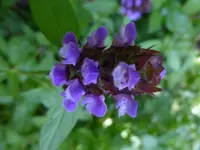
Selfheal (Prunella vulgaris) is a low-growing perennial herb in the mint family, often used as a groundcover in informal lawns and wildflower plantings. It forms small clumps or mats with square stems, paired leaves, and short spikes of purple to violet flowers in summer.

This species occurs widely across Europe, Asia, and North America, thriving in meadows, open woodlands, and disturbed grassy areas. It is generally easy to grow because it tolerates poor soils, light foot traffic, and variable moisture.

Selfheal prefers sun to light shade, moderately moist soil, and minimal disturbance. Its toughness and spreading habit make it suitable for gardeners who want to learn how to care for selfheal without complex routines.

Main Plant Requirements

Care Difficulty

Easy Care

Light Preference

Partial Sun

Water Requirements

Moderate Water

Temperature Preference

Cold Hardy

Hardiness Zone

4–9

Soil Texture

Sandy, Loamy, Clay

Soil pH

Acidic (5.5–6.5), Slightly acidic (6.5–7.0)

Soil Drainage

Moist but well-drained

Fertilization

Minimal (feed rarely)

Get Personalized Care Plan

Scan your plant to receive care tips personalized for your specific plant

Available on iOS and Android

How to Care for the selfheal

This species prefers moderate sun exposure and adapts well to varied garden light conditions.

  • Provide 4–6 hours of sun daily, with morning sun and light afternoon shade ideal, especially in hot summer climates.
  • Tolerates partial shade and dappled light under open trees; in dense shade, selfheal produces weaker growth and fewer flowers.
  • In hot regions, protect from intense afternoon sun to avoid leaf scorch, while in cooler climates it can handle more direct sun during the growing season.

Prunella vulgaris prefers consistently moist but not saturated soil.

  • Allow the top 2–3 cm of soil to dry slightly, then water deeply so moisture reaches the root zone, especially during establishment.
  • In spring and early summer, monitor after warm, dry spells; in cooler or rainy periods, reduce watering and rely more on natural rainfall.
  • Watch for wilting, crisp leaf edges, or slowed growth as signs of underwatering, and yellowing, soft stems, or a sour soil smell as signs of overwatering or poor drainage.

This hardy perennial tolerates a wide temperature range but grows best in mild conditions.

  • Optimal active growth occurs around 60–75°F (16–24°C), with flowering most robust in sustained mild weather.
  • Survives winter cold down to about 0°F (−18°C) in the ground, dying back above soil level but regrowing from the crown in spring.
  • Handles summer heat up to about 85–90°F (29–32°C) if soil stays moist; extended extremes above this can cause leaf scorching and dormancy.

This species handles a wide humidity range and usually does not need special humidity management outdoors or in typical homes.

  • Prefers 40–60% humidity but grows reliably in slightly drier or more humid conditions.
  • Tolerates dry air well; humidity stress is uncommon unless paired with high heat and drought.
  • If leaf edges crisp or tips brown despite moist soil, increase humidity by grouping plants or placing near a shallow water tray without letting roots sit in water.

This plant prefers moderately moist, loose soil with steady drainage.

  • Use a loamy soil with moderate organic matter, such as garden soil mixed with compost and a small amount of coarse sand.
  • Aim for slightly acidic to neutral pH around 6.0–7.0 for consistent growth of Prunella vulgaris.
  • Add coarse sand or fine gravel to heavy clay to improve drainage and aeration, especially in regions with wet winters.
  • Avoid compacted, waterlogged, or very dry, stony soil, which restricts root expansion and reduces flowering.

This species is suitable for container growing when the pot is sized and drained correctly.

  • Choose a wide, low to medium-depth pot to give spreading roots and stolons room to form a dense mat.
  • Use a heavier material such as terracotta or ceramic if the container is exposed to wind, to keep the spreading foliage stable.
  • Ensure drainage holes stay unclogged and elevate the pot slightly so excess water can escape quickly after rain or irrigation.

This adaptable wild perennial needs only light feeding in average garden soil.

  • For garden beds, mix a thin layer of compost or well-rotted manure into the top 5–8 cm of soil in early spring.
  • Container-grown selfheal benefits from a balanced, diluted liquid fertilizer (around 10-10-10) at 1/2 strength every 4–6 weeks in active growth.
  • Stop feeding in late summer so growth can harden before winter and avoid fertilizing dormant plants.
  • Do not overapply nitrogen; lush, weak growth is more prone to lodging and disease.

Light pruning maintains health and encourages compact, floriferous growth in Prunella vulgaris.

  • Shear back spent flower spikes in mid to late summer to promote a denser mat and possible rebloom.
  • In early spring, remove dead, winter-burned, or diseased stems with clean hand pruners or scissors.
  • Thin crowded patches by lifting and discarding weaker clumps to improve air flow and reduce fungal problems.
  • Keep cuts above healthy leaf nodes to encourage new lateral shoots and a low, even groundcover form.

This species is more often transplanted in-ground than kept long term in containers.

  • Transplant in early spring or early fall when temperatures are mild and soil is evenly moist.
  • Move plants when clumps spread beyond their space or when flowering declines, usually every 3–4 years.
  • Lift clumps with a trowel or fork, disturbing roots as little as possible and keeping soil around the root ball.
  • Replant at the same depth, water thoroughly, then shade lightly for a few days to limit transplant shock.

Prunella vulgaris is commonly propagated by division, seed, and short stem sections.

  • Divide mature clumps in early spring or early fall, replanting vigorous outer sections in fresh soil.
  • Sow seeds on the soil surface or very shallowly; they need light, consistent moisture, and 60–70°F to germinate.
  • Root short, non-flowering stem cuttings in moist, well-drained mix under bright, indirect light.
  • Space new plants 20–30 cm apart to allow a dense mat to form without immediate overcrowding.

Established plants are generally cold hardy and need minimal winter care in most temperate climates.

  • In colder regions, apply a 3–5 cm mulch layer around the crown after the ground cools but before deep freezes.
  • Leave a light layer of dead foliage over the plant as natural insulation, then clear it in early spring.
  • Container-grown plants in zones with severe frost benefit from moving to a sheltered, unheated but frost-free spot.

Care Tips

Controlled spreading

Install a shallow root barrier or sink bottomless pots into the bed to confine the creeping roots and keep selfheal from overrunning nearby low-growing perennials or lawn edges.

Timed deadheading

Cut back most flower spikes just as the earliest florets fade to encourage a denser second flush of blooms while leaving a few spikes to set seed where naturalizing is desired.

Mowing integration

In lawn plantings, set the mower height to 7–8 cm and avoid mowing during peak flowering so the rosettes survive while pollinators can still use the flower spikes.

Targeted division

Every 2–3 years, lift and divide the thickest mats in early spring, replant only the youngest outer sections, and discard or compost the oldest centers to keep the patch vigorous and disease-resistant.

Low-spray pest control

For aphids or leafhoppers, start with a firm water spray in the morning and spot-treat only heavily infested clumps with insecticidal soap, which helps maintain beneficial insects while growing selfheal in mixed borders.

Common Pests and Diseases

Powdery mildew

This disease causes a white, powdery coating on leaves and stems, often developing in warm days with cool, humid nights. Symptoms include distorted new growth and reduced vigor if the infection is heavy.

Solution

Remove and dispose of heavily infected leaves to reduce spore load, then improve air circulation by thinning dense patches and avoiding overhead watering late in the day. If needed, apply a sulfur or potassium bicarbonate fungicide labeled for ornamental herbs, making sure to cover both leaf surfaces, and repeat according to label directions during humid periods.

Leaf spot

This disease produces small brown or purplish spots on leaves that may merge into larger blotches, sometimes with a yellow halo. Symptoms include premature leaf drop and a generally thinned, tired-looking plant canopy.

Solution

Cut and discard affected leaves to lower fungal spread, and keep foliage as dry as possible by watering at soil level in the morning. In crowded beds, increase spacing to enhance airflow, and in persistent cases use a copper-based or chlorothalonil fungicide labeled for garden perennials, applied at the first sign of new spots.

Aphids

These insects cluster on young stems and the undersides of leaves, sucking sap and causing curling or distortion of new growth. This pest also excretes sticky honeydew that can attract ants or lead to sooty mold on nearby surfaces.

Solution

Dislodge colonies with a strong stream of water, focusing on new growth and leaf undersides, and repeat every few days until numbers drop. For ongoing outbreaks, use insecticidal soap or a light horticultural oil, applied thoroughly to all plant surfaces, and encourage natural predators such as lady beetles by avoiding broad-spectrum insecticides nearby.

Spider mites

These pests are tiny sap-sucking arachnids that cause fine stippling, bronzing, and a dry, speckled look to leaves, often with delicate webbing between stems in hot, dry conditions. Symptoms include slow growth and leaves that feel rough or sandpapery to the touch.

Solution

Rinse foliage regularly with water to knock mites off and to raise local humidity, paying attention to the undersides of leaves. In heavier infestations, apply insecticidal soap or neem oil thoroughly every 5–7 days for several cycles, and reduce plant stress by maintaining even soil moisture and avoiding prolonged drought.

Rust

This disease shows as small orange, brown, or rust-colored pustules on the undersides of leaves, sometimes with yellowing on the upper surface. Symptoms include gradual weakening of plants and increased leaf drop if the infection is not managed.

Solution

Remove and discard affected leaves as soon as pustules are seen, and avoid overhead watering to keep foliage dry. Improve air circulation around clumps by thinning and, where rust recurs, rotate plantings and use a labeled systemic or protectant fungicide early in the season as part of broader Prunella vulgaris care instructions.

Interesting Facts

Wide natural distribution

This species occurs across much of Europe, Asia, and North America, and in many areas it is considered native or long-naturalized, showing a high ability to adapt to different climates and soils.

Creeping growth habit

Prunella vulgaris spreads by short creeping stems (stolons) that root at the nodes, allowing it to form low, dense patches that can rapidly fill small gaps in turf and open ground.

Pollinator-friendly flower spikes

Its purple flower spikes produce nectar that attracts a range of pollinators, especially bumblebees and small solitary bees, which are well adapted to the flower shape and timing of bloom.

Botan icon

Did you know?

Genetic and morphological studies indicate that what is called Prunella vulgaris likely represents a complex of closely related lineages, with some researchers recognizing distinct subspecies or regional forms that reflect its long evolutionary history across different continents.

FAQs about selfheal

Poor flowering usually comes from low light, nutrient-poor or very dry soil, or heavy cutting earlier in the season. Encourage blooms by providing full sun, moderate moisture, and occasionally deadheading spent flower spikes to redirect energy into new buds.

Grow Healthy Plants with Botan Care

Keep your plants happy and healthy with plant identification, disease detection, and easy care guidance.

Botan plant care app — identify plants on mobile

Explore More Plants