false indigo bush Care (Amorpha fruticosa)

Also known as: false indigo bush, bastard false indigo
false indigo bush

About false indigo bush

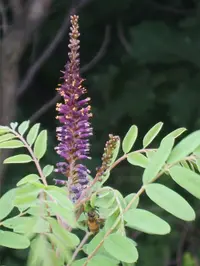
False indigo bush, Amorpha fruticosa, is a hardy deciduous shrub known for its airy, arching branches and fine, fern-like foliage. It produces slender spikes of deep purple flowers with bright orange stamens, giving a distinctive, textured look in late spring to early summer.

This species is native to North America and often grows along rivers, wetlands, and disturbed sites, where it handles periodic flooding and poor soils. It establishes quickly, fixes nitrogen in the soil, and tolerates neglect, which makes it relatively simple to care for false indigo bush in suitable climates.

It prefers full sun to light shade, moderately moist to seasonally wet conditions, and well-drained to sandy or alluvial soils, performing best when not kept overly dry for long periods.

Main Plant Requirements

Care Difficulty

Easy Care

Light Preference

Full Sun

Water Requirements

Regular Water

Temperature Preference

Cold Hardy

Hardiness Zone

4–9

Soil Texture

Sandy, Loamy, Clay

Soil pH

Slightly acidic (6.5–7.0), Slightly alkaline (7.0–7.5)

Soil Drainage

Waterlogged tolerant

Fertilization

Minimal (feed rarely)

Get Personalized Care Plan

Scan your plant to receive care tips personalized for your specific plant

Available on iOS and Android

How to Care for the false indigo bush

This hardy shrub performs best with strong outdoor light and broad sky exposure.

  • Provide full sun for 6–8 hours per day; false indigo bush flowers and branches more densely in open, unshaded sites.
  • Accepts light partial shade, especially with morning sun and light afternoon shade, but expect looser growth and fewer blooms.
  • Avoid deep shade, which causes weak, leggy stems, and note that young plants can scorch in intense late-afternoon summer sun without enough soil moisture.

This species is naturally drought-tolerant once established but still responds to thoughtful watering.

  • In the first 1–2 years, water when the top 5–7 cm of soil feels dry, giving a deep soak that moistens the full root zone.
  • Mature shrubs in the ground usually rely on rainfall, but in hot, dry spells, water if leaves dull, curl slightly, or wilting appears by late afternoon.
  • Ensure free-draining soil or a slope; persistent puddling, sour smell, or yellowing, dropping leaves suggest overwatering and possible root stress.

This shrub is adapted to temperate climates with cold winters and warm summers.

  • Active growth occurs around 65–85°F (18–29°C), with best shoot and flower development in mild to warm conditions.
  • Well-established plants tolerate winter lows down to about -20°F (-29°C); young shrubs benefit from mulch in colder regions.
  • Handles summer heat up to about 95°F (35°C) if roots stay moist; extended extremes beyond this, with dry soil, can cause leaf scorch and early leaf drop.

Humidity is not a major concern for this hardy shrub in typical outdoor conditions.

Amorpha fruticosa grows best in loose, moderately fertile mineral soils with consistent moisture.

  • Use loamy or sandy-loam soil that holds moisture yet remains airy, avoiding heavy, compacted clay where roots suffocate.
  • Aim for slightly acidic to neutral pH around 6.0–7.5, which supports nutrient availability without special amendments.
  • Mix in 20–30% compost to improve structure and water-holding while keeping the profile friable and well aerated.
  • Avoid poorly drained low spots or constantly waterlogged substrates, which increase root rot risk despite the plant’s wetland tolerance.

This species can be grown in large outdoor containers but needs careful management of size and stability.

  • Choose a deep, heavy container or weighted base to counterbalance the shrub’s tall, bushy top growth in windy sites.
  • Use a free-draining mix, such as 60% loam with 40% coarse sand or fine gravel, to prevent perched water at the pot base.
  • Elevate the container slightly on feet or bricks to keep drainage holes clear and maintain consistent outflow after heavy rain.

This nitrogen-fixing shrub usually needs minimal feeding, but light fertilization can support growth in poor soils when caring for false indigo bush.

  • Use a balanced slow-release fertilizer (around 10-10-10) or a thin layer of compost in early spring.
  • Apply once per year during the growing season for in-ground plants; container plants may benefit from 2 light feeds.
  • Dilute liquid products to half strength to avoid burning roots and excess leafy growth.
  • Avoid fertilizing in late fall or winter, when the plant is dormant and uptake is low.

Pruning Amorpha fruticosa helps control size, maintain structure, and encourage strong flowering wood.

  • Carry out main pruning in late winter to very early spring, before buds break.
  • Remove dead, diseased, crossing, or weak stems with clean bypass pruners or loppers.
  • Thin crowded interior shoots to improve light penetration and air flow through the shrub.
  • Shorten overly long branches to shape the plant, cutting back to an outward-facing bud or side branch.

This shrub is usually grown in the ground, so focus on careful transplanting rather than frequent repotting.

  • Transplant in early spring or fall when temperatures are mild and soil is workable.
  • Move plants that show poor vigor, are rootbound in a nursery container, or outgrowing their space.
  • Dig a wide planting hole, loosen circling roots gently, and set the root flare at soil level.
  • Water deeply after planting, then keep soil evenly moist for several weeks to reduce transplant stress.

Amorpha fruticosa is commonly propagated from seed and softwood or semi-ripe cuttings.

  • Collect mature seed pods in late summer, dry them, and sow seeds in fall or early spring.
  • Scarify hard seed coats lightly with sandpaper, then sow in well-drained, sandy mix at 60–70°F.
  • Take softwood cuttings in late spring or semi-ripe cuttings in mid-summer, 10–15 cm long.
  • Remove lower leaves, dip bases in rooting hormone, and root in humid, bright shade with free-draining substrate.

This species is generally cold hardy in much of the US and needs little special winter care once established.

  • In colder zones, apply a 5–8 cm mulch layer over the root zone after the ground cools but before deep freezes.
  • Avoid piling mulch against the stems to reduce rot risk and pest shelter.
  • Container-grown plants in very cold climates may be moved to a sheltered, unheated space to reduce freeze-thaw stress.

Care Tips

Root sucker control

Inspect the base and surrounding soil 2–3 times per year and promptly cut out root suckers at or below soil level to prevent unwanted thickets and maintain a single, manageable shrub form.

Wind and bank stabilization

On slopes or stream banks, plant several shrubs in a staggered row and allow moderate spreading so the root systems interlock and help stabilize soil without relying on hard structures alone.

Nitrogen management

Because this species fixes nitrogen, avoid high-nitrogen fertilizers nearby and instead use mixed plantings with nutrient-demanding perennials or grasses that benefit from the improved soil.

Wildlife and pollinator support

Position plants where flower access is easy for bees and butterflies, and leave a portion of seed heads over winter to provide structure and food for wildlife before cutting back in late winter.

Targeted rejuvenation cycles

Every 3–5 years, schedule a rejuvenation cut in late winter by removing a third to half of the oldest stems at ground level to maintain vigorous, dense growth while still keeping seasonal structure, which is key when caring for false indigo bush in designed landscapes.

Common Pests and Diseases

Japanese beetles

These insects skeletonize the compound leaves and can also feed on flowers, leaving only veins and coarse tissue behind.

Solution

Hand-pick adults in early morning into soapy water, use row covers or netting on young plants, and consider targeted products containing Bacillus thuringiensis galleriae or neem on foliage while avoiding open bloom periods to protect pollinators.

Caterpillars

These insects chew irregular holes in foliage and can defoliate young false indigo bushes when populations are high.

Solution

Inspect foliage regularly, hand-remove visible caterpillars, and if damage is significant use a Bacillus thuringiensis kurstaki (Bt) spray directed to the leaves in late afternoon, reapplying as label directions indicate.

Leaf spot

This disease causes small brown to purplish spots on leaves that may coalesce, leading to early leaf yellowing and drop, especially in humid conditions.

Solution

Prune to improve airflow, avoid overhead watering, promptly remove and dispose of fallen leaves, and if leaf loss is severe apply a labeled copper or chlorothalonil fungicide early in the season according to Amorpha fruticosa care instructions.

Powdery mildew

This disease produces white or gray powdery coating on leaves and young stems, which can lead to distorted growth and reduced vigor in shaded or crowded plantings.

Solution

Thin nearby vegetation to increase sun and air movement, water at the base rather than over foliage, remove heavily infected shoots, and use a labeled sulfur or potassium bicarbonate fungicide if infections recur each year.

Interesting Facts

Nitrogen-fixing shrub

This leguminous shrub hosts symbiotic bacteria in root nodules that fix atmospheric nitrogen, enriching poor soils and helping it colonize disturbed riverbanks and floodplains.

Specialized bee pollinators

Its dense spikes of purple flowers with bright orange anthers are especially attractive to specialist bees in the genus Calliopsis, which rely heavily on its pollen in parts of its native range.

Buoyant seed dispersal

The small, one-seeded pods are buoyant and tolerant of immersion, allowing rivers and floodwaters to transport seeds long distances along waterways, which strongly shapes its natural distribution.

Botan icon

Did you know?

This species tolerates periodic flooding and waterlogged soils so well that it can form dense thickets on river levees and reservoir margins, where its extensive root system stabilizes banks but also allows it to behave invasively outside its native North American range.

FAQs about false indigo bush

This shrub forms dense thickets by seed and suckering roots, especially along waterways or disturbed ground. In many regions it is classified as invasive, so monitor seedlings, remove unwanted shoots, and avoid planting near sensitive natural habitats.

Grow Healthy Plants with Botan Care

Keep your plants happy and healthy with plant identification, disease detection, and easy care guidance.

Botan plant care app — identify plants on mobile

Explore More Plants