Ambrosina Care (Ambrosina bassii)

Also known as: Ambrosineae
Ambrosina

About Ambrosina

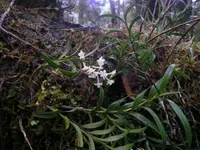
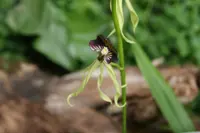
Ambrosina bassii, often simply called Ambrosina, is a small, low-growing aroid that forms tight clumps of glossy, green, hooded leaves and unusual funnel-shaped bracts. It has a creeping, rhizome-like base and stays very compact, which makes it interesting for collectors and small shaded displays.

This species is native to Mediterranean regions, where it grows in rocky, shaded sites and light woodland. It prefers mild conditions, dappled light, and evenly moist but well-drained soil.

Its slow growth, small size, and need for consistent moisture and shelter from heat or frost mean it suits more attentive growers. Understanding how to care for Ambrosina helps keep it stable and long lived in cultivation.

Main Plant Requirements

Care Difficulty

Hard Care

Light Preference

Partial Shade

Water Requirements

Keep Soil Moist

Temperature Preference

Warm Climate

Hardiness Zone

9–11

Soil Texture

Loamy, Silty, Organic-rich

Soil pH

Slightly acidic (6.5–7.0), Neutral (7.0)

Soil Drainage

Moist but well-drained

Fertilization

Minimal (feed rarely)

Get Personalized Care Plan

Scan your plant to receive care tips personalized for your specific plant

Available on iOS and Android

How to Care for the Ambrosina

This Mediterranean woodland plant prefers soft, filtered light rather than intense direct sun.

  • Provide bright shade or dappled light, such as under shrubs or light tree canopy, with 2–4 hours of gentle morning sun if possible.
  • Avoid strong midday and afternoon sun, which can scorch leaves and dry soil too quickly, especially in hot, exposed sites.
  • In summer, prioritize partial shade; in winter, when deciduous cover is thinner, Ambrosina benefits from more open, indirect light.

This tuberous plant prefers evenly moist but not saturated soil during active growth.

  • Water when the top 2–3 cm of soil feel dry, aiming for consistently moist conditions in fall and winter growth periods.
  • Use well-drained, humus-rich soil so excess water runs off easily, reducing risk of rot in Ambrosina bassii tubers.
  • Reduce watering sharply or allow soil to dry almost fully during summer dormancy; shriveling leaves suggest past dryness, while yellowing, soft tissue suggests overwatering.

This species is adapted to mild, Mediterranean-type climates with cool, wet winters and warm, dry summers.

  • Aim for active growth temperatures around 50–65°F (10–18°C), which support steady leaf and root development in winter and early spring.
  • Protect from hard frost; short dips to about 25–28°F (-4 to -2°C) may be survived if soil is well-drained and the tuber is mulched.
  • In summer dormancy, it tolerates 80–90°F (27–32°C) if soil remains relatively dry; avoid combined heat and constant moisture, which promotes rot.

This species prefers moderately moist air but usually adapts to typical indoor humidity if not extremely dry.

  • Target 40–60% humidity to limit leaf edge browning and support steady growth.
  • In very dry air, watch for curling or crisping leaf tips and slower unfolding of new foliage as signs of humidity stress.
  • Increase humidity by grouping plants, placing the pot on a pebble tray with water below the pot base, or running a nearby room humidifier.

This plant needs loose, fast-draining soil that mimics a rocky, humus-rich woodland floor.

  • Use a sandy loam with plenty of organic matter, such as 40% compost, 40% coarse sand, and 20% fine bark or grit.
  • Ensure rapid drainage; water should exit the pot within seconds, leaving soil just lightly moist rather than soggy.
  • Aim for slightly acidic to neutral pH around 6.0–7.0, which supports nutrient availability for Ambrosina bassii.
  • Improve aeration by blending in extra coarse sand or pumice and avoid heavy clay soil or any mix that compacts after watering.

This species is suitable for container growing when drainage and soil aeration are carefully controlled.

  • Choose a pot deeper than it is wide to accommodate its underground structures and keep them from overheating at the surface.
  • Select a rigid, stable container material such as clay or thick plastic so the spreading foliage does not tip the pot in wind.
  • Set the pot on feet or bricks so drainage holes remain clear and excess water can escape quickly after rain or watering.

This small geophyte from nutrient-poor habitats needs only light, targeted feeding in cultivation.

  • Use a mild balanced fertilizer (around 10-10-10) at 1/4–1/2 strength during active spring growth if soil is poor.
  • Apply a thin layer of fine compost on the soil surface instead of frequent liquid feeds.
  • Feed no more than once every 4–6 weeks in the short growing season.
  • Stop fertilizing completely once foliage begins to yellow and the plant enters summer dormancy.

Ambrosina bassii needs minimal pruning, mainly to maintain plant health and tidy appearance.

  • Best time for any pruning is late spring after flowering, while foliage is still firm.
  • Remove only dead, yellowed, or damaged leaves at the base to limit rot and disease spread.
  • Avoid heavy cutting; this compact species does not need shaping and excessive removal weakens the corm.
  • Use clean, sharp scissors or snips and disinfect blades when working on multiple plants.

This corm-forming aroid resents disturbance, so repot or transplant Ambrosina bassii infrequently and gently.

  • Check for roots circling the pot, crowded corms, or declining vigor as signs a move is needed.
  • Plan repotting or lifting and transplanting in late summer to early autumn, just before new root growth.
  • Aim for every 3–4 years at most, shifting only 1 pot size up with a sharply draining mix.
  • Handle corms carefully, keep roots shaded and slightly moist, then water lightly and keep cool after transplanting to reduce stress.

Propagation of this Mediterranean woodland species is possible but slow and usually done by seed or careful division.

  • Sow fresh seeds in autumn in a cool, shaded place; maintain evenly moist, well-drained soil for gradual germination.
  • Use a gritty, humus-rich mix to prevent waterlogging while retaining some moisture.
  • Divide offsets only when clumps are dense, lifting dormant corms in late summer and separating the smallest ones gently.
  • Replant divisions at the same depth, water lightly, and keep cool until new growth confirms establishment.

This species prefers mild, Mediterranean-type winters and may need protection in colder regions.

  • In-ground plants tolerate light frost but benefit from a 5–8 cm mulch layer over the root zone in cold areas.
  • Avoid waterlogged winter soils; ensure sharp drainage to prevent corm rot.
  • Move container plants into a cold but frost-free spot (around 35–45°F) with good light.
  • Uncover or reduce mulch gradually in early spring so emerging shoots do not etiolate.

Care Tips

Rocky substrate layering

When potting, add a 2–3 cm layer of coarse grit or small stones around and just above the corms to mimic the rocky soils of its native habitat and reduce the risk of rot around the growing points.

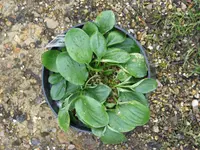
Marked dormancy phase

After the foliage dies back, clearly label the pot and move it to a dry, shaded spot so the dormant corms are not accidentally overwatered, repotted, or discarded as empty soil.

Cool rest scheduling

Time repotting and division for late summer or early fall, giving corms a cool, dry rest beforehand to improve bud initiation and support more reliable leaf and spathe production in the next growth cycle.

Tight community planting

Plant several corms close together in a shallow, wide container to create a denser mat of foliage and spathes, which also helps maintain a more even moisture and temperature profile in the root zone when growing Ambrosina.

Sloped container setup

Use a slightly sloped or raised-back container surface, with the higher side kept drier, to provide better drainage around the corms and to let emerging leaves and inflorescences display more visibly at the front edge.

Common Pests and Diseases

Rust fungi

This disease leads to yellow spots on the leaves that later develop brown or orange pustules, mainly on older foliage in humid, mild conditions.

Solution

Remove and discard affected leaves, avoid overhead watering, and increase air circulation around the clump; for persistent cases, apply a sulfur- or copper-based fungicide labeled for ornamental aroids, following label directions carefully.

Leaf spot

This disease causes small water-soaked lesions that enlarge into brown spots with possible yellow halos, especially on crowded or shaded plants.

Solution

Prune and dispose of heavily spotted leaves, water at soil level rather than on the foliage, and space plants to reduce leaf contact; if spotting continues, use a broad-spectrum ornamental fungicide appropriate for foliar leaf spots.

Aphids

These insects cluster on young leaves and flower structures, sucking sap and causing distortion, sticky honeydew, and sometimes sooty mold on the foliage.

Solution

Spray the plant with a firm stream of water to dislodge colonies, then treat remaining aphids with insecticidal soap or a light horticultural oil, repeating every 5–7 days until new growth appears clean; avoid spraying in strong sun or high heat.

Spider mites

This pest thrives in hot, dry conditions and causes fine stippling on leaves, dulling the foliage and sometimes producing delicate webbing on the undersides.

Solution

Increase humidity around the plant, rinse leaves thoroughly (especially undersides), and apply insecticidal soap or a miticidal horticultural oil, ensuring full coverage and repeating treatments several times to catch new hatchlings.

Interesting Facts

Single-species lineage

Ambrosina bassii is the only known species in the genus Ambrosina and the only member of its tribe, making it an isolated evolutionary line within the arum family (Araceae).

Two-chambered flowers

Its tiny inflorescences are divided into two separate chambers, one bearing male flowers and the other female flowers, an unusual spatial separation within a single arum-type structure.

Mediterranean microhabitats

This species is naturally restricted to the western Mediterranean region, where it typically grows in shaded, rocky, or thin-soil sites under shrubs and trees, often in seasonally moist but quickly draining habitats.

Botan icon

Did you know?

Fossil-calibrated phylogenetic studies indicate that Ambrosina represents one of the earliest-diverging lineages within the Araceae, meaning it retains several ancestral floral and structural traits that help botanists understand the early evolution of the arum family.

FAQs about Ambrosina

This Mediterranean geophyte performs best outdoors in mild, frost-free climates where it experiences a cool, moist winter and dry summer rest. Indoors, it is challenging unless those seasonal temperature and moisture cycles can be closely imitated.

Grow Healthy Plants with Botan Care

Keep your plants happy and healthy with plant identification, disease detection, and easy care guidance.

Botan plant care app — identify plants on mobile

Explore More Plants