rosy pussytoes Care (Antennaria rosea)

Also known as: Pink Pussytoes
rosy pussytoes

About rosy pussytoes

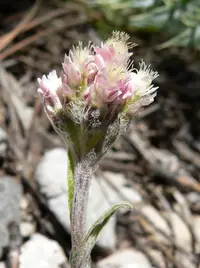
Rosy pussytoes (Antennaria rosea) is a low-growing, mat-forming perennial often used as a groundcover in rock gardens and dry, open sites. It has small, silvery-green leaves and fuzzy pinkish flower clusters that resemble tiny cat paws.

This species is native to North America, commonly found in prairies, open woodlands, and mountain slopes with well-drained, often rocky soils. It is adapted to sun, wind, and relatively low moisture, which makes it a durable option for low-maintenance planting.

Because it tolerates poor soils and drought once established, many gardeners find it straightforward to care for rosy pussytoes in suitable conditions.

Main Plant Requirements

Care Difficulty

Easy Care

Light Preference

Full Sun

Water Requirements

Low Water

Temperature Preference

Cold Hardy

Hardiness Zone

3–9

Soil Texture

Sandy, Loamy, Rocky

Soil pH

Slightly acidic (6.5–7.0), Neutral (7.0)

Soil Drainage

Well-drained

Fertilization

Minimal (feed rarely)

Get Personalized Care Plan

Scan your plant to receive care tips personalized for your specific plant

Available on iOS and Android

How to Care for the rosy pussytoes

This alpine perennial prefers bright conditions and handles strong light better than shade.

  • Provide 6–8 hours of direct sun daily; morning and midday sun are ideal, with light afternoon shade in very hot climates to prevent leaf scorch.
  • Rosy pussytoes tolerates light partial shade, but flowering and compact growth decline if it receives less than 4–5 hours of direct sun.
  • In winter, full sun helps keep rosettes dense; avoid crowded plantings or tall neighbors that cast heavy shade, which leads to weak, leggy mats.

This species is drought-tolerant and prefers slightly dry, fast-draining soil.

  • Allow the top 3–5 cm of soil to dry before watering; in typical garden conditions this often means no extra water beyond rainfall once plants are established.
  • Increase watering only during long hot, dry spells; leaves that flop and feel thin signal underwatering, while yellowing at the base and mushy crowns suggest excess moisture.
  • Plant Antennaria rosea in very free-draining, gritty soil or on a slope, as standing water around the roots quickly causes rot, especially in cool seasons.

This cold-hardy groundcover tolerates a wide temperature range once established.

  • Ideal growing temperatures are 55–75°F (13–24°C), with active growth in cool spring and fall and slower growth during summer heat.
  • Antennaria rosea survives down to about -30°F (-34°C) under typical garden conditions, especially with snow cover, and is suited to many cold-winter climates.
  • Heat tolerance is moderate; in areas above 90°F (32°C), combine good air movement with light afternoon shade to reduce stress and prevent foliage scorch.

This alpine perennial tolerates low humidity and rarely needs special moisture control in homes or gardens.

  • Ideal humidity is 30–50%, similar to most heated or air-conditioned indoor or dry outdoor conditions.
  • Rosy pussytoes handles dry air well, but prolonged hot, dry wind can crisp leaf tips and fade foliage.
  • If foliage browns at the edges during heatwaves, provide brief shade and gentle airflow rather than misting, which adds unnecessary surface moisture.

This species prefers lean, mineral, sharply drained soil that mimics rocky alpine ground.

  • Use a sandy or gravelly mix, such as 50–60% coarse sand or grit with the rest regular potting mix, to keep roots aerated.
  • Aim for slightly acidic to neutral pH, roughly 6.0–7.0, which supports nutrient uptake without encouraging excessive, weak growth.
  • In heavy or clay soil, create a raised bed and blend in coarse sand and fine gravel to improve drainage and prevent winter root rot.
  • Avoid rich, water-retentive mixes high in peat or compost, which hold moisture around the crown and increase rot risk for Antennaria rosea.

This low, mat-forming species can be grown successfully in shallow, well-drained containers.

  • Choose a wide, shallow pot to match its spreading habit, limiting deep, unused soil that can stay wet and sour around the roots.
  • Select unglazed clay if outdoor conditions are cool and damp, as its porous walls help moisture evaporate faster from the mix.
  • Position containers slightly raised on feet or bricks so drainage holes clear quickly after rain and excess water does not pool under the base.

This drought-tolerant alpine perennial needs minimal feeding, as rosy pussytoes is adapted to lean, rocky soils.

  • If growth is very weak in poor soil, apply a light topdressing of compost in early spring.
  • Use a low-dose balanced NPK granular or slow-release fertilizer at 1/2 strength once in spring only.
  • Avoid high-nitrogen products, which cause floppy, open growth and fewer flowers.
  • Do not feed in late fall or winter, when the plant is dormant or semi-dormant.

Antennaria rosea benefits from light, targeted pruning to maintain a dense mat and encourage fresh flowering growth.

  • In late spring or after main bloom, shear off spent flower stalks with clean scissors or hand pruners.
  • Remove dead, winter-burned, or diseased foliage whenever noticed to keep the mat healthy.
  • Thin out small crowded patches to reduce humidity around stems and discourage rot.
  • Avoid cutting into woody crowns; focus on soft, leafy growth to preserve plant vigor.

This species is more often transplanted in the garden than kept long term in containers, as it prefers open, well-drained sites.

  • Transplant in early spring or early fall, when temperatures are mild and soil moisture is steady.
  • Move plants when clumps outgrow their space, show thinning centers, or when container roots circle the pot.
  • Lift clumps with a trowel, keeping a shallow but wide root ball to minimize disturbance of fine roots.
  • Replant into sharply drained soil at the same depth, water once to settle, then allow the surface to dry between light waterings.

This ground-hugging perennial is commonly propagated to expand low carpets in rock gardens and dry borders.

  • Divide established clumps in early spring, separating offsets with a trowel while keeping small root systems attached.
  • Replant divisions immediately into gritty, well-drained soil and water lightly until rooted and stable.
  • Sow fresh seeds in late fall outdoors or in cold frames, allowing natural winter chilling for germination.
  • Provide bright light, good air movement, and only modest moisture to prevent damping-off in young plants.

This mat-forming perennial is generally cold hardy and needs little winter care in most temperate climates.

  • In regions with severe freeze–thaw cycles, apply a very thin layer of gravel or coarse sand mulch to stabilize soil temperatures.
  • Avoid heavy organic mulches, which can trap moisture and cause crown rot over winter.
  • Container-grown plants in very cold zones can be overwintered in an unheated garage or cold frame to reduce root stress.

Care Tips

Encourage Dense Mats

Shear off about one-third of the foliage in early spring before new growth starts to encourage tight, low mats and reduce old, winter-burned leaves.

Use Gravel Mulch

Apply a 1–2 cm layer of coarse grit or small gravel around plants instead of organic mulch to keep crowns dry, limit weed competition, and mimic the plant’s native rocky habitat.

Divide To Rejuvenate

Every 3–4 years, lift and divide crowded patches in early spring, replanting only the healthiest, firmest rosettes to maintain vigor and prevent bare, woody centers.

Edge Against Spread

Install shallow edging stones or metal strips sunk 3–5 cm into the soil around beds or paths to gently contain spreading runners while still allowing a natural-looking carpet.

Winter Drainage Check

Before winter, check that planting areas are slightly raised or sloped so meltwater does not pool around the crowns, which is critical when caring for rosy pussytoes in regions with freeze–thaw cycles.

Common Pests and Diseases

Powdery mildew

This disease appears as white, dusty patches on leaves and stems, often during warm days and cool, humid nights. Symptoms include distorted new growth and reduced vigor in dense clumps.

Solution

Improve air circulation by thinning crowded stems and avoid overhead watering, especially late in the day. Remove and discard affected foliage and, if needed, apply a sulfur or potassium bicarbonate fungicide labeled for ornamental perennials, following Antennaria rosea care instructions for dry, sunny conditions.

Leaf spot

This disease causes small tan to brown spots on foliage, sometimes with a darker margin, which can merge and lead to premature leaf drop. Symptoms include a patchy, unattractive appearance on older leaves, especially in overly moist sites.

Solution

Remove and discard heavily spotted leaves and any dense thatch around the plant to reduce moisture retention. Water at soil level in the morning, and if spotting continues, use a copper- or chlorothalonil-based fungicide according to label directions during prolonged wet periods.

Aphids

These insects cluster on tender stems and flower stalks, sucking sap and excreting sticky honeydew. This pest can cause curled, stunted growth and attract sooty mold on surrounding surfaces.

Solution

Spray colonies off with a strong stream of water and pinch back heavily infested stem tips. For persistent infestations, use insecticidal soap or a light horticultural oil, making sure to coat the undersides of leaves and repeating as needed according to the product label.

Spider mites

These pests thrive in hot, dry conditions and feed on leaf undersides, causing fine stippling and a dull, grayish cast to the foliage. Symptoms include very fine webbing between leaves and a general loss of vigor.

Solution

Rinse foliage thoroughly with water, focusing on leaf undersides, and repeat several times over 7–10 days to disrupt their life cycle. If populations remain high, use a horticultural oil or insecticidal soap labeled for mites, applied in the early morning or late afternoon to avoid leaf burn.

Root-knot nematodes

These microscopic worms attack roots, causing galls or swelling and leading to poor growth and reduced drought tolerance in otherwise tough groundcover patches. Symptoms include plants that remain stunted and sparse despite adequate light and drainage.

Solution

Remove and discard severely affected plants and avoid replanting Antennaria in the same exact spot. Improve soil with organic matter, plant in raised or well-drained beds, and where nematodes are persistent, rotate with more resistant species or use clean, nematode-free nursery stock for any new plantings.

Interesting Facts

Clonal carpet former

Antennaria rosea often spreads more by stolons and rhizomes than by seed, forming extensive clonal patches where many flowering stems are genetically identical.

Sex expression diversity

Populations of this species can be dioecious, gynoecious, or functionally female-only, and some are influenced by cytoplasmic male sterility linked to inherited factors in the plant’s mitochondria or chloroplasts.

High-elevation specialist

This plant is native to dry, open sites from low foothills up to subalpine and alpine zones across western North America, tolerating intense sun, thin soils, and substantial temperature swings.

Botan icon

Did you know?

Antennaria rosea is part of a polyploid complex, meaning it occurs in multiple chromosome-number forms that can reproduce through apomixis, a type of asexual seed formation where seeds develop without fertilization, producing offspring genetically identical to the mother plant.

FAQs about rosy pussytoes

This species spreads slowly by short stolons, forming low, woolly mats. It is usually well-behaved and easy to contain. In lean, dry soils it stays compact, but in lighter, sandy beds it can gradually fill open spaces.

Grow Healthy Plants with Botan Care

Keep your plants happy and healthy with plant identification, disease detection, and easy care guidance.

Botan plant care app — identify plants on mobile

Explore More Plants