Rocky mulch band
Create a 5–10 cm wide band of small stones or grit around the clump to keep foliage off wet soil, reduce rot, and mimic the rocky scree conditions this alpine prefers.

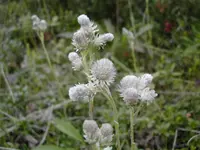
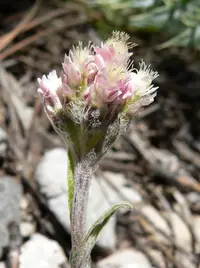
Alpine pussytoes (Antennaria alpina) is a low, mat-forming perennial adapted to cold, harsh mountain environments. It belongs to the daisy family and stays very compact. Leaves form dense silvery-green carpets, while small, fuzzy white flower clusters rise just above the foliage in late spring or early summer. This creates a soft, woolly look that suits rock gardens and alpine troughs. The species is native to arctic and alpine regions of Europe, Asia, and North America, where it grows on rocky, well-drained slopes. Its tolerance of poor soils, cold, and wind makes it relatively easy to care for alpine pussytoes in similar dry, sunny, well-drained sites.

Care Difficulty
Easy Care

Light Preference
Full Sun

Water Requirements
Low Water

Temperature Preference
Cold Hardy

Hardiness Zone
2–7

Soil Texture
Sandy, Loamy, Rocky

Soil pH
Slightly acidic (6.5–7.0), Neutral (7.0)

Soil Drainage
Well-drained

Fertilization
Minimal (feed rarely)
Scan your plant to receive care tips personalized for your specific plant
Available on iOS and Android
This alpine species thrives in bright, open conditions that mimic high-mountain habitats.
This drought-tolerant alpine prefers dry, fast-draining conditions rather than frequent watering.
This hardy alpine plant tolerates significant cold and prefers cool to moderate temperatures.
Humidity is not a significant factor for Antennaria alpina, which is adapted to dry alpine air.
Antennaria alpina prefers lean, very well-drained, gritty soil that mimics rocky alpine slopes.
This species can grow in containers if drainage is excellent and the substrate stays relatively dry.
This alpine species is adapted to lean soils and usually needs only minimal feeding.
Pruning Antennaria alpina is simple and mainly focuses on cleanup and maintaining a neat mat.
This species is usually grown in rock gardens or poor soil beds and seldom needs container repotting.
Antennaria alpina is commonly propagated by division or seed under cool, well-drained conditions.
This alpine perennial is very cold hardy and usually needs minimal winter care in the ground.

Plant Health Check
Not sure what's wrong with your plant? Check your plant's health inside the app.
Antennaria alpina is one of the few flowering perennials that naturally occurs across high Arctic and subalpine regions of both North America and Eurasia, tolerating short growing seasons and very low temperatures.
Many natural populations consist largely or entirely of female plants that can set viable seed without fertilization through a process called apomixis, where seeds develop clonally from maternal tissue.
The small gray-green leaves are densely covered in woolly hairs that trap air and reduce water loss, an adaptation that protects the plant from intense wind, cold, and high ultraviolet radiation in exposed mountain habitats.

In parts of northern Europe, alpine pussytoes has been recorded flowering only a few weeks after snowmelt, timing its entire reproductive cycle within a very narrow summer window that can last little more than 6–8 weeks in harsh alpine and Arctic environments.
This species forms a slow, low mat through short stolons, but it does not usually behave aggressively. It spreads just enough to make a tight ground cover, especially in lean, well-drained soil with limited competition.
Keep your plants happy and healthy with plant identification, disease detection, and easy care guidance.