Wind-hardening young plants
If planting in a breezy site, gradually expose young shrubs to stronger wind over 2–3 weeks or use temporary windbreaks so stems thicken and the root system anchors well before the first major storm season.

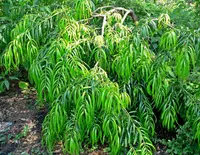
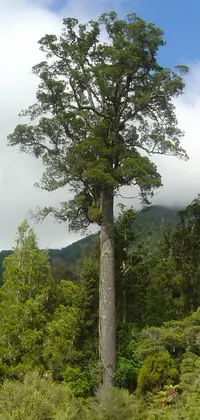
Podocarpus matudae is an evergreen coniferous tree from cloud forests of Mexico and Central America. It naturally forms a tall, narrow column with dense, fine-textured foliage. Leaves are slender and leathery, giving the plant a tidy, architectural look that suits both gardens and large containers in mild climates. Growth is steady rather than fast, which helps it maintain a controlled shape with pruning. It prefers cool to mild conditions, consistent moisture, and well-drained, slightly acidic soil. Understanding how to care for Podocarpus matudae makes it a reliable choice for structured hedges, screens, or specimen plantings in suitable regions.

Care Difficulty
Moderate Care

Light Preference
Partial Shade

Water Requirements
Moderate Water

Temperature Preference
Warm Climate

Hardiness Zone
9–11

Soil Texture
Sandy, Loamy, Organic-rich

Soil pH
Acidic (5.5–6.5), Slightly acidic (6.5–7.0)

Soil Drainage
Well-drained

Fertilization
Minimal (feed rarely)
Scan your plant to receive care tips personalized for your specific plant
Available on iOS and Android
This species prefers bright, indirect light with some gentle direct sun each day.
Watering should keep the root zone evenly moist but never saturated.
Stable, mild temperatures support dense, healthy growth for Podocarpus matudae.
This species tolerates typical indoor humidity but grows best with slightly moist air.
This conifer prefers a well-aerated, free-draining, slightly acidic to neutral substrate.
This species is suitable for container growing when the pot is chosen to support its vertical growth and root system.
Light, balanced feeding supports steady growth without making Podocarpus matudae excessively lush or weak.
Thoughtful pruning keeps Podocarpus matudae dense, healthy, and well-shaped without stressing the plant.
Transplanting or repotting supports root health and structure when this species becomes crowded or root-bound.
Propagation of this species is usually done from semi-hardwood cuttings rather than seed for more predictable results.
Mature plants are moderately cold tolerant but benefit from basic winter protection in colder climates.

Plant Health Check
Not sure what's wrong with your plant? Check your plant's health inside the app.
This species is native to humid montane cloud forests of eastern and southern Mexico and parts of Central America, where it often grows on steep slopes between roughly 1,000–2,500 m, tolerating cool, misty conditions and frequent fog immersion.
In parts of its range, this tree forms an important component of the upper canopy, mixing with broadleaf species such as oaks and magnolias and contributing evergreen structure that stabilizes soils and influences local water cycles through year-round foliage.
Instead of dry, woody cones, it produces small fleshy, berry-like seed cones with a brightly colored receptacle that attracts birds, which then disperse the seeds after eating the soft tissue around them.

Genetic and morphological studies place this species within the podocarp family as one of the few New World conifers adapted to tropical cloud forests, making it an important model for understanding how Southern Hemisphere conifer lineages have diversified into montane tropical habitats.
This species is evergreen, retaining foliage year-round rather than dropping leaves seasonally. Individual needles live several years before being replaced, so the plant maintains a dense, green canopy that suits screening, hedging, and long-term structure in landscapes.
Keep your plants happy and healthy with plant identification, disease detection, and easy care guidance.