Brazilian joyweed Care (Alternanthera brasiliana)

Also known as: Ruby Leaf, purple joyweed
Brazilian joyweed

About Brazilian joyweed

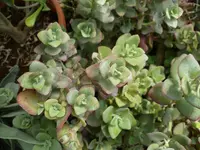
Brazilian joyweed (Alternanthera brasiliana) is a warm-climate perennial often grown as a fast-growing annual in cooler regions. It is valued for its colorful foliage, which ranges from green flushed with purple to deep burgundy, and forms dense, low mounds or spreading groundcover.

This plant is native to tropical regions of Central and South America, where it grows in open, sunny spots. It is considered easy to moderate to grow, thanks to its vigorous habit and tolerance of pruning. Consistent moisture, warmth, and reasonably fertile, well-drained soil support healthy growth and make it easier to care for Brazilian joyweed.

Main Plant Requirements

Care Difficulty

Easy Care

Light Preference

Full Sun

Water Requirements

Regular Water

Temperature Preference

Tropical / Frost Sensitive

Hardiness Zone

9–11

Soil Texture

Loamy, Sandy, Organic-rich

Soil pH

Acidic (5.5–6.5), Slightly acidic (6.5–7.0)

Soil Drainage

Moist but well-drained

Fertilization

Light (every 4–6 weeks)

Get Personalized Care Plan

Scan your plant to receive care tips personalized for your specific plant

Available on iOS and Android

How to Care for the Brazilian joyweed

This sun-loving foliage plant colors best with ample direct light but tolerates some shade in hot climates.

  • Outdoors, aim for 4–6 hours of direct morning sun with light afternoon shade, especially in hot USDA zones 9–11.
  • In cooler regions, Brazilian joyweed can handle full sun all day if soil stays evenly moist and roots do not dry out completely.
  • If stems stretch, leaf color fades, or foliage thins, light is too low; move to a brighter, more open site.

This plant prefers consistently moist, well-drained soil and reacts quickly to both drought and waterlogging.

  • Water when the top 2–3 cm of soil feels dry, allowing moisture to reach the full root zone without leaving the area soggy.
  • Increase watering during hot, dry periods when growth is rapid, and reduce frequency in cooler seasons as evaporation and growth slow.
  • Signs of underwatering include limp, folding leaves and dry edges; yellowing lower leaves and a sour soil smell suggest overwatering and poor drainage for Alternanthera brasiliana.

This warm-climate perennial grows best in consistently mild to hot temperatures without frost exposure.

  • Optimal growth occurs around 70–85°F (21–29°C), with foliage color and density improving in stable warmth.
  • The plant is damaged near 40°F (4°C) and usually killed by freezes below 32°F (0°C), so protect or replant after frost in cooler regions.
  • It tolerates short heat spikes up to about 95°F (35°C) if soil moisture is maintained, but prolonged extreme heat with dry soil can cause leaf scorch and dieback.

This species prefers moderate humidity but usually copes with typical indoor air.

  • Aim for 40–60% humidity to keep foliage dense and reduce leaf-edge browning.
  • It tolerates short dry-air periods, but prolonged air below 30% can cause curled, crispy leaf tips on Brazilian joyweed.
  • Increase humidity with a nearby pebble tray, grouped plants, or a small humidifier rather than misting leaves directly.

Alternanthera brasiliana grows best in loose, fertile, consistently moist but free-draining soil.

  • Use a loamy, organic-rich mix combining roughly 2 parts all-purpose potting mix, 1 part compost, and 1 part perlite or coarse sand.
  • Ensure fast drainage so water does not pool around roots, which increases the risk of rot and fungal problems.
  • Aim for slightly acidic to neutral pH around 6.0–7.0, which supports steady nutrient uptake and healthy foliage color.
  • Improve aeration by avoiding heavy clay-only substrates and breaking up compacted soil before planting or topdressing.

This species is well suited to container growing for compact, colorful foliage displays.

  • Choose a wide, shallow to medium-depth pot to match its spreading root system and reduce the risk of the plant becoming top-heavy.
  • Select a pot material that matches your climate, using terracotta for faster drying in humid areas and plastic for slower drying in hot, dry sites.
  • Place containers where excess water can drain freely and be discarded within 10–15 minutes to avoid prolonged saucer saturation.

Nutrient-rich soil supports strong growth and vivid foliage color in Brazilian joyweed.

  • Use a balanced water-soluble fertilizer (such as 10-10-10 or 20-20-20) diluted to 1/2 strength for container plants.
  • Feed every 2–4 weeks during the warm growing season when the plant is actively producing new leaves.
  • Apply a thin layer of compost around outdoor plants in spring to improve soil structure and slow nutrient release.
  • Reduce feeding to once in late fall or stop entirely in winter when growth slows or stops.

Thoughtful pruning keeps Alternanthera brasiliana dense, colorful, and within bounds.

  • Best time for major shaping is in spring through early summer, once active growth is evident.
  • Use clean, sharp scissors or hand pruners to remove dead, damaged, or crossing stems at their base.
  • Pinch or cut back shoot tips by 2–5 cm to encourage branching and a low, bushy form.
  • Lightly trim spent or lanky stems through the season to maintain compact growth and even foliage color.

Healthy root conditions are important for vigorous growth and color in this plant.

  • Repot or transplant when roots circle the pot, emerge from drainage holes, or when growth becomes noticeably slower.
  • Plan major moves for spring or early summer so Alternanthera brasiliana can re-establish in warm, bright conditions.
  • Typically shift to a pot 2–5 cm wider every 1–2 years, using a well-draining peat-free potting mix.
  • Minimize root stress by watering the plant well before moving, handling the root ball gently, and shading it for several days afterward.

New plants are most often produced from softwood stem cuttings.

  • Take 7–10 cm cuttings from non-flowering shoots in late spring or summer, just below a leaf node.
  • Strip lower leaves, optionally dip the cut end in rooting hormone, and insert into moist, sterile propagation mix.
  • Provide bright, indirect light, 70–80°F warmth, and high humidity until roots form in 1–3 weeks.
  • For seed, sow on the surface of fine mix, keep lightly covered and evenly moist, and maintain gentle bottom heat for best germination.

Cold sensitivity means this species needs protection in regions with freezing winters.

  • Alternanthera brasiliana is frost-tender and usually damaged or killed below about 32°F.
  • In cool climates, grow in containers and move indoors before nighttime temperatures drop below 40°F.
  • Keep overwintered plants in bright light, slightly cooler rooms, and water just enough to prevent the soil from fully drying.
  • In mild climates, apply a 5–8 cm mulch layer over the root zone to buffer short cold spells.

Care Tips

Pinch For Bushiness

Regularly pinch back soft stem tips every 2–3 weeks during active growth to keep plants compact, encourage dense branching, and maintain rich leaf color rather than tall, woody stems.

Color-Maintaining Placement

Rotate containers a quarter turn every 1–2 weeks and avoid shading from taller plants so all sides receive similar light, which helps keep foliage color uniform and prevents one-sided, pale growth when growing Brazilian joyweed.

Seasonal Rejuvenation Cut

Once stems begin to lignify (turn woody), cut the plant back by 1/3–1/2 in late spring or mid-summer to stimulate vigorous new shoots and restore a dense, low mound.

Low Hedge Training

For edging or low borders, plant in a straight or gently curved line, then trim the outer edges with clean shears every 3–4 weeks to build a continuous, even hedge-like strip.

Container Refresh Routine

In containers, gently lift and trim circling roots and replace the top 3–5 cm of potting mix with fresh mix each spring to maintain strong growth without repotting into a much larger pot every year.

Common Pests and Diseases

Spider mites

This pest commonly attacks Alternanthera foliage in hot, dry conditions, causing fine stippling, dulling of leaf color, and webbing between stems and leaves.

Solution

Rinse foliage thoroughly with a strong but controlled stream of water, then increase humidity and reduce heat stress; for persistent infestations, use insecticidal soap or a horticultural oil, ensuring the spray covers both upper and lower leaf surfaces.

Aphids

These insects feed on tender shoots and young leaves, causing distortion, curling, and sticky honeydew that can encourage sooty mold on the colorful foliage.

Solution

Pinch or hose off heavily infested tips, then treat remaining colonies with insecticidal soap or neem oil, repeating every 5–7 days until new growth appears clean and vigorous.

Leaf spot

This disease produces small brown, purple, or black spotting on leaves, which may enlarge and cause premature leaf drop, especially in dense, humid plantings.

Solution

Remove and discard affected leaves, then improve air circulation by thinning crowded stems and avoiding overhead watering; in severe or recurring cases, a copper-based fungicide can be applied according to label directions to protect new foliage.

Nematode damage

This pest problem arises in warm soils where microscopic root-knot nematodes feed on roots, leading to stunted growth, wilting in heat, and poor recovery after pruning.

Solution

Discard severely affected plants and avoid replanting in the same soil; in garden beds, rotate with non-host plants, improve organic matter, and keep Alternanthera in containers with fresh, well-drained potting mix if nematodes are a recurring problem.

Whiteflies

These insects congregate on the undersides of leaves, fly up in a small cloud when disturbed, and weaken plants through sap feeding while producing honeydew that can attract ants.

Solution

Use yellow sticky traps to monitor and reduce adult numbers, regularly wash the undersides of leaves with water, and apply insecticidal soap or horticultural oil in repeated treatments until populations decline and new growth appears clean, which is an important part of Alternanthera brasiliana care.

Interesting Facts

Short‑day flowering response

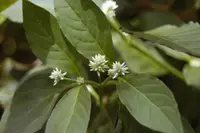
This species flowers more readily when days are shorter than nights, a photoperiod response that can trigger abundant small white flower clusters in late summer to fall in many warm regions.

Naturally sprawling subshrub

In suitable frost‑free climates it develops a woody, much‑branched base and can form low, mounded thickets rather than remaining a soft herb, which is why it is sometimes used as a semi‑woody border or hedge in tropical landscapes.

Color linked to light

The purple or bronze leaf coloration intensifies in high light and tends to fade to greener tones in shade, reflecting the plant’s production of anthocyanin pigments that help protect the leaves from strong sun.

Botan icon

Did you know?

In some tropical and subtropical areas outside its native range, Alternanthera brasiliana has naturalized along roadsides and disturbed sites, where its dense, ground‑hugging growth can help stabilize exposed soil and reduce small‑scale erosion.

FAQs about Brazilian joyweed

Yellowing leaves usually point to root stress, often from compacted or poorly drained soil, nutrient depletion, or old foliage aging out. Improve drainage, refresh soil with balanced fertilizer, and remove the oldest, most faded leaves.

Grow Healthy Plants with Botan Care

Keep your plants happy and healthy with plant identification, disease detection, and easy care guidance.

Botan plant care app — identify plants on mobile

Explore More Plants