Rotate For Symmetry
Rotate the pot 90° every 2–3 weeks so the plant receives light from different directions and develops a balanced, upright clump instead of leaning toward one side.

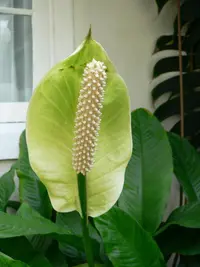
Snow Flower (Peace Lily), Spathiphyllum floribundum, is a tropical, evergreen flowering plant commonly grown indoors for its white spathes and glossy, lance-shaped leaves. It forms compact clumps and slowly expands from the base, staying manageable in containers.
In nature, it grows on the shady forest floor in Central and South America, where it receives filtered light and consistent humidity. This background explains its preference for stable indoor conditions and moderate, indirect light.
The plant is considered relatively forgiving, tolerating brief neglect and adapting to typical home environments. Understanding how to care for Snow Flower (Peace Lily) mainly involves providing even moisture, free-draining potting mix, and protection from harsh sun or cold drafts.

Care Difficulty
Easy Care

Light Preference
Bright Indirect Light

Water Requirements
Keep Soil Moist

Temperature Preference
Tropical / Frost Sensitive

Hardiness Zone
11–12

Soil Texture
Loamy, Peaty, Organic-rich

Soil pH
Acidic (5.5–6.5), Slightly acidic (6.5–7.0)

Soil Drainage
Moist but well-drained

Fertilization
Light (every 4–6 weeks)
Scan your plant to receive care tips personalized for your specific plant
Available on iOS and Android
This tropical understory plant prefers soft, filtered light rather than direct sun.
This species prefers evenly moist but not saturated soil.
This plant grows best in stable, warm, frost-free conditions.
This species benefits from consistently moderate to high humidity for best foliage quality.
This plant prefers a loose, moist, organic-rich potting medium that drains freely yet holds some water.
This species is well suited to container growing in homes and shaded patios.
Spathiphyllum floribundum responds well to light, consistent feeding during active growth.
Pruning Spathiphyllum floribundum is simple and mainly focused on cleaning and shaping the plant.
This species grows well slightly root-bound but benefits from periodic repotting to maintain vigor.
Spathiphyllum floribundum is most reliably propagated by division rather than from seed.
This tropical plant is frost-sensitive and needs warm indoor conditions during winter in most climates.

Plant Health Check
Not sure what's wrong with your plant? Check your plant's health inside the app.
This species can produce its characteristic white inflorescences even under relatively low indoor light, thanks to efficient use of diffuse light and a photosynthetic system adapted to shaded tropical forest understories.
Its broad, glossy leaves shed water quickly, a trait that helps reduce the time leaf surfaces stay wet in its native humid habitats, which in turn limits some fungal and bacterial problems on the foliage.
The showy white “flower” is mainly a bract, a modified leaf that surrounds a central spadix; this contrast of white bract and densely packed tiny flowers on the spadix helps guide pollinators more effectively than the true flowers alone.
Yellowing leaves usually result from overwatering, poor drainage, or natural aging of older foliage. Check the root zone for sogginess, improve drainage, and remove a few oldest leaves rather than healthy, newer ones.
Keep your plants happy and healthy with plant identification, disease detection, and easy care guidance.