Encourage Deep Rooting
During establishment, water less frequently but deeply and allow the top 5–8 cm of soil to dry between waterings so roots anchor strongly and better tolerate drought as the plant matures.

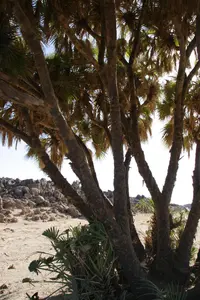
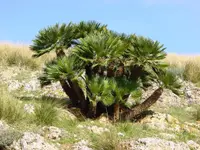
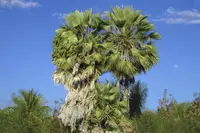
Doum palm (Hyphaene thebaica) is a slow-growing, branching palm tree native to arid and semi-arid regions of North and East Africa and parts of the Middle East. It often develops multiple forked trunks with stiff, fan-shaped leaves forming a rounded crown.
This species is adapted to hot, dry climates and poor, sandy or rocky soils, which makes it drought tolerant but less suited to cool, wet regions. Its fibrous roots and tough foliage handle wind and intense sun well, but young plants are sensitive to prolonged cold.
Understanding how to care for doum palm starts with providing strong light, warmth, and sharply draining soil while avoiding waterlogged conditions.

Care Difficulty
Moderate Care

Light Preference
Full Sun

Water Requirements
Low Water

Temperature Preference
Warm Climate

Hardiness Zone
10–12

Soil Texture
Sandy, Loamy, Rocky

Soil pH
Neutral (7.0), Slightly alkaline (7.0–7.5)

Soil Drainage
Well-drained

Fertilization
Minimal (feed rarely)
Scan your plant to receive care tips personalized for your specific plant
Available on iOS and Android
Hyphaene thebaica thrives in strong sun typical of dry, open landscapes.
This desert-adapted palm prefers infrequent, deep watering rather than constant moisture.
This species comes from hot, arid regions and is adapted to high temperatures and strong sun.
This desert palm tolerates very dry air and usually does not need special humidity management indoors.
Hyphaene thebaica prefers a very free-draining, sandy substrate that mimics arid, riverbank conditions.
This palm can be grown in containers for many years if the pot supports its deep, anchoring root system.
Hyphaene thebaica grows well in lean soils and needs only light, occasional feeding in cultivation.
Hyphaene thebaica benefits from minimal structural pruning focused on safety and health.
This palm is usually grown in the ground, so focus on careful transplanting of young plants rather than frequent repotting.
Hyphaene thebaica is propagated almost exclusively from seed and germination is slow and variable.
This heat-loving palm is not frost hardy and needs careful winter management in cooler climates.

Plant Health Check
Not sure what's wrong with your plant? Check your plant's health inside the app.
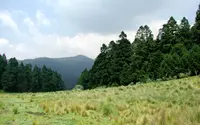
This palm often establishes along seasonal riverbeds and floodplains in the Sahara and Sahel, tolerating both intense drought and periodic flooding better than many other palms.
Mature trees typically develop a branched, Y-shaped trunk structure, which is unusual among palms that normally grow a single unbranched stem.
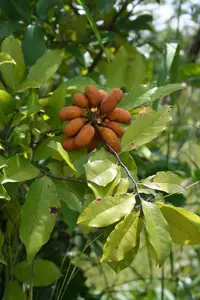
Its hard, oval fruits have a very fibrous, gingerbread-scented pulp that is eaten locally and used for drinks, while the seeds are extremely hard and traditionally carved or used as prayer beads.

The doum palm has been documented from ancient Egyptian archaeological sites, including tombs, indicating that its fruits and wood were used and valued by Nile Valley cultures for thousands of years.
Brown leaf tips or edges usually result from drought stress, hot dry winds, or accumulated salts from fertilizer or hard water. Remove only fully dead fronds and adjust watering quality and frequency rather than cutting green tissue.
Keep your plants happy and healthy with plant identification, disease detection, and easy care guidance.