Use stable supports
Install discreet stakes or low metal hoops early in the season so stems can be loosely tied before they reach full height, which prevents wind damage and keeps flower spikes upright and visible.

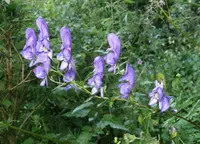
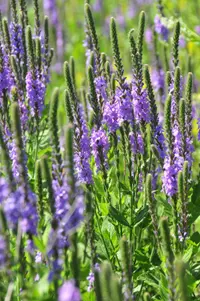
Manchurian monkshood, Aconitum variegatum, is a hardy, herbaceous perennial grown mainly for its tall spikes of hooded blue to violet flowers. It forms upright clumps with deeply divided, dark green leaves that give a refined, architectural look to mixed borders.
This species occurs naturally in parts of central and eastern Europe, often in cool mountain meadows and woodland edges. It prefers consistently moist, fertile, well-drained soil and thrives in cool summers with partial sun.
Manchurian monkshood suits gardeners who can offer stable moisture and are comfortable handling a strongly toxic plant, which makes it less suitable for households with children or pets. Anyone looking up how to care for Manchurian monkshood should always factor in both its cool, moist growing needs and its toxicity.

Care Difficulty
Moderate Care

Light Preference
Partial Shade

Water Requirements
Regular Water

Temperature Preference
Cold Hardy

Hardiness Zone
3–7

Soil Texture
Loamy, Silty, Organic-rich

Soil pH
Acidic (5.5–6.5), Slightly acidic (6.5–7.0)

Soil Drainage
Moist but well-drained

Fertilization
Minimal (feed rarely)
Scan your plant to receive care tips personalized for your specific plant
Available on iOS and Android
This perennial prefers cool conditions with moderate light exposure for steady growth.
This plant prefers consistently moist, cool soil without becoming waterlogged.
This hardy perennial is adapted to cool to mild temperate climates with cold winters.
This species handles typical outdoor humidity but benefits from moderately moist air in hotter regions.
This species prefers cool, moist, well-structured ground that stays evenly damp but never waterlogged.
This plant can be grown in containers, but only where a large, stable pot can support its tall, upright growth.
This perennial benefits from modest feeding in richer garden soils but does not need heavy fertilization.
Pruning needs for Aconitum variegatum are moderate and focus on cleanliness and encouraging fresh growth.
This plant is usually grown in the ground, with transplanting done infrequently to avoid root disturbance.
Propagation is possible but somewhat specialized, as all parts of this plant are poisonous and must be handled carefully.
This perennial is generally cold hardy in temperate climates and usually needs minimal winter attention.

Plant Health Check
Not sure what's wrong with your plant? Check your plant's health inside the app.
This species produces hooded blue to violet flowers with a pronounced helmet shape, formed by the upper sepal arching over the petals, an adaptation that guides pollinators such as bumblebees into the flower.
In the wild, it typically grows in cool, moist habitats like mountain ravines, forest edges, and stream banks across central and eastern Europe, where consistent soil moisture and partial shade reduce heat stress on the foliage.
Populations show noticeable variability in flower color intensity, spotting, and stem height, which has led botanists to describe several subspecies and forms within what is currently treated as A. variegatum.
This species performs best outdoors in cool, temperate climates with moist, humus-rich soil. It dislikes warm, dry indoor air and low light. Manchurian monkshood indoor care is generally unreliable except in very cool, bright conservatories.
Keep your plants happy and healthy with plant identification, disease detection, and easy care guidance.