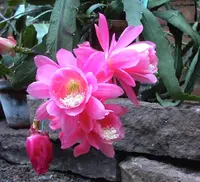



Cactus (Disocactus phyllanthoides) Light Needs

Cactus grows best in bright indirect or filtered light, with only gentle morning sun if acclimated.

Light Preference

Bright Indirect Light

Disocactus phyllanthoides Light Requirements

This epiphytic forest cactus is native to Mexico, where it grows above the forest floor in warm, humid habitats. Its stems receive broken sunlight through an overhead canopy rather than open desert sun, with brighter conditions during canopy gaps or drier seasons.

In cultivation, that background translates to strong ambient light and protection from harsh midday exposure. Its preferred light is bright indirect or filtered light.

  • Ideal exposure:

    Cactus needs about 6–8 hours of bright indirect or filtered light daily, including up to 1–2 hours of gentle direct morning sun.

  • Direct sun limit:

    Brief early sun is tolerated, but strong midday or afternoon sun can scorch the flattened stems.

  • Lower light:

    Bright shade is tolerated, although flowering and compact growth are usually better in stronger filtered light.

  • Seasonal caution:

    Increase sun exposure gradually in spring, since stems grown in dimmer winter light can burn quickly.

Indoors, place it where daylight is bright but direct sun stays gentle.

NConditional
North-facing window:

A north-facing window can work only if it is very bright and unobstructed; growth and flowering may be weaker in dim rooms.

EBest
East-facing window:

An east-facing window is often best because it gives bright light and mild morning sun without intense afternoon heat.

SConditional
South-facing window:

A south-facing window is suitable when the plant sits 2–4 ft back or direct sun is softened by a sheer curtain.

WConditional
West-facing window:

A west-facing window is conditional because afternoon sun can be hot; use distance or filtering to prevent stem burn.

Recheck placement as seasons shift, because winter sun is weaker and summer sun is sharper.

Too much light usually appears on the most exposed stem surfaces.

Bleached patches:

Pale cream or whitish areas can appear where strong sun hits the flat stems.

Tan scarring:

Sunburn may dry into firm tan marks, especially after a sudden move into brighter exposure.

Reddened stems:

A bronze or red cast can signal protective pigment from light that is near the upper limit.

Papery surfaces:

The sun-facing side may look dull or slightly papery after repeated harsh afternoon rays.

Move Disocactus phyllanthoides to bright filtered light and block direct afternoon sun. If direct sun is desired, reintroduce only gentle morning exposure over several days.

Low light usually shows up in the shape of new growth first.

  • Stretched growth:

    New stem sections may become longer, narrower, or weaker as they reach toward brighter light.

  • Leaning habit:

    Growth may angle strongly toward the nearest window instead of hanging or arching evenly.

  • Reduced flowering:

    Flowering is less likely when the plant receives only dim light through the active season.

  • Small new stems:

    Fresh growth may stay thin and undersized compared with older, well-lit sections.

Move Disocactus phyllanthoides gradually into brighter filtered light, starting with a short distance change. Avoid sudden direct sun after a low-light period.

If the ideal spot is unavailable, choose the brightest room with filtered sun rather than a dim corner; this best matches Disocactus phyllanthoides light needs.

Set the pot within 2–4 ft of a bright window when rays are softened, or move it back if direct afternoon sun reaches the stems.

Avoid deep interior shelves because they usually cannot support steady growth or flowering.

Get Personalized Care Plan

Scan your plant to receive care tips personalized for your specific plant

FAQ

The best light for Cactus is bright indirect or filtered light for most of the day. A little gentle morning sun is useful, but harsh afternoon exposure can mark the stems.

More Plant Light Guides

Get the Botan App

Discover how to care for your plants with Botan.

Botan app identifying a plant with a phone camera
How Often to Water Fruit Trees

7 min read · 11 Aug 2026

How Often to Water Fruit Trees

Irrigation needs change as roots establish and weather shifts. This guide gives practical starting intervals, explains how soil and tree type change them, and shows how to recognize both excess moisture and drought stress.

Plant Care
How Often to Water Fruit Trees
Plants That Repel Mosquitoes – 10 Effective Choices

8 min read · 6 Jul 2026

Plants That Repel Mosquitoes – 10 Effective Choices

Plants that repel mosquitoes can help mask human scent naturally and make outdoor spaces more comfortable. Explore the most effective options, their benefits and drawbacks, and choose the right plant for your space.

Plant Recommendations
Plants That Repel Mosquitoes – 10 Effective Choices
8 Glow-in-the-Dark Plants and Fungi That Really Exist

8 min read · 6 Nov 2026

8 Glow-in-the-Dark Plants and Fungi That Really Exist

Plants that glow in the dusk really exist. Some of them produce their own light, while others need UV exposure or special treatments. Explore eight fascinating examples, including glowing petunias, bioluminescent mushrooms, fluorescent flowers, and experimental succulents.

Plant Recommendations
8 Glow-in-the-Dark Plants and Fungi That Really Exist