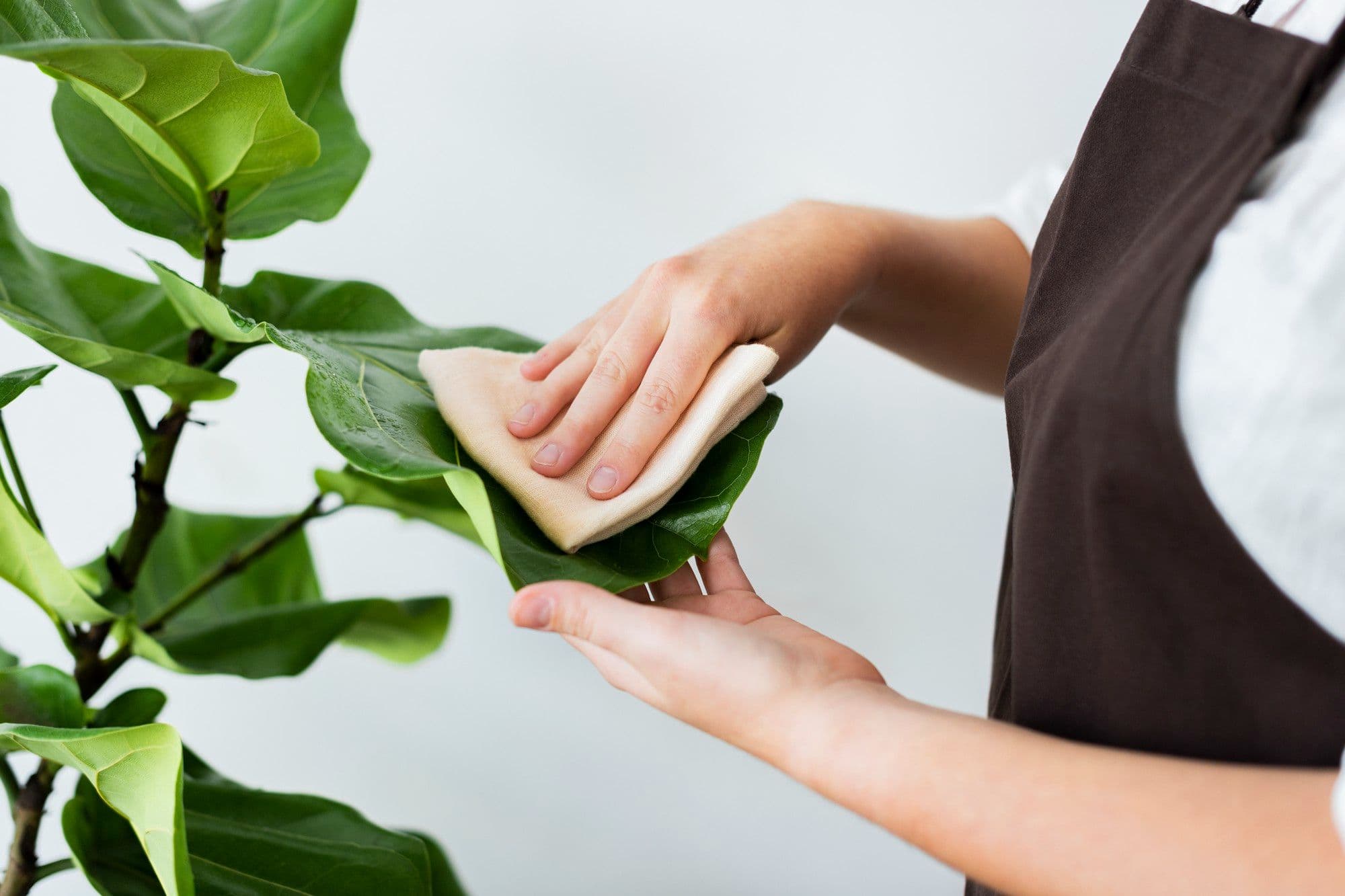




Fiddleleaf Fig (Ficus lyrata) Light Needs

Fiddleleaf Fig grows best in bright indirect light with a few hours of gentle morning sun when acclimated.

Light Preference

Bright Indirect Light

Ficus lyrata Light Requirements

Ficus lyrata is native to lowland tropical forests of western Africa, where young plants grow in warm, humid conditions with overhead canopy and shifting filtered light. As it matures, it may receive brighter broken sun near forest edges or gaps.

Indoors, this background explains its need for strong brightness without harsh, prolonged sun on the leaves. Preferred light is bright indirect light.

  • Ideal exposure:

    Ideal exposure: Ficus lyrata needs about 6–8 hours of bright indirect or filtered light daily, including up to 2–3 hours of gentle direct morning sun.

  • Gentle sun:

    Early morning or late afternoon sun is usually tolerated after gradual acclimation, but hot midday rays can scorch leaves.

  • Lower light:

    It can survive in medium light, but growth often slows and new leaves may stay smaller.

  • Afternoon risk:

    West or unfiltered south sun is safest when softened by distance from glass or a sheer curtain.

Indoors, window direction strongly affects whether the plant receives enough brightness without leaf scorch.

NConditional
North-facing window:

Use only if the window is large, unobstructed, and bright enough to cast a soft shadow for several hours.

EBest
East-facing window:

Place it close to an east-facing window where it can receive bright morning light and indirect brightness for the rest of the day.

SSuitable
South-facing window:

Place it 3–6 ft from the glass or use a sheer curtain so leaves receive strong light without harsh midday sun.

WConditional
West-facing window:

Use a west-facing window only with distance from the glass or filtering to reduce hot afternoon rays.

Choose the brightest safe exposure available, then adjust distance or filtering if leaf surfaces show sun stress.

Excess light usually appears on the leaves facing the strongest window.

Sun-facing patches:

Tan or pale brown dry areas may form on upper leaves after sudden direct sun.

Bleached surfaces:

Flat, faded areas can appear where intense rays hit the leaf surface for several hours.

Crisp scorch marks:

Irregular crispy spots near a bright window may follow hot afternoon exposure, especially through glass.

Rapid change damage:

Damage is more likely when a plant is moved from lower light into direct sun without acclimation.

Move it back from harsh rays or add a sheer curtain. Existing scorched areas will not turn green again, so judge recovery by new growth.

Low light tends to show in new growth and overall shape before severe decline.

  • Leaning growth:

    The stem or canopy may lean toward the nearest window as it searches for stronger light.

  • Wide spacing:

    New leaves may appear farther apart, giving the plant a stretched, sparse look.

  • Small new leaves:

    Fresh leaves may develop smaller than older leaves during the active growing season.

  • One-sided canopy:

    The brighter side may produce fuller growth while the shaded side stays thin.

  • Seasonal slowdown:

    Growth may pause for long periods in spring or summer despite otherwise stable care.

Move it gradually into brighter indirect light, not sudden direct sun. Improvement is most visible in new growth rather than older leaves.

If ideal brightness is not available, choose the brightest area that avoids harsh afternoon rays. Place it where a person standing at leaf level can see open sky through the window.

Rotate the pot a quarter turn every 1–2 weeks so the canopy develops more evenly. Add a sheer curtain if direct sun creates hot patches.

A dim corner is unsuitable because it usually cannot support strong, steady new growth.

Get Personalized Care Plan

Scan your plant to receive care tips personalized for your specific plant

FAQ

This plant needs bright indirect light for most of the day. A spot with strong ambient brightness and limited gentle direct sun supports the best indoor growth.

Everything About Fiddleleaf Fig

More Plant Light Guides

Get the Botan App

Discover how to care for your plants with Botan.

Botan app identifying a plant with a phone camera
Plants That Repel Mosquitoes – 10 Effective Choices

8 min read · 6 Jul 2026

Plants That Repel Mosquitoes – 10 Effective Choices

Plants that repel mosquitoes can help mask human scent naturally and make outdoor spaces more comfortable. Explore the most effective options, their benefits and drawbacks, and choose the right plant for your space.

Plant Recommendations
Plants That Repel Mosquitoes – 10 Effective Choices
Best Time to Mow Lawn – A Complete Guide

5 min read · 10 Aug 2026

Best Time to Mow Lawn – A Complete Guide

Explore when to mow your lawn for its health and a pleasant green color. Find out the best time for this task during the summer heat, and follow practical tips for correctly cutting the grass, and learn common mistakes to avoid.

Plant Care
Best Time to Mow Lawn – A Complete Guide
10 Best Plant Care Apps to Keep Your Plants Healthy in 2026

13 min read · 15 Jul 2026

10 Best Plant Care Apps to Keep Your Plants Healthy in 2026

We’ve tested, reviewed, and compared the most popular, high-quality plant care apps to make it easier for you to find the best one. Explore the features, see how they meet your priorities, and make an informed choice.

Plant Recommendations
10 Best Plant Care Apps to Keep Your Plants Healthy in 2026