


Jewel Orchid (Ludisia discolor) Light Needs

Jewel Orchid grows best in bright indirect light with gentle morning sun or filtered shade.

Light Preference

Bright Indirect Light

Ludisia discolor Light Requirements

In its native tropical forests of Southeast Asia, this terrestrial orchid grows on the shaded forest floor, where taller vegetation filters the sun. Light is usually dappled, with brief softer sun possible at forest edges or during seasonal canopy changes, not open midday exposure.

That background explains why cultivated plants stay healthiest with steady brightness and protection from harsh rays. Preferred light is bright indirect or filtered light.

  • Ideal exposure:

    Jewel Orchid needs about 6–8 hours of bright indirect or filtered light daily, including up to 1–2 hours of gentle direct morning sun.

  • Safe direct sun:

    Early sun is tolerated when exposure is mild, but full midday or afternoon sun can scorch the velvety leaves.

  • Lower light:

    Shade is tolerated, yet very dim rooms often reduce leaf contrast and slow compact growth.

  • Afternoon heat:

    West or unfiltered south light usually needs distance or a sheer curtain to soften intense rays.

Indoors, place it where light is bright but direct sun is brief or filtered.

NConditional
North-facing window:

Use a north-facing window only if it is large, unobstructed, and the plant sits close to the glass.

EBest
East-facing window:

An east-facing window gives the safest balance of bright light and gentle morning sun.

SConditional
South-facing window:

Keep it several feet back or behind a sheer curtain so midday sun does not strike the leaves.

WConditional
West-facing window:

Use a west-facing window only with filtering or extra distance, since afternoon sun is usually too intense.

Adjust placement seasonally if leaf color fades, growth stretches, or sun patches appear.

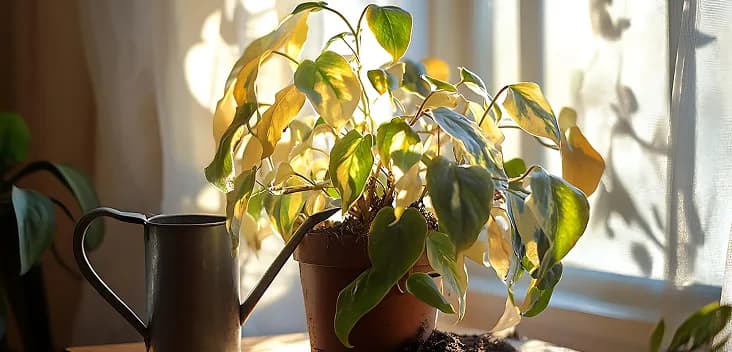
Excess light usually shows first on exposed leaves.

Faded color:

Leaves may look washed out or less velvety after several days in stronger sun.

Bleached patches:

Pale tan or silvery areas can appear where direct rays hit the same leaf surface.

Scorched spots:

Dry brown patches may form after sudden afternoon sun, especially near glass.

Curling or drooping:

Leaves may angle away from the window or curl slightly during the brightest part of the day.

Move Ludisia discolor back from the glass or filter the sun with a sheer curtain. Keep the new position bright, but avoid direct midday and afternoon exposure.

Low light often causes gradual growth changes rather than sudden damage.

  • Stretched stems:

    New growth may lengthen toward the brightest side instead of staying compact.

  • Wide leaf spacing:

    Leaves can form farther apart along the stem when available light is weak.

  • Muted markings:

    The pale leaf veins may look less distinct in a very dim location.

  • Little flowering:

    Flower spikes may be sparse or absent if the plant stays in low light for many months.

  • Small new leaves:

    New leaves may emerge smaller during the active growing season.

Move it to a brighter indirect position, or place it closer to a suitable window in winter. Increase light gradually if it has been in shade.

If ideal brightness is not available, choose the brightest area that stays protected from hot direct rays; this is usually better than a dim corner.

Soften any sharp sun with a sheer curtain, or move the pot 2–4 ft back from the glass.

Rotate the pot a quarter turn every 1–2 weeks to keep growth even and reduce leaning.

Get Personalized Care Plan

Scan your plant to receive care tips personalized for your specific plant

FAQ

This plant does best in bright indirect or filtered light for most of the day. Gentle morning sun can be helpful, but strong direct sun is not appropriate.

Everything About Jewel Orchid

More Plant Light Guides

Get the Botan App

Discover how to care for your plants with Botan.

Botan app identifying a plant with a phone camera
Plants That Repel Mosquitoes – 10 Effective Choices

8 min read · 6 Jul 2026

Plants That Repel Mosquitoes – 10 Effective Choices

Plants that repel mosquitoes can help mask human scent naturally and make outdoor spaces more comfortable. Explore the most effective options, their benefits and drawbacks, and choose the right plant for your space.

Plant Recommendations
Plants That Repel Mosquitoes – 10 Effective Choices
12 Best Plants for Bathroom That Thrive in Humid Conditions

9 min read · 29 Sept 2026

12 Best Plants for Bathroom That Thrive in Humid Conditions

Discover the 12 best plants for bathroom spaces. Each pick comes with its own advantages, plus light, humidity, watering, and placement tips. Take a look and match the plant to your specific bathroom.

Plant Recommendations
12 Best Plants for Bathroom That Thrive in Humid Conditions
12 Best Plants That Repel Spiders For Your Home and Garden

8 min read · 24 Jul 2026

12 Best Plants That Repel Spiders For Your Home and Garden

Spiders constantly appear in places you don't want them. A few common plants can help repel them using scent alone. Here are 12 options suitable for both indoors and outdoors, plus care tips for each.

Plant Recommendations
12 Best Plants That Repel Spiders For Your Home and Garden