


Chinese Banyan (Ficus microcarpa) Light Needs

Chinese Banyan grows best in bright indirect light, with some gentle direct sun when acclimated.

Light Preference

Bright Indirect Light

Ficus microcarpa Light Requirements

In its native tropical and subtropical habitats, this species grows where light changes with age and setting. Young plants often start in partial shade or filtered light, while mature trees can stand in open, bright conditions with direct sun.

That range explains its flexibility in cultivation. Indoors, growth is strongest when light is bright but not harsh. Preferred light is bright indirect light with some gentle sun.

  • Ideal exposure:

    Chinese Banyan needs about 6–8 hours of bright indirect or filtered light daily, including 2–3 hours of gentle direct morning sun.

  • Direct sun:

    Acclimated plants can tolerate more direct sun, especially outdoors, but sudden hot afternoon exposure can scorch leaves.

  • Lower light:

    It can survive in shade or lower indoor light, but growth usually becomes slower and less dense.

  • Best timing:

    Morning sun is safer than strong late-day sun through glass, especially in summer.

Indoors, place it where the canopy receives bright light for most of the day.

NConditional
North-facing window:

A north-facing window is usable only if it is very bright and unobstructed; growth may be thinner in dim rooms.

EBest
East-facing window:

An east-facing window gives gentle morning sun and bright indirect light, which suits steady indoor growth.

SSuitable
South-facing window:

A south-facing window works well if the plant sits 2–4 ft back or behind a sheer curtain during intense midday sun.

WConditional
West-facing window:

A west-facing window can work if hot afternoon rays are filtered or the plant is set several feet from the glass.

Avoid moving it abruptly from shade to strong sun; increase exposure over 1–2 weeks.

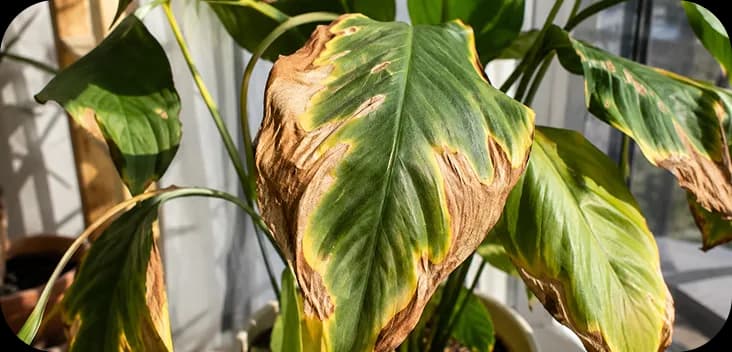
Excess light usually appears after sudden exposure to strong sun.

Bleached patches:

Leaves may develop pale tan or whitish areas on the sun-facing side, especially near a hot window.

Crisp sun spots:

Burned areas can dry to brown patches that do not regain green color.

Rolled leaves:

Newer leaves may cup or curl slightly when direct sun and heat are too intense.

Uneven canopy:

The side facing harsh light may look duller or thinner than shaded inner growth.

Move the plant out of direct afternoon sun and use a sheer curtain if light comes through hot glass. Keep the new position bright, then acclimate slowly if more sun is desired.

Weak light changes growth before it causes obvious decline. Ficus microcarpa can tolerate shade, but it usually looks thinner indoors when light stays low.

  • Leaning growth:

    New shoots may angle toward the nearest window instead of filling the canopy evenly.

  • Long internodes:

    Spaces between leaves can widen, giving branches a stretched, sparse look.

  • Small new leaves:

    Fresh leaves may emerge smaller than older leaves during the active growing season.

  • Slow renewal:

    Pruning cuts may produce fewer new shoots when the plant lacks usable light.

Move it to a brighter position with indirect light first. Increase direct sun gradually so shaded leaves do not scorch.

If ideal light is limited, choose the brightest room and keep the plant close enough to receive clear sky light rather than reflected room light.

Rotate the pot a quarter turn every 1–2 weeks to keep growth balanced, and use a sheer curtain when direct sun feels hot on your hand.

A dim corner away from the window is a poor long-term setup because it encourages sparse growth.

Get Personalized Care Plan

Scan your plant to receive care tips personalized for your specific plant

FAQ

Chinese Banyan light requirements are best met with 6–8 hours of bright indirect or filtered light daily, with a few hours of gentle direct morning sun if the plant is acclimated.

Everything About Chinese Banyan

More Plant Light Guides

Get the Botan App

Discover how to care for your plants with Botan.

Botan app identifying a plant with a phone camera
How to Increase Humidity for Plants – 8 Simple Ways That Work

8 min read · 14 Aug 2026

How to Increase Humidity for Plants – 8 Simple Ways That Work

Dry indoor air stresses a lot of houseplants. You usually notice it first in the browning leaf tips. This guide describes 8 simple ways to raise the moisture around your plants, from humidifiers to pebble trays.

Plant Care
How to Increase Humidity for Plants – 8 Simple Ways That Work
How to Tell if a Plant Is Dead

6 min read · 19 Aug 2026

How to Tell if a Plant Is Dead

A plant can lose its leaves, stop growing, or collapse and still remain alive. A closer look at the stems, roots, bulbs, and tubers can show whether the plant still has a chance to recover.

Beginner Guides
How to Tell if a Plant Is Dead
How to Mist Plants – Proper Technique and Common Mistakes

7 min read · 30 Jul 2026

How to Mist Plants – Proper Technique and Common Mistakes

Find out when misting works well and when to avoid it. Here, you’ll find detailed information about compatible and incompatible species, tips on how often to mist plants and do it correctly, and some great alternatives for raising humidity.

Beginner Guides
How to Mist Plants – Proper Technique and Common Mistakes