Encourage compact form
Rotate the container a quarter turn every 2–3 weeks so all pads receive similar light, which keeps the plant low, dense, and less likely to sprawl or topple.


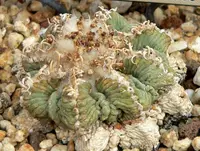
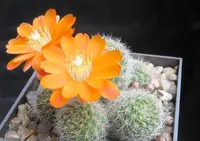
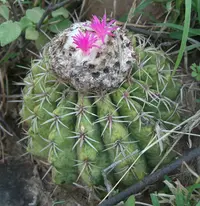
Airampoa soehrensii is a small, clumping cactus from high-altitude regions of Argentina and Bolivia. It forms low mats of jointed, oval pads with short spines. In suitable conditions it produces showy, funnel-shaped flowers, often yellow to orange, followed by small, dry fruits. Its compact size and segmented growth make it suitable for pots, rock gardens, and collectors of hardy cacti. This species is adapted to intense sun, strong temperature swings, and very lean, fast-draining soils, which makes overwatering its main vulnerability. Once its basic needs are understood, it is relatively straightforward to care for Airampoa soehrensii in a bright, dry setting.

Care Difficulty
Easy Care

Light Preference
Full Sun

Water Requirements
Low Water

Temperature Preference
Warm Climate

Hardiness Zone
8–11

Soil Texture
Sandy, Loamy, Rocky

Soil pH
Slightly acidic (6.5–7.0), Neutral (7.0)

Soil Drainage
Well-drained

Fertilization
Minimal (feed rarely)
Scan your plant to receive care tips personalized for your specific plant
Available on iOS and Android
This desert cactus thrives in strong light but still benefits from some protection from extreme afternoon sun.
This species prefers infrequent, deep watering that allows the soil to dry thoroughly between soakings.
This cactus tolerates wide temperature swings but has clear limits for safe growth and overwintering.
This cactus prefers dry air and does not need raised humidity.
This species needs very fast-draining, mineral-rich soil to prevent root and stem rot.
This species is suitable for container growing, especially in colder or wetter climates.
This hardy cactus from arid habitats has low nutrient needs, so fertilization should stay light and infrequent.
This species needs minimal pruning, mainly for safety, appearance, and plant health.
Container-grown plants appreciate occasional transplanting to maintain drainage and root health.
This cactus is commonly propagated from stem pads, with seeds used mainly for larger-scale growing.
Mature plants are quite cold tolerant when kept dry, but container specimens need more attention in winter.

Plant Health Check
Not sure what's wrong with your plant? Check your plant's health inside the app.
This cactus forms chains of small, jointed pads that easily detach at natural weak points, allowing the plant to spread vegetatively across the ground in its native Andean habitats.
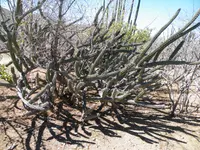
It is native to high-altitude regions of Argentina and Bolivia, where it tolerates intense solar radiation, strong winds, and large day–night temperature swings typical of the Central Andes.
Compared with many lowland cacti, this species shows notable tolerance to subfreezing temperatures when kept very dry, an adaptation linked to its occurrence in cold, high-elevation environments.

Airampoa soehrensii belongs to a small Andean group of opuntioid cacti that were split from Opuntia based on detailed flower, seed, and stem morphology as well as molecular studies, making it a good example of how modern taxonomy combines genetic and anatomical data to redefine cactus genera.
This species performs best outdoors in full sun and very well-drained, gritty soil. It can be kept indoors only in the brightest possible spot, often with supplemental light. Outdoors, airflow and temperature swings support stronger, more compact growth.
Keep your plants happy and healthy with plant identification, disease detection, and easy care guidance.