


Rotate For Symmetry
Turn the pot 90° every 2–3 weeks so the clumps develop evenly and the stems do not lean or distort toward the strongest light source.

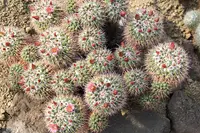
Mother of Hundreds, Mammillaria compressa, is a compact, clustering cactus from central Mexico. It forms dense mounds of rounded stems covered with many short, closely set spines. Small pink to reddish flowers often ring the tops of the stems, followed by decorative, elongated red fruits that add seasonal interest. This growth habit makes it a popular choice for containers and rock gardens. The species is generally considered easy to grow if kept in bright light, low humidity, and very well-drained, gritty soil. It dislikes prolonged cold and excess moisture, so understanding how to care for Mother of Hundreds helps prevent rot and other stress problems.

Care Difficulty
Easy Care

Light Preference
Full Sun

Water Requirements
Low Water

Temperature Preference
Warm Climate

Hardiness Zone
9–11

Soil Texture
Sandy, Loamy, Rocky

Soil pH
Slightly acidic (6.5–7.0), Neutral (7.0)

Soil Drainage
Well-drained

Fertilization
Minimal (feed rarely)
Scan your plant to receive care tips personalized for your specific plant
Available on iOS and Android
This cactus prefers bright, direct light in arid or semi-arid conditions.
This species stores water in its stems and must dry well between waterings.
This cactus prefers warm, dry air with a marked difference between summer and winter conditions.
This cactus thrives in dry air and rarely needs extra humidity.
Use a very fast-draining, mineral-rich mix that dries quickly between waterings.
This species is very suitable for container growing.
Mammillaria compressa needs only light, focused feeding during its active growing season in spring and summer.
Mammillaria compressa requires minimal pruning, mainly for health and appearance rather than shaping.
This cactus prefers to stay slightly root-bound and only needs repotting when growth or root space is clearly limited.
Mammillaria compressa is commonly propagated from offsets, with seeds as a slower alternative.
This species needs cool, dry winter conditions and is not suited to prolonged freezing outdoors in most climates.

Plant Health Check
Not sure what's wrong with your plant? Check your plant's health inside the app.
This species produces its small pink to reddish flowers in a distinctive ring or several rings around the upper part of the stem, following the pattern of the tubercles. Flowering usually concentrates in late winter to spring in its native habitat in central Mexico.
The plant branches freely from the base, producing many offsets that stay tightly clustered. Over time this growth habit creates broad, cushion-like colonies rather than tall solitary stems.
Although often described as having white radial spines and darker central spines, wild populations can show noticeable variation in spine color and length. Local forms may appear almost uniformly pale or display contrasting darker central spines that emphasize the plant’s geometric structure.

In parts of its native range in central Mexico, dense cushions of this species help stabilize shallow, rocky soils on slopes, where its clustered roots and tight mounds reduce erosion and create small microhabitats for insects and other small organisms.
Lack of flowers usually comes from insufficient light, too much fertilizer, or a pot that is oversized. Cool, bright, dry winter rest encourages buds. Avoid frequent repotting, and use a lean, gritty cactus mix.
Keep your plants happy and healthy with plant identification, disease detection, and easy care guidance.

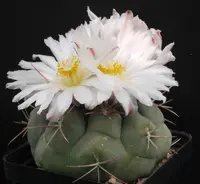
Thelocactus hexaedrophorus
Thelocactus hexaedrophorus
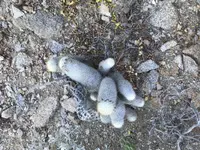
Cochemiea albicans
Cochemiea albicans
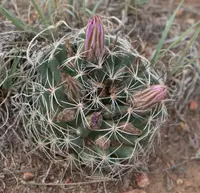
Cochemiea wrightii
Cochemiea wrightii
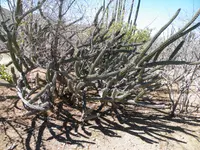
Galloping Cactus
Stenocereus gummosus
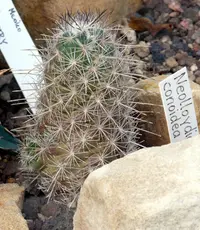
Texas cone cactus
Cochemiea conoidea
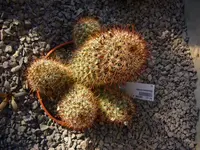
Cochemiea armillata
Cochemiea armillata
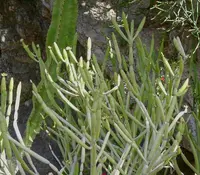
Euphorbia alluaudii
Euphorbia alluaudii
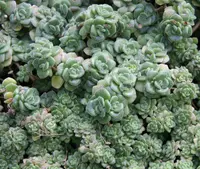
Aichryson tortuosum
Aichryson tortuosum