Deep pot selection
Choose a heavy, deep pot with excellent side drainage to support the tall, columnar stems and prevent tipping as the plant matures.

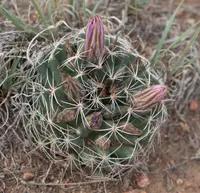
Cochemiea wrightii, often called Wright’s hedgehog cactus, is a small, clustering desert cactus with upright cylindrical stems covered in dense spines. It usually stays compact, forming tight clumps that can produce showy tubular red flowers along the stem.
This species is native to arid regions of the southwestern United States and northern Mexico, where it grows on rocky slopes and well-drained desert soils. It is slow growing but generally tough, as long as excess moisture is avoided.
Because it is drought tolerant and adapted to strong sun, it suits growers who can provide bright light and a very free-draining mineral substrate. Understanding how to care for Cochemiea wrightii mainly involves preventing overwatering and protecting it from prolonged cold and damp conditions.

Care Difficulty
Moderate Care

Light Preference
Full Sun

Water Requirements
Low Water

Temperature Preference
Warm Climate

Hardiness Zone
8–11

Soil Texture
Sandy, Loamy, Rocky

Soil pH
Slightly acidic (6.5–7.0), Neutral (7.0)

Soil Drainage
Well-drained

Fertilization
Minimal (feed rarely)
Scan your plant to receive care tips personalized for your specific plant
Available on iOS and Android
This desert cactus needs strong light that mimics full-sun rocky habitats.
This species is highly drought-adapted and needs careful, infrequent watering.
This cactus prefers warm, arid conditions with good temperature swings between day and night.
This cactus prefers dry air and rarely needs extra humidity indoors.
Soil for Cochemiea wrightii must be very fast-draining and highly mineral.
This species is well suited to container growing when the pot controls excess moisture and supports its clumping form.
This desert cactus needs only light feeding to stay healthy in containers or poor mineral soils.
Pruning needs are minimal and focus on sanitation rather than shaping this cactus.
Container-grown plants appreciate infrequent, careful repotting in a very fast-draining mix.
Home growers commonly propagate this cactus from offsets and seeds with patience and careful handling.
This cactus is somewhat cold tolerant when dry but still benefits from controlled winter conditions in cultivation.

Plant Health Check
Not sure what's wrong with your plant? Check your plant's health inside the app.
This cactus naturally occurs on rocky limestone slopes and ridges in the Chihuahuan Desert, often at relatively high elevations where nights are cool and the soil drains extremely fast.
Instead of true ribs, its cylindrical stems are covered in pointed tubercles (small projections), which increase surface area for photosynthesis while helping the plant shed excess heat and channel rare rainfall toward the root zone.
The spines often arrange in subtle spiral patterns around the stem, with central spines darker and stouter than radials, which likely helps both with shading the stem and disrupting air flow to reduce water loss.

In parts of its native range, this species forms dense, low clumps that can almost disappear visually among similarly colored rocks, an extreme form of camouflage that helps protect it from herbivores in open desert landscapes.
Flowering is reduced by insufficient light, cool temperatures, or overly rich, moist soil. This species needs strong sun, a distinct cool, dry rest in winter, and a slight size maturity before it will set buds reliably.
Keep your plants happy and healthy with plant identification, disease detection, and easy care guidance.