


Top‑dressing grit
Add a 0.5–1 cm layer of coarse mineral grit (pumice, granite, or small gravel) on the soil surface to keep the stem base dry, reduce rot risk, and discourage fungus gnats around this cactus.

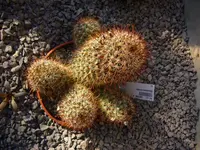
Cochemiea armillata is a small, clustering cactus native to arid regions of Baja California in Mexico. It forms tight groups of short, cylindrical stems covered in dense, interlocking spines. In season, it produces tubular, often ring-like flowers near the stem tips, which attract pollinators and add a brief but striking display. This species is adapted to intense sun, rocky slopes, and very fast-draining mineral soils. Its slow growth and strong drought tolerance make it attractive for collectors, but its need for bright light and careful watering means it is better suited to growers who already know how to care for Cochemiea armillata.

Care Difficulty
Moderate Care

Light Preference
Full Sun

Water Requirements
Low Water

Temperature Preference
Tropical / Frost Sensitive

Hardiness Zone
10–11

Soil Texture
Sandy, Rocky, Loamy

Soil pH
Slightly acidic (6.5–7.0), Neutral (7.0)

Soil Drainage
Well-drained

Fertilization
Minimal (feed rarely)
Scan your plant to receive care tips personalized for your specific plant
Available on iOS and Android
This desert cactus thrives in bright, intense light that mimics full sun in its native habitat.
Watering should mimic desert rainfall patterns with thorough soaking followed by a full dry-out period.
Stable warmth with cool, dry winters supports healthy growth and flowering for this species.
This cactus prefers dry air and does not need elevated humidity indoors or outdoors.
This species needs a very fast-draining, mineral-rich substrate to prevent root and stem rot.
This cactus is well suited to container growing when given a stable, shallow, and fast-draining setup.
This cactus benefits from light feeding during active growth but suffers if nutrients are overapplied.
Pruning needs for Cochemiea armillata are minimal and mostly hygiene focused.
This slow-growing cactus prefers infrequent disturbance but sometimes needs a new container or position.
New plants are most reliably produced from offsets, with seeds used mainly by collectors.
Winter care for this cactus focuses on keeping it cold but dry to prevent root and stem rot.

Plant Health Check
Not sure what's wrong with your plant? Check your plant's health inside the app.
This species forms distinctive armilla-like rings of tubercles and spines around the stems, which inspired the epithet armillata, meaning ringed or bracelet-like in Latin.
It occurs naturally only in arid parts of the Baja California Peninsula in Mexico, growing on rocky slopes and outcrops where drainage is extremely rapid.
Its tubular, bright red flowers are oriented horizontally to slightly downward and produce nectar, an adaptation that suits hummingbird pollination in its native habitat.

This cactus often grows in tight clumps, and as older stems die back in harsh desert conditions, newer offsets continue the clump’s growth, allowing a single genetic individual to persist for many years in the same rocky niche.
Lack of flowers usually comes from insufficient light, too much water, or no cool, dry winter rest. Older, sun-exposed stems bloom best. Avoid high-nitrogen fertilizer, and keep the plant slightly cooler and drier in winter to set buds.
Keep your plants happy and healthy with plant identification, disease detection, and easy care guidance.

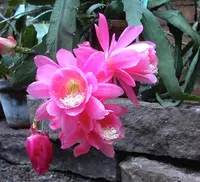
Cactus
Disocactus phyllanthoides

Bird's Nest Snake Plant
Dracaena trifasciata 'Golden Hahnii'
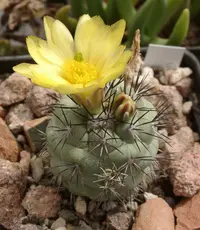
Cochemiea macdougallii
Cochemiea macdougallii
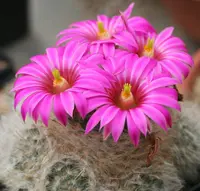
Cochemiea guelzowiana
Cochemiea guelzowiana
sticky fagonbush
Zygophyllum pachyacanthum
spear head
Senecio kleiniiformis
pingpong-ball cactus
Epithelantha micromeris
Rhipsalis floccosa
Rhipsalis floccosa