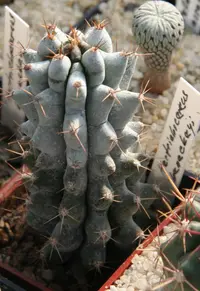
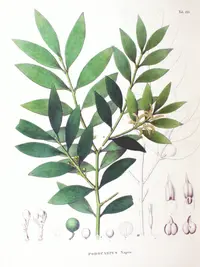
Safe handling routine
Always wear gloves and long sleeves when cutting or repotting, keep paper towels ready to blot the milky sap, and immediately rinse any tools and surfaces that contact the latex to reduce irritation risk.

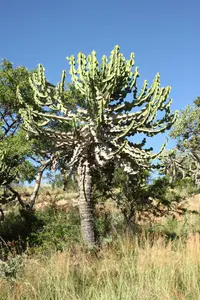
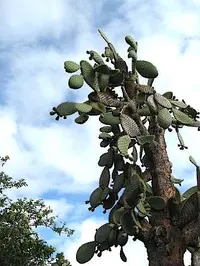
The candelabra tree, Euphorbia cooperi, is a succulent shrub or small tree with thick, ribbed, cactus-like stems arranged in a branching candelabra shape. It stores water in its stems, which helps it survive long dry periods.
This species is native to southern Africa, where it grows in hot, rocky, and semi-arid habitats. Its slow growth, drought tolerance, and sculptural form make it attractive for dry gardens and large indoor containers.
It is generally considered low-maintenance if protected from frost and excess moisture, and if handled carefully due to its irritating sap. Bright light, sharply draining soil, and infrequent watering make it easier to care for candelabra Tree.

Care Difficulty
Moderate Care

Light Preference
Full Sun

Water Requirements
Low Water

Temperature Preference
Tropical / Frost Sensitive

Hardiness Zone
10–12

Soil Texture
Sandy, Loamy, Rocky

Soil pH
Slightly acidic (6.5–7.0), Neutral (7.0)

Soil Drainage
Well-drained

Fertilization
Minimal (feed rarely)
Scan your plant to receive care tips personalized for your specific plant
Available on iOS and Android
Euphorbia cooperi thrives in bright, intense sun that mimics its native arid habitat.
Water Euphorbia cooperi sparingly, allowing the soil to dry well between waterings to prevent rot.
This species prefers warm, dry conditions and does not tolerate prolonged cold or frost.
Euphorbia cooperi tolerates a wide humidity range and usually does not need special humidity control indoors.
This succulent prefers very fast-draining, gritty soil that keeps roots aerated and dry between waterings.
This species is suitable for container growing when the pot is chosen to manage its height and weight safely.
This drought-tolerant succulent tree needs only light feeding under cultivation, especially in containers.
Pruning Euphorbia cooperi is mainly done for safety, shape control, and removal of damaged tissue.
Container-grown plants and young landscape specimens benefit from infrequent but careful transplanting.
Propagation of Euphorbia cooperi is feasible but requires care due to caustic sap and slow rooting.
This species is frost sensitive and needs protection in regions with cold winters.

Plant Health Check
Not sure what's wrong with your plant? Check your plant's health inside the app.
This species typically develops 4–8 thick, wavy ribs that branch in a candelabra-like pattern, giving the plant its characteristic sculptural silhouette in dry savanna landscapes.
Like many spurges, it exudes a milky latex rich in diterpenoid esters, which deter most herbivores and can cause strong skin and eye irritation in humans.
Its small, greenish-yellow cyathia (specialized Euphorbia flower structures) produce nectar that attracts specific savanna insects, enabling reliable pollination even in harsh, seasonally dry conditions.

In parts of its native range in southern Africa, this species is sometimes planted as a living fence, since its dense, spiny, branching form and irritating latex combine to create an effective physical and chemical barrier for livestock control.
Growth is moderate. In warm, bright, dry climates it can add 15–30 cm per year when young, then slows with age. Root space, warmth, strong light, and low moisture stress support steady growth without excessive elongation.
Keep your plants happy and healthy with plant identification, disease detection, and easy care guidance.