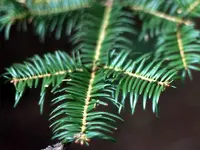
Asian bayberry Care (Nageia nagi)

Asian bayberry

About Asian bayberry

Asian bayberry, Nageia nagi, is an evergreen coniferous tree grown as an ornamental or screening plant in mild climates. It has dense, dark green, leathery leaves and a naturally upright, tidy growth habit.

In the wild it occurs in parts of China, Japan, and surrounding regions, where it grows in warm, humid forests. It is relatively slow growing but long lived, which suits small gardens and container culture.

This species prefers bright light without extreme heat, moderate moisture, and well-drained, slightly acidic soil. With stable conditions and minimal pruning, it is generally straightforward to care for Asian bayberry.

Main Plant Requirements

Care Difficulty

Moderate Care

Light Preference

Partial Shade

Water Requirements

Moderate Water

Temperature Preference

Warm Climate

Hardiness Zone

9–11

Soil Texture

Loamy, Sandy, Organic-rich

Soil pH

Acidic (5.5–6.5), Slightly acidic (6.5–7.0)

Soil Drainage

Moist but well-drained

Fertilization

Minimal (feed rarely)

Get Personalized Care Plan

Scan your plant to receive care tips personalized for your specific plant

Available on iOS and Android

How to Care for the Asian bayberry

Nageia nagi prefers bright, gentle light that mimics an understory woodland setting.

  • Provide 3–5 hours of morning sun with light afternoon shade; dappled or filtered light under taller trees suits Asian bayberry well.
  • Plant where it receives partial shade during the hottest hours, since intense afternoon sun can scorch needles and cause leaf yellowing or browning.
  • In summer, protect young plants from reflected heat; in winter, ensure at least bright open shade so growth does not become sparse and leggy.

This species prefers consistently moist but not saturated soil with good structure and drainage.

  • Water when the top 3–5 cm of soil feels dry, then soak the root zone thoroughly so moisture reaches 15–20 cm deep.
  • Use well-drained, slightly acidic soil; prolonged standing water or heavy clay can cause root rot, yellowing foliage, and dieback in Nageia nagi.
  • In hot, dry periods, expect more frequent watering and watch for drooping or curling leaves, while in cool or rainy seasons reduce frequency to avoid soggy soil.

This conifer grows best in mild, frost-protected climates with moderate seasonal change.

  • Aim for 60–77°F (16–25°C) for steady growth; short spikes slightly above or below this range are usually tolerated if soil moisture is stable.
  • Protect from hard frost; damage often appears below about 23°F (−5°C), with young plants more vulnerable than established specimens.
  • During heat above 86°F (30°C), reduce heat stress by providing afternoon shade and mulching the root zone to keep soil cooler and more evenly moist.

This species handles a wide humidity range but benefits from slightly moist air.

  • Target 40–60% humidity for steady growth, which suits most homes where Asian bayberry is kept.
  • Tolerates short periods of drier air, but prolonged humidity below 30% can lead to browning needle tips and edge crisping.
  • Increase humidity with a nearby tray of water and pebbles or by grouping plants, rather than misting, to avoid prolonged leaf wetness.

This conifer prefers deep, loose, well‑drained soil that holds some moisture without becoming waterlogged.

  • Use a mix of roughly 50% loam or general potting soil, 25% composted organic matter, and 25% mineral material such as pumice, perlite, or coarse sand.
  • Aim for slightly acidic to neutral pH, around 5.5–7.0, which supports nutrient availability and stable root development in Nageia nagi.
  • Ensure strong drainage by avoiding fine, compacting materials like heavy clay or large amounts of peat that stay saturated for long periods.
  • Improve aeration by incorporating chunky pine bark or similar coarse particles so roots receive both moisture and consistent oxygen access.

This slow-growing conifer adapts fairly well to container culture outdoors.

  • Choose a pot that is deeper than it is wide to accommodate the taproot and reduce rocking in strong winds.
  • Use a heavy, stable container material such as ceramic or thick-walled plastic to counter the plant’s eventual top-heavy crown.
  • Raise the pot slightly on feet or bricks so drainage holes stay clear and excess water can run off quickly after heavy rain.

Nageia nagi grows slowly and needs only modest feeding to maintain healthy evergreen foliage.

  • Use a balanced slow-release fertilizer or well-rotted compost in early spring as new growth begins.
  • Apply a light dose 1–2 times during the growing season, following label rates at about 1/2 strength for container plants.
  • Keep fertilizer away from the trunk and water in thoroughly to avoid root burn.
  • Stop feeding in late summer so growth hardens before winter, which supports long-term Asian bayberry health.

Nageia nagi benefits from light, occasional pruning to maintain structure and remove problem growth.

  • Plan main pruning in late winter or very early spring, before active growth resumes.
  • Remove dead, diseased, or storm-damaged branches first, cutting back to healthy wood.
  • Thin crowded interior shoots sparingly to improve light and airflow without over-opening the canopy.
  • Use clean, sharp bypass pruners or a pruning saw, making smooth cuts just outside the branch collar.

Nageia nagi is most often grown as a landscape tree, so focus on careful transplanting rather than frequent repotting.

  • Transplant in late winter or early spring when the tree is dormant or just starting growth.
  • Look for circling roots, slowed growth, or a root-bound container as signs a young plant needs more space.
  • Move the root ball with minimal disturbance, keep it intact, and plant at the same soil level in a well-drained site.
  • Water thoroughly after planting, then keep soil evenly moist and shaded for several weeks to reduce transplant shock.

Nageia nagi is slow to propagate and usually raised by seeds or semi-hardwood cuttings under controlled conditions.

  • Collect ripe seeds, clean them, and sow fresh in a well-drained mix; cool stratification can improve germination.
  • Take semi-hardwood cuttings in late summer, 7–10 cm long, from healthy non-flowering shoots.
  • Use a rooting hormone, place cuttings in a humid, warm environment (around 70–75°F), and provide bright, indirect light.
  • Maintain even moisture without waterlogging and expect rooting or germination to be slow, sometimes taking several months.

Nageia nagi is moderately cold hardy and needs only simple winter care in suitable climates.

  • In regions colder than its rated hardiness, grow in containers that can be moved to a cool, frost-free space in winter.
  • Apply 5–8 cm of mulch over the root zone in late fall, keeping it slightly back from the trunk.
  • Shelter young trees from drying winter winds with a windbreak or temporary burlap screen in exposed sites.

Care Tips

Root flare check

When potting or planting, keep the uppermost structural roots just at or slightly above the soil surface so the trunk base is visible and does not stay buried, which helps prevent rot and improves long-term stability.

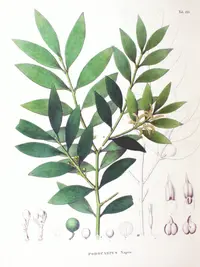
Gradual sun hardening

If moving a plant from shade to a brighter site, increase light exposure over 10–14 days by shifting it a little closer to the sun each few days to avoid needle scorch and stress.

Wind-shaping support

In windy sites, use 1–2 low, flexible ties to a single stake placed outside the root ball for the first 1–2 years, allowing slight movement so the trunk strengthens instead of remaining weak.

Targeted canopy thinning

On older plants, selectively remove a few congested interior twigs rather than shortening branch tips so more light and air reach inner foliage and reduce fungal issues.

Salt-splash protection

In coastal or roadside locations, install a low hedge, mesh screen, or plant 1–2 m back from salted paths to reduce salt spray on foliage and minimize leaf burn when growing Asian bayberry.

Common Pests and Diseases

Scale insects

This pest feeds on sap along stems and undersides of leaves, causing yellowing, stunted growth, and sticky honeydew on Nageia nagi foliage. Symptoms include sooty black deposits that grow on the honeydew and reduce photosynthesis.

Solution

Remove light infestations by gently scraping or wiping scales off with a cotton pad dipped in diluted alcohol, then rinse foliage with water. For persistent problems, use repeated applications of horticultural oil or insecticidal soap, making sure to coat stems and leaf undersides while improving plant vigor with correct watering and light.

Armillaria root rot

This disease attacks roots and the lower trunk, leading to gradual decline, thin foliage, branch dieback, and eventual plant death, especially in poorly drained or previously forested sites. Symptoms include white fungal sheets under the bark at the root collar and clusters of honey-colored mushrooms near the base in cool, wet seasons.

Solution

Promptly remove and destroy severely affected trees, including as much of the stump and major roots as possible, and avoid replanting Nageia nagi or other susceptible conifers in the same spot. For established specimens, focus on prevention by planting in well-drained soil, avoiding deep mulch against the trunk, and preventing chronic overwatering or mechanical root damage.

Phytophthora root and collar rot

This disease thrives in saturated or compacted soils, causing root decay, dark lesions at the soil line, foliage yellowing, and sudden collapse during warm, wet periods. Symptoms include poor new growth, wilting despite moist soil, and brown, water-soaked tissue at the base of the stem or trunk.

Solution

Improve drainage immediately by reducing watering, amending soil to increase aeration, and, if possible, raising the planting area or using mounded beds. Remove and discard badly affected plants and surrounding wet soil, then replant only into well-drained ground; in high-value landscape settings, a licensed professional may use labeled phosphite fungicides as part of a broader management plan.

Bagworms

These insects create spindle-shaped bags from needles and debris, hanging from branches and gradually stripping foliage as larvae feed. Symptoms include thinning, browned branch tips and many small, camouflaged bags that remain on the plant even in winter.

Solution

Hand-pick and destroy bags during fall, winter, or very early spring before larvae emerge, focusing on lower and mid-height branches that are easy to reach. When large populations are present on tall specimens, a targeted spray of Bacillus thuringiensis (Bt) or another labeled product at the young larval stage can reduce damage, combined with regular monitoring each year.

Cypress aphids

These insects cluster on young twigs and branchlets, sucking sap and causing patchy bronzing or dieback in the outer foliage. This pest also produces sticky honeydew, which encourages sooty mold growth and attracts ants.

Solution

Prune out and dispose of heavily infested shoots, then wash remaining foliage with a firm stream of water to dislodge aphids. Where populations persist, apply insecticidal soap or a light horticultural oil to the affected twigs, and reduce plant stress through proper irrigation and mulching to support recovery and long-term Nageia nagi plant care.

Interesting Facts

Ancient conifer lineage

This species is one of the few living members of the podocarp family in East Asia, representing an old lineage of conifers that diverged early from pines and firs and produces fleshy seed coverings instead of woody cones.

Broad, leaflike needles

Unlike most conifers with narrow needles, it has broad, flat, evergreen leaves that resemble those of broadleaf trees, an adaptation that increases light capture in shaded, warm-temperate forests.

Edible, oily seeds

The seeds are rich in oil and have been used in East Asia for culinary oil and small-scale industrial uses, making this conifer both an ornamental and a minor traditional resource tree.

Botan icon

Did you know?

Mature trees can develop an unusually dense, dome-shaped crown with foliage held on layered, horizontal branches, which historically made the species a favored choice for temple and shrine plantings in parts of Japan and China due to its calm, ordered appearance.

FAQs about Asian bayberry

Growth is moderate. In suitable outdoor conditions, this species typically adds around 15–30 cm of height per year. Young plants grow a bit faster, then slow as they mature into a dense, compact tree or large shrub.

Grow Healthy Plants with Botan Care

Keep your plants happy and healthy with plant identification, disease detection, and easy care guidance.


Botan plant care app — identify plants on mobile

Explore More Plants