Root-zone warming
In cooler regions, use dark mulch or ground-cover fabric around the base to gently warm the root zone in spring, which encourages faster early-season growth and better establishment when growing red kapok tree outdoors.

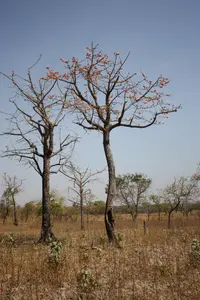
The red kapok tree, Bombax costatum, is a deciduous tree known for its thick trunk, sparse branches, and striking red flowers on bare wood. It often develops a broad, open crown and can form a strong visual focal point in warm landscapes.
This species is native to dry savanna regions of West and Central Africa, where it copes with pronounced dry seasons. Its adaptation to drought and lean soils makes it relatively resilient, but it needs warmth and space to develop well.
For those who want to care for red kapok tree, it generally prefers bright light, a well-drained soil, and moderate moisture rather than constant wet conditions.

Care Difficulty
Moderate Care

Light Preference
Full Sun

Water Requirements
Moderate Water

Temperature Preference
Tropical / Frost Sensitive

Hardiness Zone
10–12

Soil Texture
Sandy, Loamy, Organic-rich

Soil pH
Acidic (5.5–6.5), Slightly acidic (6.5–7.0)

Soil Drainage
Well-drained

Fertilization
Minimal (feed rarely)
Scan your plant to receive care tips personalized for your specific plant
Available on iOS and Android
Bombax costatum prefers strong light typical of open woodland or savanna edges.
This drought-tolerant tree needs infrequent but thorough watering once established.
This species thrives in warm, frost-free climates with a pronounced dry season.
This species tolerates a fairly wide humidity range but grows best with moderate indoor levels.
Bombax costatum prefers a sharply draining, airy mix that still retains moderate moisture.
This species is suitable for container growing, especially in cooler climates where outdoor planting is limited.
This drought-tolerant species needs modest feeding, especially when grown as a red kapok tree in containers.
Pruning Bombax costatum focuses on safety, structure, and clearance rather than frequent shaping.
This tree is usually grown in the ground, so attention centers on careful transplanting and occasional container upgrades.
Propagation of Bombax costatum is mainly done from seed, with some use of semi-hardwood cuttings by experienced growers.
This tropical tree is frost-sensitive and needs protection in climates with cool or freezing winters.

Plant Health Check
Not sure what's wrong with your plant? Check your plant's health inside the app.
Bombax costatum sheds most of its leaves before flowering, producing large red blooms on bare branches at the end of the dry season. This timing improves visibility to pollinators such as sunbirds and bats in its native West African savanna habitats.
Mature trees develop a thick, often bottle-shaped trunk capable of storing water, an adaptation to long dry periods in the Sudanian and Guinean savannas. This storage tissue helps the tree survive seasonal drought and fire-prone environments.
The seed capsules contain silky, buoyant fibers that help the small seeds disperse by wind. These fibers, commonly called kapok, have been used locally as stuffing material for pillows and cushions.

In several West African cultures, Bombax costatum is considered a sacred or emblematic tree and is often preserved when surrounding land is cleared, so mature individuals can stand as solitary landmarks in fields and village landscapes.
This species usually flowers in the dry season, often late winter to early spring, before new leaves emerge. Large, showy red blossoms appear on bare branches and are rich in nectar, attracting birds and insects.
Keep your plants happy and healthy with plant identification, disease detection, and easy care guidance.