


Deep container choice
Use a tall, narrow pot with excellent drainage so the long taproot can develop straight down, and avoid repotting unless the plant is clearly root-bound to reduce transplant shock.

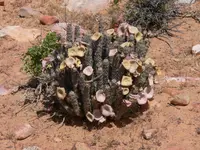
Wild ghaap (Hoodia gordonii) is a small succulent shrub from arid regions of South Africa and Namibia. It belongs to the dogbane family but resembles a cactus in appearance. The plant forms upright, ribbed, leafless stems with small spines and produces star-shaped, often strongly scented flowers near the stem tips. Its natural habitat is hot, very dry desert with rocky, fast-draining soils. This background makes it slow-growing, drought tolerant, and sensitive to overwatering and cold, which can make it challenging for beginners. It prefers strong light, low humidity, and sharply draining soil, so anyone looking to care for Wild Ghaap should aim to mimic desert-like conditions.

Care Difficulty
Hard Care

Light Preference
Full Sun

Water Requirements
Low Water

Temperature Preference
Tropical / Frost Sensitive

Hardiness Zone
10–11

Soil Texture
Sandy, Rocky, Loamy

Soil pH
Slightly acidic (6.5–7.0), Neutral (7.0)

Soil Drainage
Well-drained

Fertilization
Minimal (feed rarely)
Scan your plant to receive care tips personalized for your specific plant
Available on iOS and Android
This desert succulent needs strong light to maintain compact, healthy growth.
This species is highly drought tolerant and must dry well between waterings.
This arid-climate succulent prefers warm, stable temperatures and does not tolerate frost.
This desert succulent prefers very dry air and rarely suffers from low household humidity.
Hoodia gordonii requires a very fast-draining, mineral-based substrate to prevent root and stem rot.
This species is well suited to container growing when drainage and pot choice are carefully controlled.
Hoodia gordonii is adapted to very poor desert soils and needs only minimal feeding in cultivation.
Pruning Hoodia gordonii is limited and mainly focused on health and safety of the stems.
This slow-growing succulent prefers to stay slightly root bound and dislikes frequent repotting.
Propagation of Hoodia gordonii is possible but slow and requires stable, warm, dry conditions.
Winter care for this desert succulent focuses on keeping it dry and above freezing.

Plant Health Check
Not sure what's wrong with your plant? Check your plant's health inside the app.
This succulent is native to the arid regions of Namibia, Botswana, and South Africa, where it grows among rocky, sun-exposed slopes and gravel plains in extremely low-rainfall habitats.
The flowers are adapted to attract carrion-associated flies, using a strong odor and mottled coloration that mimic decaying organic matter to ensure effective pollination.
Plants grow slowly and form upright, cylindrical, cactus-like stems that can branch from the base to create loose clumps over many years in habitat.

The San and other Indigenous peoples of southern Africa have traditionally chewed fresh stems of this species to help suppress hunger and thirst during long hunting trips in the Kalahari, making it one of the most culturally noted stapeliads in the region.
Growth is slow. Seedlings often remain small for several years, adding only a few centimeters annually. Once established, stems thicken gradually rather than elongating quickly. Patience is essential when growing this species to mature size.
Keep your plants happy and healthy with plant identification, disease detection, and easy care guidance.

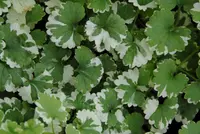
Variegated Creeping Charlie
Glechoma hederacea 'Variegata'
 POPULAR
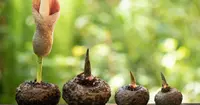
Devil's Tongue
Amorphophallus konjac
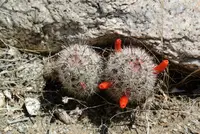
common fishhook cactus
Cochemiea tetrancistra
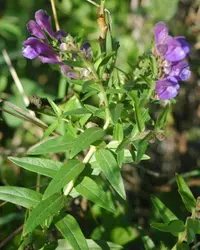
Baikal skullcap
Scutellaria baicalensis
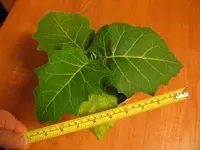
cocona
Solanum sessiliflorum
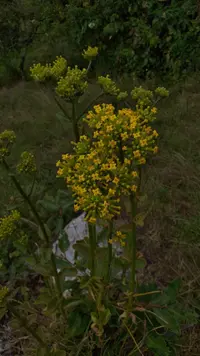
Kalanchoe densiflora
Kalanchoe densiflora
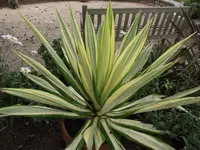
Mauritius hemp
Furcraea foetida
 POPULAR
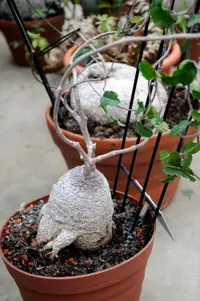
Hottentot Bread
Fockea edulis