Targeted stem support
As stems elongate and become top-heavy, anchor them gently with small rocks at the base or use low, discrete wire hoops to keep rosettes upright without restricting airflow.

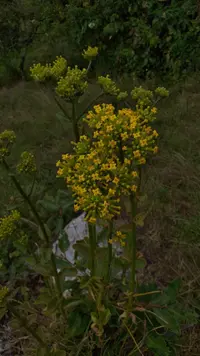
Kalanchoe densiflora is a compact, shrubby succulent known for its stacked, scalloped leaves and upright stems. Mature plants form dense clumps with a strong architectural look. Native to rocky areas of Madagascar, it is adapted to bright light, sharp drainage, and dry periods between rains. This background makes it well suited to container culture in warm, sunny spots. The plant usually produces clusters of tubular, orange to red flowers on tall stalks, adding seasonal color. Its drought tolerance and slow to moderate growth rate generally make it low maintenance, as long as excess moisture is avoided. Many growers find it straightforward to care for Kalanchoe densiflora once its need for bright light and fast-draining soil is understood.

Care Difficulty
Easy Care

Light Preference
Full Sun

Water Requirements
Low Water

Temperature Preference
Tropical / Frost Sensitive

Hardiness Zone
10–12

Soil Texture
Sandy, Loamy, Rocky

Soil pH
Acidic (5.5–6.5), Slightly acidic (6.5–7.0)

Soil Drainage
Well-drained

Fertilization
Minimal (feed rarely)
Scan your plant to receive care tips personalized for your specific plant
Available on iOS and Android
This succulent prefers bright, strong light but benefits from some protection during the hottest hours.
This drought-tolerant succulent needs infrequent, careful watering to avoid root problems.
This species prefers warm, dry conditions and does not tolerate frost.
This succulent handles low household humidity well and rarely needs special humidity care.
This species prefers a very free-draining, mineral-rich mix that mimics arid, rocky soils.
This species is well suited to container growing for controlled watering and drainage.
This succulent benefits from light, targeted feeding rather than heavy fertilization.
Thoughtful pruning keeps Kalanchoe densiflora compact, branching, and clean.
This species prefers a stable container but does benefit from occasional, careful repotting.
This plant is commonly multiplied from stem cuttings under warm, bright conditions.
This succulent is frost sensitive and needs protection in regions with cold winters.

Plant Health Check
Not sure what's wrong with your plant? Check your plant's health inside the app.
Kalanchoe densiflora develops its leaves in tight, stacked tiers along upright stems, creating a layered, architectural silhouette that is quite different from the rosette shape of many other kalanchoes.
Its bright orange to scarlet tubular flowers often show subtle color gradients and markings that act as nectar guides, helping attract and direct insect pollinators to the nectar source.
This species produces many small seeds adapted to dry habitats, relying on short bursts of favorable moisture in its native East African range for germination rather than continuous humidity.

In its native habitats of Ethiopia, Kenya, and Tanzania, Kalanchoe densiflora can form scattered, low shrub-like colonies on rocky slopes and open grasslands, where its upright, densely leafed stems help reduce self-shading and maximize light capture in high-sun, nutrient-poor environments.
This species performs well both indoors and outdoors if given strong light, sharp drainage, and protection from frost. In colder climates it is often grown in pots, moved indoors for winter as part of Kalanchoe densiflora indoor care.
Keep your plants happy and healthy with plant identification, disease detection, and easy care guidance.