


Stabilize Tall Stems
As stems elongate past 30–40 cm, add discreet gravel mounds or small rock supports at the base to prevent leaning or uprooting when the pot is bumped or moved.

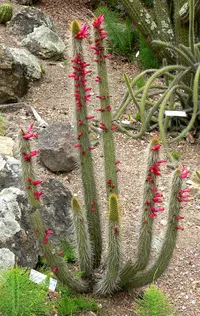
Cleistocactus candelilla is a columnar cactus known for its slender, upright stems densely covered with fine spines, giving it a softly bristled look. It usually forms clumps over time, creating a striking vertical accent in containers or rock gardens.
This species is native to arid regions of South America, where it grows in high light and well-drained, mineral soils. Its slow to moderate growth and drought tolerance make it relatively straightforward for growers who understand basic cactus needs.
Those learning how to care for Cleistocactus candelilla should focus on strong light, careful watering, and gritty soil, as excess moisture is the main factor that can cause problems.

Care Difficulty
Moderate Care

Light Preference
Full Sun

Water Requirements
Low Water

Temperature Preference
Tropical / Frost Sensitive

Hardiness Zone
10–11

Soil Texture
Sandy, Loamy, Rocky

Soil pH
Slightly acidic (6.5–7.0), Neutral (7.0)

Soil Drainage
Well-drained

Fertilization
Minimal (feed rarely)
Scan your plant to receive care tips personalized for your specific plant
Available on iOS and Android
This cactus prefers bright, strong light that mimics high-altitude sun in its native range.
This species needs sparse, well-timed watering suited to a drought-adapted cactus.
Stable warmth supports strong, compact growth for this columnar cactus.
This cactus prefers dry indoor air and does not have special humidity requirements.
This species requires a very fast-draining, mineral-heavy soil mix to prevent root rot.
This species is well suited to container growing when the pot supports its tall, narrow stems.
This desert cactus benefits from light feeding but stays healthiest when soil nutrients remain modest and controlled.
This cactus needs minimal pruning, mainly to keep stems healthy and safe rather than to shape it.
Container-grown plants need infrequent repotting that focuses on root health and fresh, free-draining substrate.
New plants are usually produced from stem cuttings or seeds, depending on how quickly multiples are needed.
This cactus is sensitive to prolonged freezing and benefits from cool, very dry winter conditions.

Plant Health Check
Not sure what's wrong with your plant? Check your plant's health inside the app.
This species forms dense clumps of thin, upright stems, often only 2–3 cm thick, creating a tight candelabra-like cluster rather than a few thick columns.
It is native to high, dry regions of Bolivia, where intense UV exposure and cool nights shape its growth, resulting in slow, compact stems with close-set areoles.
The species name candelilla refers to its resemblance to a bundle of small candles, describing the many slender, vertical stems produced from the plant’s base.
Growth is relatively slow to moderate. In good light and a gritty, well-drained mix, it may add around 5–10 cm per year. Cooler temperatures, low light, or frequent repotting slow growth noticeably when growing Cleistocactus candelilla.
Keep your plants happy and healthy with plant identification, disease detection, and easy care guidance.

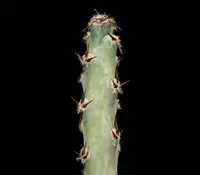
Cereus spegazzinii
Cereus spegazzinii
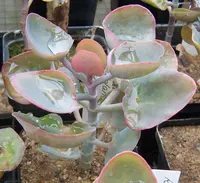
Kalanchoe synsepala
Kalanchoe synsepala

Armatocereus matucanensis
Armatocereus matucanensis
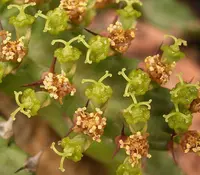
Milkthorn
Euphorbia stellata
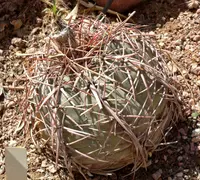
turk's head cactus
Echinocactus horizonthalonius
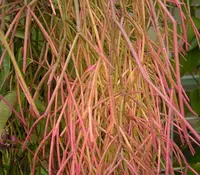
Rhipsalis burchellii
Rhipsalis burchellii
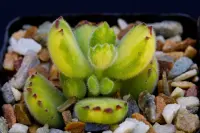
Bear's paw
Cotyledon tomentosa
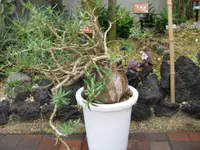
Pachypodium bispinosum
Pachypodium bispinosum