Mauritius hemp Care (Furcraea foetida)

Also known as: giant cabuya, green aloe, Furcraea
Mauritius hemp

About Mauritius hemp

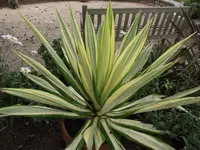
Mauritius hemp, Furcraea foetida, is a large succulent perennial grown for its bold, architectural rosette of long, sword-like leaves. Mature plants can form a substantial clump that becomes a strong focal point in dry or coastal landscapes. Native to the Caribbean and parts of tropical America, it now grows in many warm regions and can naturalize in favorable climates. The plant is drought-tolerant and generally tough, but the stiff, sometimes sharp leaves require space. It suits experienced beginners who want to care for Mauritius hemp in a sunny, well-drained spot, indoors or outdoors in mild areas. Occasional neglect is usually tolerated if the soil does not stay wet.

Main Plant Requirements

Care Difficulty

Easy Care

Light Preference

Full Sun

Water Requirements

Low Water

Temperature Preference

Tropical / Frost Sensitive

Hardiness Zone

10–11

Soil Texture

Sandy, Loamy, Rocky

Soil pH

Slightly acidic (6.5–7.0), Neutral (7.0)

Soil Drainage

Well-drained

Fertilization

Minimal (feed rarely)

Get Personalized Care Plan

Scan your plant to receive care tips personalized for your specific plant

Available on iOS and Android

How to Care for the Mauritius hemp

This succulent prefers strong light and sun to build compact, sturdy rosettes.

  • Provide 6–8 hours of direct sun daily; full sun suits established outdoor plants, while young plants benefit from some filtered light at midday.
  • Mauritius hemp tolerates light partial shade, but growth becomes looser and leaf variegation fades if it receives under 4–5 hours of sun.
  • In very hot climates, protect from harsh afternoon sun to reduce leaf scorch, especially in summer, and prioritize gentle morning sun.

This drought-tolerant species stores water in its leaves and prefers infrequent, deep watering.

  • In the ground, water only when the top 5–7 cm of soil are completely dry; in hot, dry periods this may mean every 1–3 weeks.
  • Use very fast-draining, gritty soil; standing water or heavy clay strongly increases risk of root rot and leaf base collapse.
  • Reduce watering sharply in cool seasons; shriveling outer leaves suggest underwatering, while soft, yellowing or foul-smelling bases indicate excess moisture.

This plant prefers warm, frost-free conditions but copes with substantial heat when established.

  • Aim for 65–85°F (18–29°C) for active growth; stable warmth supports stronger rosettes and faster leaf production.
  • Furcraea foetida is damaged by frost; brief drops near 30–32°F (-1–0°C) can scar leaves, and prolonged freezing may kill the growing point.
  • In very hot weather above 95°F (35°C), ensure sharply drained soil and some air movement to limit heat stress and prevent tissue scorch.

This succulent tolerates dry indoor air well and rarely needs special humidity management.

  • Target 30–50% humidity; the plant stays healthy in most heated or air‑conditioned homes.
  • Dry, crispy leaf tips or marginal browning usually relate more to underwatering or excess fertilizer than low humidity.
  • If air is extremely dry near heaters or vents, move the container a bit farther away to reduce moisture loss.

This species prefers very free‑draining, mineral soil that mimics arid, rocky habitats.

  • Use a gritty, sandy mix such as 50–70% mineral components (coarse sand, pumice, or perlite) blended with 30–50% low‑peat cactus potting mix.
  • Aim for slightly acidic to slightly alkaline pH, around 6.0–7.5, which suits Furcraea foetida roots well.
  • Create sharp drainage by ensuring water runs through rapidly and the mix never stays soggy for more than a few hours.
  • Avoid dense, clay‑heavy or water‑retentive mixes; if existing soil compacts, lighten it with additional coarse sand or pumice for better aeration.

This species is suitable for large, sturdy containers, especially in cooler climates where outdoor growing Furcraea foetida is limited.

  • Choose a wide, heavy pot (cement, ceramic, or thick terracotta) to counterbalance the tall rosette and prevent tipping in wind.
  • Ensure multiple drainage holes so excess water leaves the root zone within minutes after thorough watering.
  • Raise the container slightly on pot feet or bricks outdoors so drainage holes stay clear and runoff does not collect under the base.

Furcraea foetida is a low-demand feeder, but light, balanced nutrition supports steady growth in containers and poor soils.

  • Use a balanced, slow-release fertilizer (for example 10-10-10 or 14-14-14) or a thin layer of well-rotted compost in spring.
  • Feed container-grown Mauritius hemp every 8–10 weeks during the warm growing season only.
  • Apply fertilizer at half the label strength to avoid salt buildup in the soil.
  • Stop feeding in late fall and do not fertilize during winter dormancy in cool climates.

Furcraea foetida needs only light maintenance pruning to keep the rosette clean and safe to handle.

  • Best time for pruning is late winter to early spring, before strong new growth starts.
  • Remove dead, yellowing, or damaged leaves at the base using clean, sharp pruning shears.
  • Trim leaves that block paths or walkways to manage size and maintain a symmetrical rosette.
  • Disinfect tools before and after use to reduce the risk of disease entry through cut surfaces.

This species is usually grown in the ground, but large container plants or crowded clumps benefit from careful transplanting.

  • Plan transplanting or repotting for late spring to early summer when soil is warm and growth is active.
  • Watch for roots circling the pot, slow growth, or the plant becoming top-heavy as signs it needs more space.
  • Move to a container only 1–2 in wider, using a very free-draining, gritty mix to limit waterlogging stress.
  • Handle the root ball gently, keep roots at the same depth, water once to settle soil, then let the mix partly dry.

Furcraea foetida is commonly propagated from bulbils and offsets rather than from seed for faster establishment.

  • Collect bulbils from the flowering stalk or offsets from the base in late spring or summer.
  • Allow cut surfaces to dry and callus for 1–3 days before planting to reduce rot risk.
  • Plant bulbils or offsets in a sharply drained, sandy mix and keep slightly moist, not wet, for rooting.
  • Provide bright, indirect light and warm temperatures around 70–80°F to encourage steady root development.

This semi-tropical plant is frost sensitive and needs protection in regions with cold winters.

  • In-ground plants tolerate only brief light frosts; sustained freezes can damage or kill foliage and crowns.
  • Apply a dry mulch layer around the root zone in fall to buffer temperature swings and drainage.
  • Move container plants indoors or into a frost-free greenhouse when temperatures drop near 32°F.
  • Keep winter soil on the dry side and provide as much light as possible to limit stress and rot.

Care Tips

Pup management

Remove offsets (pups) with a clean, sharp knife once they reach 10–15 cm and have visible roots, then replant them in a gritty mix to control clump size and propagate new plants.

Leaf hazard control

In high-traffic areas, trim or redirect the lowest outer leaves away from walkways and play spaces to reduce the risk of cuts from the stiff, fibrous foliage.

Root space planning

When planting in the ground, allow at least 90–120 cm of open soil around the base so the fleshy roots and expanding rosette do not crowd nearby plants or hardscape.

Salt and wind tolerance

Use this plant as a windbreak or coastal barrier in exposed, salty sites and place more sensitive species in its lee to benefit from its sheltering effect.

Heavy pot stabilization

If container-grown, use a wide, heavy pot and add a layer of coarse gravel at the bottom to lower the center of gravity and reduce the risk of the tall rosette toppling in strong winds when growing Mauritius hemp.

Common Pests and Diseases

Agave weevil

This pest bores into the base of the rosette and crown, causing internal damage that often leads to sudden collapse of the plant. Symptoms include yellowing leaves, wilting, and a soft, decaying crown area.

Solution

Remove and destroy heavily infested plants, including the root system, to prevent spread. For remaining plants, inspect the crown regularly, remove any soft or damaged tissue, keep the planting area clean of plant debris, and, in landscape settings, use a systemic insecticide labeled for agave weevils as a preventative treatment in warm seasons.

Scale insects

These insects attach to leaves and stems, feeding on plant sap and often producing sticky honeydew on the leaf surface. Symptoms include yellowing, reduced vigor, and the presence of small, shell-like bumps on the foliage and leaf bases.

Solution

Physically remove scales on small plants by gently scraping with a soft brush or cloth and washing leaves with lukewarm water and mild soap. For larger or persistent infestations, apply horticultural oil or insecticidal soap thoroughly to leaf bases and undersides, repeating according to label directions until populations decline.

Aloe mite galls

This pest (eriophyid mite) causes abnormal, swollen, or warty growths along leaf margins and at the center of the rosette. Symptoms include thickened, distorted tissue and rough, corky patches that can slowly spread across the plant.

Solution

Cut out and discard all affected leaves and rosette centers, placing waste in sealed bags to avoid spreading mites. Maintain good spacing for airflow, avoid overhead watering, and if new galls appear, treat remaining plants with a miticide labeled for eriophyid mites, following instructions carefully.

Leaf spot

This disease produces brown or dark, water-soaked spots on leaves, sometimes with a yellow halo, often starting on older or lower leaves. Symptoms include gradual expansion of lesions, cosmetic damage, and in severe cases partial leaf dieback.

Solution

Remove and discard affected leaves to reduce inoculum, and avoid wetting the foliage during watering. Improve spacing and airflow, and if spotting continues in humid conditions, apply a copper-based or broad-spectrum fungicide suitable for succulents according to the label.

Soft crown rot

This disease, often caused by opportunistic fungi or bacteria, leads to soft, foul-smelling decay in the crown and inner leaf bases, frequently following mechanical injury or weevil damage. Symptoms include sudden collapse of central leaves and a mushy, discolored core.

Solution

At first signs, cut away all soft, discolored tissue with sterile tools and allow remaining healthy tissue to dry in a well-ventilated, shaded area. Discard severely affected plants, keep soil on the dry side, and avoid water collecting in the rosette; in landscape settings, rotating planting locations and removing plant debris reduces pathogen buildup as part of general Furcraea foetida care.

Interesting Facts

Natural fiber source

Mauritius hemp has long, tough leaf fibers that have been traditionally extracted to make ropes, cordage, twine, and coarse textiles, especially in tropical regions where the plant is cultivated.

Monocarpic flowering habit

This species is monocarpic, meaning each rosette flowers only once, producing a huge, branched flower spike and then dying, while new offsets around the base continue the colony.

Prolific bulbils production

After flowering, it can form numerous small plantlets called bulbils on the flower stalk, which drop off and root easily, allowing the plant to spread rapidly in suitable climates.

Botan icon

Did you know?

In several tropical and subtropical regions, Mauritius hemp has become an invasive species, with dense stands outcompeting native vegetation and altering coastal and dry-forest habitats, leading to active control and removal programs.

FAQs about Mauritius hemp

This species usually flowers only once when fully mature, often after many years, then the main rosette dies. Lack of size, youth, or stress from cold, root disturbance, or nutrient-poor conditions can all delay blooming.

Grow Healthy Plants with Botan Care

Keep your plants happy and healthy with plant identification, disease detection, and easy care guidance.

Botan plant care app — identify plants on mobile

Explore More Plants