Monstera punctulata Care

Monstera punctulata

About Monstera punctulata

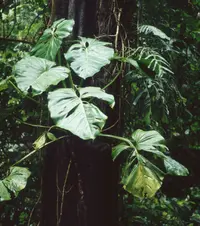
Monstera punctulata is a tropical climbing aroid grown mainly for its bold, perforated foliage and striking, upright to trailing growth habit. It typically develops long vines that attach to supports with aerial roots. Mature leaves can become deeply lobed and fenestrated, giving a strong architectural look in indoor collections.

This species occurs naturally in Central America, where it grows in warm, humid forests as an understory climber. It is moderately challenging for beginners because it prefers stable warmth, consistent moisture without waterlogging, and a chunky, well-drained substrate. Those conditions are the main focus when learning how to care for Monstera punctulata.

Main Plant Requirements

Care Difficulty

Moderate Care

Light Preference

Bright Indirect Light

Water Requirements

Moderate Water

Temperature Preference

Tropical / Frost Sensitive

Hardiness Zone

11–12

Soil Texture

Loamy, Organic-rich

Soil pH

Acidic (5.5–6.5), Slightly acidic (6.5–7.0)

Soil Drainage

Moist but well-drained

Fertilization

Light (every 4–6 weeks)

Get Personalized Care Plan

Scan your plant to receive care tips personalized for your specific plant

Available on iOS and Android

How to Care for the Monstera punctulata

This species prefers bright, filtered light that mimics a forest understory.

  • Aim for 4–6 hours of bright, indirect light each day, such as light passing through a sheer curtain or dappled shade under taller plants.
  • Tolerates partial shade, but in very low light leaves may become smaller, darker, and produce fewer fenestrations; growth slows noticeably.
  • Protect Monstera punctulata from harsh midday and afternoon sun, which can cause yellow patches and crisp brown edges, especially in summer at lower latitudes.

Watering should keep roots moist yet never stagnant.

  • Allow the top 3–5 cm of soil to dry before watering; check by inserting a finger rather than following a fixed calendar schedule.
  • Increase watering frequency slightly in warm, active growth periods and reduce during cooler months when growth slows, while never letting the root zone stay bone dry for long.
  • Ensure deep, fast-draining soil; persistent wetness, sour smell, or yellowing lower leaves suggest overwatering, while curling, limp leaves and very dry soil indicate underwatering in Monstera punctulata.

Stable, warm conditions support healthy growth and root function.

  • Ideal growth occurs at 70–85°F (21–29°C), with steady temperatures and moderate humidity supporting leaf expansion and root activity.
  • Avoid letting temperatures drop below 55°F (13°C); brief dips to 50°F (10°C) may be survivable but can slow growth and increase risk of root damage.
  • Protect from frost and cold drafts in winter and from hot, dry wind or heat above 95°F (35°C), which can cause leaf scorch and rapid moisture loss.

This species benefits from moderately high humidity for steady growth.

  • Aim for 50–70% humidity; it tolerates brief dips but dislikes very dry heated rooms.
  • Crisping leaf edges, stalled growth, and brown tips indicate low humidity stress.
  • Use grouped plants, a room humidifier, or a pebble tray near Monstera punctulata to raise local humidity without waterlogging the pot.

Monstera punctulata prefers a loose, airy, organic-rich substrate that drains quickly yet retains some moisture.

  • Use a mix of roughly 40% peat or coco coir, 30% fine bark, and 30% perlite or pumice to create a chunky, well-aerated structure.
  • Target a slightly acidic to neutral pH around 6.0–7.0, avoiding strongly acidic or alkaline blends that can limit nutrient uptake.
  • Ensure rapid drainage; avoid heavy garden soil, clay-based mixes, or fine sand that compacts and restricts oxygen around the roots.
  • For extra aeration, add coarse bark or horticultural charcoal so roots can anchor into solid pieces rather than staying in dense, wet peat.

This species is well suited to container culture when the pot supports its vining, top-heavy habit.

  • Choose a wide, heavy container to counterbalance the plant and any support pole, reducing the risk of tipping as it gains height.
  • Select a pot depth that allows a broad, shallow root system to spread, preventing dense circling roots that can trap excess moisture.
  • Opt for breathable materials like unglazed clay only if extra evaporation is desirable, since they dry faster than plastic and reduce prolonged saturation.

Steady, moderate feeding supports healthy foliage and root development in Monstera punctulata.

  • Use a balanced liquid fertilizer (around 10-10-10 or 20-20-20) diluted to 1/2 strength for container plants in active growth.
  • Apply every 4–6 weeks during spring and summer, always onto already moist soil to reduce root burn risk.
  • Incorporate a thin layer of mature compost or a mild slow-release fertilizer in early spring for long-term nutrition.
  • Reduce feeding to 1 light application in fall, then pause through winter when growth slows.

Thoughtful pruning helps maintain size, structure, and leaf quality on Monstera punctulata.

  • Carry out main pruning in late winter or early spring before vigorous new growth begins.
  • Remove dead, diseased, or damaged leaves and stems first, then thin crowded or crossing vines to improve light and airflow.
  • Shorten overly long stems to control spread and encourage branching, which results in a fuller appearance.
  • Use clean, sharp pruners or a sterilized knife, cutting just above a node to limit tissue damage.

Container-grown Monstera punctulata benefits from occasional repotting to support root health and growth.

  • Check for crowded roots circling the pot, water running straight through, or slowed growth as signals it needs a larger container.
  • Plan repotting for spring, moving up only 1–2 in in pot diameter every 2–3 years to avoid overly wet soil.
  • Gently loosen circling roots, trim broken ones with sterilized tools, and set the plant in fresh, chunky, well-drained mix.
  • Water thoroughly after repotting, keep in bright indirect light, and avoid heavy feeding for 3–4 weeks to reduce transplant stress.

New plants of Monstera punctulata are most commonly produced from stem cuttings taken from healthy vines.

  • Take 1–2 node stem cuttings in late spring or early summer, ensuring each piece has at least one node and a leaf.
  • Root cuttings in water or a moist, airy mix at 70–80°F with high humidity and bright, indirect light.
  • Keep the rooting medium barely moist, not soggy, and provide gentle airflow to limit rot.
  • Once strong roots form and new growth appears, pot into a well-drained mix and acclimate to normal care.

This tropical species is frost sensitive and needs protection in climates cooler than its native range.

  • Avoid exposure to temperatures below 50°F; sustained cold can damage foliage and roots.
  • For container plants, move indoors or into a heated greenhouse before the first frost date.
  • Indoors, provide bright indirect light, slightly drier soil, and good air circulation during winter.
  • In very mild climates, insulate the root zone with a 5–8 cm mulch layer, keeping mulch off the stems.

Care Tips

Provide climbing frame

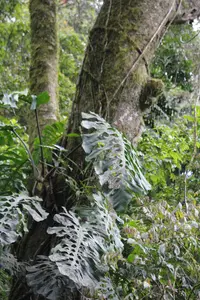
Install a sturdy moss pole or slatted board early and gently secure new aerial roots to it with soft ties so the plant can anchor, enlarge its leaves, and develop more natural fenestrations over time.

Root zone inspection

Every 2–3 months, slide the plant partly out of its pot to check root color and density, then rotate or up-pot before the root mass circles tightly, which reduces vigor and increases stress sensitivity.

Targeted leaf cleaning

Wipe both sides of the leaves with a damp, soft cloth and support each leaflet with your hand, improving light capture and making it easier to spot early signs of pests or nutrient issues.

Aerial root management

Guide longer aerial roots into the support or back into the potting mix instead of cutting them off, as these roots help with water and nutrient uptake and improve overall stability when growing Monstera punctulata.

Preventive pest routine

Once a month, inspect leaf undersides, petiole joints, and aerial roots with a hand lens and, if anything is suspicious, rinse the plant in the shower and follow with a light application of horticultural soap according to label directions.

Common Pests and Diseases

Scale insects

These insects attach firmly to stems and leaf undersides, sucking sap and causing yellowing, stunted growth, and sticky honeydew that can lead to sooty mold. Infestations are common on thicker Monstera stems and along leaf midribs.

Solution

Remove heavily infested leaves or stem sections and wipe remaining colonies with cotton pads dipped in 70% isopropyl alcohol or a mild insecticidal soap solution. For persistent populations, repeat treatments weekly and improve air movement and light levels to discourage reinfestation as part of general Monstera punctulata care instructions.

Spider mites

These pests thrive in warm, dry indoor air and cause fine stippling on leaves, dull coloration, and delicate webbing between petioles and along fenestrated leaf edges. Symptoms include slowed growth and a dusty appearance on the foliage.

Solution

Rinse foliage thoroughly with a strong but controlled stream of lukewarm water, including leaf undersides, then follow with a miticidal soap or horticultural oil spray labeled for spider mites. Increase humidity to 50–60% and maintain regular leaf cleaning to reduce future outbreaks.

Bacterial leaf spot

This disease produces water-soaked, translucent lesions on leaves that may turn brown with yellow halos, often starting where water sits on the blade. Symptoms include rapid spread in warm, high-humidity, low-airflow conditions.

Solution

Prune and discard affected leaves with sterilized tools and avoid overhead watering or water sitting on foliage. Improve air circulation around the plant, water at the soil line, and if spread continues, apply a copper-based bactericide according to label directions, ensuring leaves dry quickly after treatment.

Anthracnose

This disease causes irregular tan to dark brown leaf spots that may coalesce along veins and edges, sometimes leading to tip dieback on larger leaves. Symptoms include thin, papery patches and premature leaf drop under very humid, stagnant conditions.

Solution

Remove and discard spotted leaves, sterilizing cutting tools between cuts, and keep plant debris off the soil surface. Reduce leaf wetness by watering the substrate directly, increase airflow, and use a broad-spectrum fungicide labeled for anthracnose if new lesions continue to form.

Mealybugs

These insects appear as white, cottony clusters in leaf axils, along petioles, and around aerial root bases while feeding on plant sap and excreting honeydew. This pest weakens growth and can deform new leaves if colonies become dense.

Solution

Physically remove visible mealybugs with cotton swabs dipped in 70% isopropyl alcohol, then wash the plant with a mild insecticidal soap solution, focusing on crevices and aerial root junctions. Isolate the plant during treatment, repeat applications every 7–10 days, and inspect any nearby aroids to prevent reinfestation.

Interesting Facts

Hemiepiphytic life strategy

This species often begins life on tree trunks or in leaf litter as a hemiepiphyte, later sending roots both upward toward light and downward to the ground, which allows it to exploit resources in multiple forest layers.

Distinctive perforation pattern

Its mature leaves develop long, narrow perforations and slits that are more elongated and parallel than in many other Monstera species, a trait used by botanists to help distinguish it during field identification.

Central American lowland native

It is naturally distributed from southern Mexico through parts of Central America, where it grows in warm, humid lowland rainforests under filtered light conditions.

FAQs about Monstera punctulata

Growth is moderate. In warm, bright, stable conditions, it may add 20–60 cm of stem length per year. Young plants usually grow faster than older, established specimens, especially when regularly repotted and lightly fertilized during the growing season.

Grow Healthy Plants with Botan Care

Keep your plants happy and healthy with plant identification, disease detection, and easy care guidance.

Botan plant care app — identify plants on mobile

Explore More Plants