Early wall training
Install sturdy horizontal wires or trellis lines 20–30 cm apart before planting, then gently tie new stems to these guides in the first 1–2 seasons to create an even, well-covered wall instead of a tangled mass.

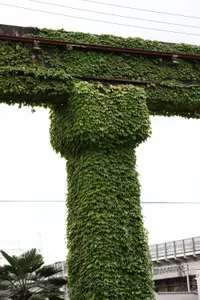
Japanese creeper, Parthenocissus tricuspidata, is a fast-growing deciduous vine commonly used to cover walls, fences, and pergolas. It clings to surfaces with small adhesive pads, creating dense, uniform coverage.
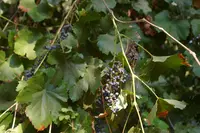
Leaves are typically three-lobed and turn strong shades of red and purple in autumn, giving striking seasonal color. The plant produces small, inconspicuous flowers followed by dark berries that attract birds.
Japanese creeper is native to East Asia, especially China, Korea, and Japan, and adapts well to many temperate climates. It is generally robust and easy to establish but can become vigorous and needs space and regular control.
It tolerates a wide range of soils and light conditions, from sun to partial shade, which simplifies how to care for Japanese Creeper in gardens and urban landscapes.

Care Difficulty
Easy Care

Light Preference
Full Sun

Water Requirements
Moderate Water

Temperature Preference
Cold Hardy

Hardiness Zone
4–8

Soil Texture
Loamy, Clay, Organic-rich

Soil pH
Acidic (5.5–6.5), Slightly acidic (6.5–7.0)

Soil Drainage
Moist but well-drained

Fertilization
Minimal (feed rarely)
Scan your plant to receive care tips personalized for your specific plant
Available on iOS and Android
This vigorous climber prefers bright outdoor light and can handle a range of sun exposures with some protection.
This species prefers evenly moist, well-drained soil once established in the landscape.
This hardy vine tolerates a wide temperature range but grows best in moderate seasonal conditions.
Humidity is not a major concern for Parthenocissus tricuspidata in typical outdoor conditions.
Parthenocissus tricuspidata accepts many soil types but performs best in structured, moisture-retentive yet well-drained ground.
This vine can be grown in containers if the pot is large and stable enough to support vigorous climbing growth.
This vigorous climber usually needs only modest feeding, especially in the ground.
Pruning Parthenocissus tricuspidata controls size, supports structure, and keeps the vine healthy.
This vine is most often grown in the ground, so transplanting is more common than container repotting.
Parthenocissus tricuspidata is commonly propagated by cuttings and simple layering.
This hardy vine generally needs minimal winter care in most temperate climates.

Plant Health Check
Not sure what's wrong with your plant? Check your plant's health inside the app.
Its young tendrils end in adhesive pads that act like tiny suction cups, allowing the vine to cling to smooth stone, glass, and metal surfaces without penetrating or damaging the substrate like true root climbers do.
Dense summer foliage can significantly shade masonry walls, helping reduce surface temperatures, while leaf drop in autumn restores solar gain in winter, so building facades experience a form of seasonal temperature regulation.
The abundant blue-black berries provide autumn and winter food for birds such as starlings and pigeons, while the dense foliage offers cover and nesting sites for urban wildlife, which is one reason growing Japanese Creeper is often encouraged on large walls and fences.

This species was famously planted on the ivy-covered walls of Ivy League universities like Harvard and Yale, and its dramatic autumn color and distinctive leaf shape helped popularize the very idea of an “ivy-clad” academic campus in North America and Europe.
This vine spreads rapidly by vigorous stems and adhesive pads, easily covering large surfaces. In many regions it can become invasive, so regular pruning and clear boundaries are important when growing Japanese Creeper near structures, fences, or neighboring plants.
Keep your plants happy and healthy with plant identification, disease detection, and easy care guidance.