Provide climbing support
Install a narrow trellis, wire mesh, or tensioned strings early, then gently wind young shoots onto the support so stems harden in the desired direction and fruit hangs cleanly off the ground.

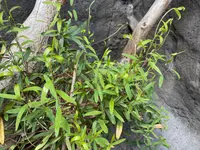
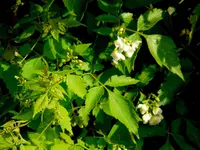
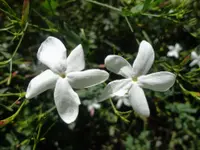
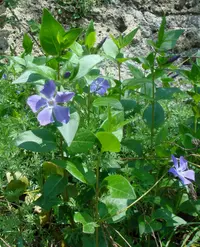
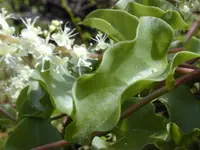
Sweet apple-berry (Billardiera cymosa) is a twining shrub or light climber native to southern Australia. It often scrambles through other plants or along supports, forming a delicate, informal tangle of stems. The plant carries narrow green leaves and clusters of pale, tubular to bell-shaped flowers that mature into small, elongated purple berries. It suits mild, frost-free or only lightly frosty climates and adapts well to cottage, coastal, and bush-style gardens. Growth is generally moderate and manageable, which helps simplify how to care for sweet apple-berry. It prefers light shade to morning sun, moderately moist but well-drained soil, and some shelter from harsh, drying winds.

Care Difficulty
Moderate Care

Light Preference
Partial Shade

Water Requirements
Moderate Water

Temperature Preference
Warm Climate

Hardiness Zone
9–11

Soil Texture
Sandy, Loamy, Organic-rich

Soil pH
Acidic (5.5–6.5), Slightly acidic (6.5–7.0)

Soil Drainage
Well-drained

Fertilization
Minimal (feed rarely)
Scan your plant to receive care tips personalized for your specific plant
Available on iOS and Android
This twining shrub prefers bright positions with mild protection from harsh midday sun.
This species prefers consistently moist but not saturated soil with brief drying at the surface between waterings.
This plant grows best in mild, temperate conditions without prolonged frost or extreme heat.
This species handles a wide humidity range but grows best with moderate ambient moisture.
Soil for this species should be loose, free-draining, and slightly fertile to support steady root growth.
This species is suitable for container growing when the pot is chosen to match its twining, vining habit.
Billardiera cymosa benefits from modest feeding in containers or poor soils, but established in-ground plants need minimal fertilizer.
Billardiera cymosa responds well to light structural pruning that maintains a tidy, flowering vine.
This species is more often grown in the ground, so focus on careful transplanting rather than frequent repotting.
Billardiera cymosa is commonly propagated by seeds or semi-ripe cuttings under suitable conditions.
In mild climates, Billardiera cymosa usually needs only light winter attention outdoors.

Plant Health Check
Not sure what's wrong with your plant? Check your plant's health inside the app.
This species is a twining woody climber that uses its flexible stems to scramble through shrubs and low trees rather than relying on tendrils or adhesive roots.
It produces clusters of pendent, bell-shaped flowers that typically start cream to pale yellow and often age to deeper yellow or greenish tones, providing a subtle but long-lasting floral display.
In southern Australia it is naturally found in open forests and coastal scrub, where it often occupies semi-shaded positions under taller vegetation and benefits from the shelter of surrounding plants.
Poor flowering is often caused by insufficient light, heavy pruning at the wrong time, or excess nitrogen fertilizer. Ensure bright conditions, avoid cutting young flowering shoots, and use a balanced, low-nitrogen feed to support bud formation.
Keep your plants happy and healthy with plant identification, disease detection, and easy care guidance.