Support long petioles
Install a low, stable ring stake or small trellis and loosely tie the long petioles with soft plant ties to prevent mechanical damage and tipping as leaves elongate and become heavier.

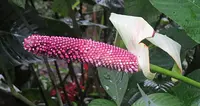
Anthurium nymphaeifolium is a tropical aroid grown mainly for its long, pendant leaves and distinctive vein patterns. It is usually grown as an ornamental foliage plant indoors or in greenhouses.
In nature, it is found in humid forests of Central and South America, often growing as an epiphyte on trees or on mossy, well-drained substrates. Its growth habit is vining to trailing, so it often benefits from support or space to hang.
This species prefers warm, stable conditions with bright, filtered light, consistent moisture, and airy, organic-rich soil. With adequate humidity and stable care, many growers find it moderately easy to care for Anthurium nymphaeifolium.

Care Difficulty
Moderate Care

Light Preference
Bright Indirect Light

Water Requirements
Keep Soil Moist

Temperature Preference
Tropical / Frost Sensitive

Hardiness Zone
11–12

Soil Texture
Loamy, Peaty, Organic-rich

Soil pH
Acidic (5.5–6.5), Slightly acidic (6.5–7.0)

Soil Drainage
Moist but well-drained

Fertilization
Light (every 4–6 weeks)
Scan your plant to receive care tips personalized for your specific plant
Available on iOS and Android
This species prefers bright, filtered light that mimics a forest understory.
Moist but well-aerated substrate supports healthy root growth for this aroid.
Stable, warm conditions are important for steady growth and leaf health.
This species benefits from consistently high humidity to maintain healthy foliage.
This aroid prefers a loose, airy, organic-rich mix that drains very quickly yet stays slightly moist.
This species is well suited to container growing when the pot supports its upright, potentially large foliage.
Moderate, consistent feeding supports healthy foliage and flowering in Anthurium nymphaeifolium.
Light pruning keeps Anthurium nymphaeifolium tidy and reduces disease risk.
Thoughtful repotting maintains root health and supports stable growth for this aroid.
Vegetative propagation is the most reliable way to maintain true-to-type Anthurium nymphaeifolium plant care.
This tropical species is frost-sensitive and needs warm, stable indoor conditions in winter.

Plant Health Check
Not sure what's wrong with your plant? Check your plant's health inside the app.
This species often grows on vertical, mossy rock walls in its native Andean habitat, with its long pendant leaves hanging down like a leafy waterfall and helping it shed excess water efficiently in heavy rain.
The leaf blade is matte to slightly velvety rather than glossy, with a pronounced midrib and drip tip that channel water away from the lamina, an adaptation that reduces fungal problems in constantly wet cloud-forest conditions.
It produces long internodes and strong aerial roots that anchor it to rocks or trees, allowing the plant to access better light and airflow in the lower montane forests of Colombia and Ecuador.
This species works well indoors if given bright, filtered light, high humidity, and a well-draining aroid mix. Its long, pendant leaves create a strong focal point, especially in taller pots, plant stands, or near moss poles.
Keep your plants happy and healthy with plant identification, disease detection, and easy care guidance.