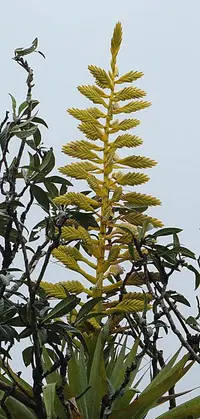
Pink manjack Care (Tabebuia heterophylla)

Also known as: Pink Trumpet-tree, Heterophyllous Yellow Pui
Pink manjack

About Pink manjack

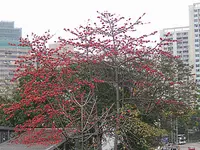
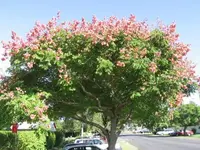
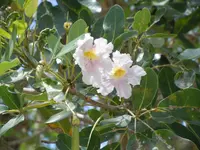
Pink manjack, Tabebuia heterophylla, is a small to medium flowering tree valued for its soft pink, trumpet-shaped blooms. It is semi-evergreen in warm climates and forms a neat, rounded canopy with a relatively straight trunk.

This species is native to the Caribbean, where it grows in coastal and lowland areas, often tolerating wind and salt spray. In suitable climates it is considered moderately easy to grow, provided it receives ample sun and well-drained soil.

Growth is steady rather than fast, and young trees appreciate some protection from severe cold or prolonged drought. Gardeners who learn how to care for Pink manjack usually find it a dependable ornamental tree for streets, yards, and larger containers in frost-free regions.

Main Plant Requirements

Care Difficulty

Moderate Care

Light Preference

Full Sun

Water Requirements

Moderate Water

Temperature Preference

Tropical / Frost Sensitive

Hardiness Zone

10–11

Soil Texture

Sandy, Loamy, Organic-rich

Soil pH

Slightly acidic (6.5–7.0), Neutral (7.0)

Soil Drainage

Well-drained

Fertilization

Minimal (feed rarely)

Get Personalized Care Plan

Scan your plant to receive care tips personalized for your specific plant

Available on iOS and Android

How to Care for the Pink manjack

This tropical tree grows best with strong, direct light in warm climates.

  • Provide 6–8 hours of full sun daily; morning and midday sun are ideal, with only light shade in late afternoon in very hot areas.
  • Pink manjack tolerates light partial shade, but flowering and canopy density decrease if it receives less than 4–5 hours of direct sun.
  • Young trees can sunburn in intense heat; use temporary shade cloth their first 1–2 summers and ensure open exposure in winter when sun is lower.

This species prefers evenly moist, well-drained soil once established in the landscape.

  • Water when the top 3–5 cm of soil feel dry, allowing deeper soil to stay slightly moist but never saturated.
  • In the first 1–2 years, monitor closely during hot, dry periods; wilting new leaves or curling edges indicate the need for a deep soak.
  • Reduce watering in cool or rainy seasons, and avoid standing water or heavy clay without amendments, which can cause yellowing leaves and root rot in Tabebuia heterophylla.

This tree thrives in warm, frost-free climates with mild seasonal shifts.

  • Ideal growth occurs at 70–90°F (21–32°C), where flowering and canopy expansion are most vigorous.
  • The tree is damaged near 32°F (0°C) and may die back or fail to flower if exposed repeatedly below 28°F (−2°C).
  • Mature trees handle dry heat up to about 100°F (38°C) if soil moisture is stable, but young plants need mulch and protection from hot, drying winds in summer.

This species tolerates a wide humidity range and usually does not need special humidity management outdoors.

Tabebuia heterophylla prefers freely draining, moderately fertile soil that does not stay waterlogged.

  • Use a loamy or sandy loam base enriched with a modest amount of compost to support steady growth without becoming heavy.
  • Ensure drainage is rapid by avoiding high clay content and by incorporating coarse sand or fine gravel if the site is slow-draining.
  • Aim for slightly acidic to neutral pH, around 6.0–7.0, which supports nutrient availability for this species.
  • Avoid compacted or consistently wet spots, and break up the planting hole sides to improve aeration and root penetration.

This tree can be grown in containers when kept small, although long-term cultivation is challenging due to size and root vigor.

  • Choose a deep, heavyweight container to accommodate the developing taproot and to reduce tipping in windy conditions.
  • Use a fast-draining, bark-based mix to keep the root zone aerated while still retaining enough moisture for active growth.
  • Position the pot where it will not overheat on all sides, since dark containers in full sun can raise root-zone temperatures excessively.

Tabebuia heterophylla benefits from modest feeding to support steady growth and flowering when grown as an ornamental Pink manjack.

  • Use a balanced slow-release fertilizer (for example 10-10-10) or well-rotted compost in spring at the start of active growth.
  • Apply granular slow-release around the drip line, lightly working it into the top 2–3 cm of soil and watering in well.
  • Feed every 8–10 weeks during the warm growing season; avoid additional fertilizer from late fall through winter.
  • For container-grown plants, use a balanced liquid fertilizer at 1/2 strength every 4–6 weeks in spring and summer only.

Pruning Tabebuia heterophylla helps develop a strong framework and maintain clear structure without excessive intervention.

  • Carry out main pruning in late winter or very early spring before new growth starts.
  • Remove dead, diseased, crossing, or storm-damaged branches with sharp, clean bypass pruners or a pruning saw.
  • Thin dense interior twigs to improve light penetration and airflow, encouraging healthier foliage and flowering.
  • Shorten or remove poorly placed shoots on young trees to establish a single leader and balanced scaffold branches.

This tree is usually grown in the ground, so care focuses on transplanting young specimens from containers into permanent sites.

  • Look for roots circling the pot, reduced growth, or quick drying soil as signs a nursery plant is ready to move up or into the ground.
  • Transplant in late spring or early summer once soil is warm and risk of frost has passed.
  • Shift young container plants to a pot 2–5 cm wider every 1–2 years until planted out, using a free-draining, slightly loamy mix.
  • At planting, gently tease circling roots, water deeply, then keep soil evenly moist and mulch the root zone to limit transplant shock.

New Tabebuia heterophylla plants are most commonly raised from seed, with cuttings used less often for selected forms.

  • Collect ripe pods in late summer to early fall, then dry and extract seeds for sowing.
  • Sow seeds in a well-drained seed mix, barely covered, and keep at 70–80°F with bright, indirect light for reliable germination.
  • Maintain lightly moist, not waterlogged, substrate and provide gentle air movement to limit damping-off, a common seedling disease.
  • For semi-hardwood cuttings in late spring or summer, use rooting hormone, a coarse, airy medium, bottom heat, and high humidity.

This tropical to subtropical tree is frost sensitive and needs winter protection in regions with temperatures near or below freezing.

  • In ground, use a 5–8 cm layer of organic mulch over the root zone, keeping it a few cm away from the trunk.
  • Wrap young trunks with breathable horticultural fleece or burlap during cold spells to limit bark damage.
  • Grow container plants in large pots that can be moved indoors or into a frost-free greenhouse before temperatures drop below 40°F.
  • Water sparingly in winter, allowing the top of the soil to dry slightly, while avoiding complete root desiccation.

Care Tips

Early structural pruning

In the first 3–5 years, remove competing leaders and lightly shorten overly vigorous side branches to encourage a single strong trunk and balanced canopy that resists storm damage later.

Wind exposure management

In open or coastal sites, install temporary staking and windbreak mesh on the windward side for the first 1–2 seasons, then remove supports once the trunk has thickened to avoid long-term dependency and rubbing injuries.

Calcium and boron checks

On very sandy or limestone-derived soils, test for calcium and micronutrients every 2–3 years and correct deficiencies with a balanced, slow-release product to reduce tip dieback and improve flowering wood quality.

Root competition control

Keep a 60–90 cm grass-free mulch ring around the trunk so feeder roots do not have to compete with turf for water and nutrients, which supports faster establishment and better flowering.

Storm season preparation

Before the windiest season, remove dead or crossing branches and shorten long, weakly attached limbs by 20–30% of their length to lower breakage risk while maintaining the natural form when caring for Pink manjack.

Common Pests and Diseases

Pink hibiscus mealybug

This pest feeds on young shoots, leaves, and flower buds, causing distortion, leaf curling, and sooty mold development on honeydew deposits. Symptoms include white cottony clusters on stems, leaf nodes, and under leaves.

Solution

Prune and destroy heavily infested shoots, then wash remaining foliage with a strong stream of water to dislodge colonies. For persistent infestations, treat with a horticultural oil or insecticidal soap, repeating every 7–10 days until new growth appears clean and monitoring nearby Tabebuia heterophylla trees for reinfestation.

Leaf beetle defoliation

These insects chew irregular holes in the leaf blades and can cause partial defoliation, especially on young trees or new flushes of growth. Symptoms include skeletonized leaves, ragged edges, and scattered feeding damage across the canopy.

Solution

Collect and destroy adult beetles and larvae from reachable branches and remove heavily damaged leaves to reduce population buildup. For larger trees or severe outbreaks, use a targeted foliar spray containing spinosad or pyrethrin in the evening, and encourage natural predators by avoiding broad-spectrum insecticides around the planting site.

Scale insects

This pest appears as small, fixed bumps on stems and leaf undersides and feeds on sap, leading to yellowing leaves and reduced vigor. Honeydew excretion can encourage black sooty mold on leaves and nearby surfaces.

Solution

Gently scrape off or wipe scale colonies with a soft cloth or brush dipped in diluted alcohol, then follow with an application of horticultural oil to smother remaining insects. Repeat treatments every 2–3 weeks during active growth and improve overall Tabebuia heterophylla care by avoiding excess nitrogen, which can encourage soft, scale-prone growth.

Leaf spot

This disease causes scattered brown, tan, or purplish spots on leaves, sometimes with a yellow halo and premature leaf drop during warm, wet periods. Symptoms include thinning foliage and a buildup of spotted leaves under the canopy.

Solution

Remove and dispose of fallen and heavily spotted leaves to reduce the source of infection and avoid overhead irrigation that keeps foliage wet. Improve air movement around the canopy by light thinning cuts, and, in recurring severe cases, apply a copper-based fungicide at the start of the rainy season following label directions.

Powdery mildew

This disease forms white to grayish powdery patches on young leaves, shoots, and sometimes flower buds, leading to distortion and reduced flowering. Symptoms include dull, curled foliage and a dusty coating that rubs off on fingers.

Solution

Increase sunlight and airflow around the tree canopy by spacing plantings properly and selectively thinning crowded branches. Remove heavily affected shoots and apply a sulfur or potassium bicarbonate fungicide when first patches appear, repeating as needed during extended warm, dry periods that favor powdery mildew development.

Interesting Facts

Caribbean dry-forest specialist

This species is naturally native to dry coastal forests of the Lesser Antilles and nearby islands, where it is adapted to shallow, often rocky soils and a pronounced dry season.

Semi-deciduous flowering habit

Pink manjack often drops a significant portion of its leaves at the end of the dry season, then produces flushes of pale pink, trumpet-shaped flowers, making the blooms more visible on the relatively bare branches.

Narrow, winged seeds

Its long, slender pods split open to release many flat, papery seeds with thin wings, an adaptation that allows efficient wind dispersal in open coastal and urban environments.

Botan icon

Did you know?

In several Caribbean islands this tree is used as an ornamental street and shade tree because it tolerates reflected heat, air pollution, and compacted urban soils better than many native forest species, making Tabebuia heterophylla care relatively straightforward in city landscapes.

FAQs about Pink manjack

Growth is moderate. Young trees usually add about 30–60 cm per year under warm, frost‑free conditions with enough moisture and nutrition. Growth slows once structural branches form and the canopy begins to fill out.

Grow Healthy Plants with Botan Care

Keep your plants happy and healthy with plant identification, disease detection, and easy care guidance.

Botan plant care app — identify plants on mobile

Explore More Plants