Mounting strategy
Mount plants on open, inorganic materials like cork bark, hardwood, or plastic-coated wire grids so that water drains off quickly and air can move freely around the entire base.

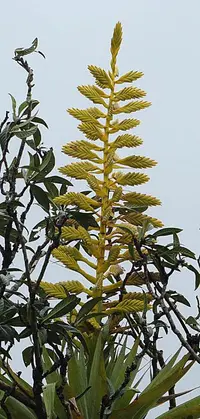
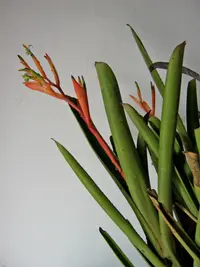
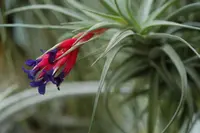
Tillandsia oerstediana is an epiphytic air plant from Central American cloud forests, where it grows attached to trees rather than in soil. It forms a rosette of stiff, often silvery-green leaves that can develop attractive banding and produce a tall, showy flower spike.
This species prefers bright, filtered light, good air movement, and regular moisture from mist or soaking, which reflects its naturally humid, breezy habitat. Once its basic needs are understood, it is moderate in difficulty, and learning how to care for Tillandsia oerstediana mainly involves balancing light and moisture without allowing the plant to stay wet for long periods.

Care Difficulty
Moderate Care

Light Preference
Partial Shade

Water Requirements
Moderate Water

Temperature Preference
Tropical / Frost Sensitive

Hardiness Zone
Unknown

Soil Texture
Rocky, Organic-rich

Soil pH
Acidic (5.5–6.5)

Soil Drainage
Well-drained

Fertilization
Light (every 4–6 weeks)
Scan your plant to receive care tips personalized for your specific plant
Available on iOS and Android
This species prefers bright conditions with some protection from harsh midday sun.
Watering focuses on thorough wetting followed by quick drying of leaves and base.
Stable, warm conditions support consistent growth and flowering.
This epiphytic air plant prefers consistently moist air to maintain healthy foliage.
As an epiphytic species, this plant should not be grown in traditional potting soil but mounted on a well-aerated, fast-drying base.
This species can be displayed in containers, but the container functions mainly as a holder, not as a traditional potting environment.
Nutrient needs are moderate, so light feeding supports healthy growth without overwhelming this epiphytic bromeliad.
Pruning focuses on hygiene and maintaining a tidy clump rather than shaping this air plant.
This species is usually mounted rather than potted, so transplanting means refreshing its support and position.
Propagation is most reliable from offsets that form naturally around the mother plant.
Cold sensitivity means outdoor plants in cool climates need thoughtful winter management.

Plant Health Check
Not sure what's wrong with your plant? Check your plant's health inside the app.
This species forms a tight rosette that holds water in a central tank, allowing it to trap leaf litter and organic debris that slowly decompose and supply nutrients to the plant in its cloud forest habitat.
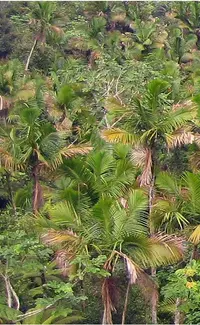
It naturally occurs in humid montane forests of Central America, often in cooler, misty conditions with frequent fog and diffuse light rather than in hot, exposed lowland sites.
The broad, silvery-green leaves are densely covered with trichomes, specialized hair-like scales that rapidly absorb water from fog and brief showers, an adaptation to frequent but low-volume moisture in the canopy.
This species usually needs to reach mature size and experience a slight seasonal drop in night temperature to initiate flowering. Insufficient light intensity, poor air circulation, or nutrient depletion over many years can also delay or prevent bloom formation.
Keep your plants happy and healthy with plant identification, disease detection, and easy care guidance.