Wind acclimation
In the first 2–3 years, gradually expose young trees to stronger wind by avoiding solid fences or walls directly upwind, which encourages sturdier trunks and better root anchorage.

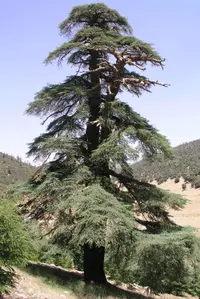
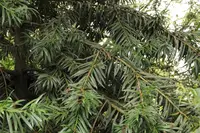
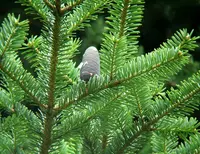
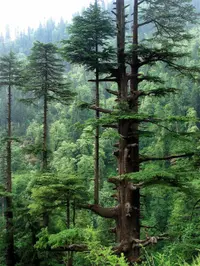
Atlas cedar, Cedrus atlantica, is a long-lived evergreen conifer grown mainly as a landscape tree. It develops a strong central trunk with layered, spreading branches and dense clusters of short, needle-like leaves in blue-green or silvery shades.
In nature, it is native to the Atlas Mountains of Morocco and Algeria, where it grows on rocky slopes and well-drained mountain soils. It generally prefers full sun, moderate moisture, and deep, well-drained soil.
This species is considered moderately easy to grow in suitable climates but needs space, patience, and good site selection. Understanding how to care for Atlas Cedar helps it form a stable structure and maintain healthy, attractive foliage over time.

Care Difficulty
Moderate Care

Light Preference
Full Sun

Water Requirements
Low Water

Temperature Preference
Cold Hardy

Hardiness Zone
6–9

Soil Texture
Sandy, Loamy, Rocky

Soil pH
Acidic (5.5–6.5), Slightly acidic (6.5–7.0)

Soil Drainage
Well-drained

Fertilization
Minimal (feed rarely)
Scan your plant to receive care tips personalized for your specific plant
Available on iOS and Android
This species is a sun-loving conifer that develops best color and structure with strong light exposure.
Cedrus atlantica prefers deep, infrequent watering once established, with soil allowed to dry slightly between soakings.
This conifer is cold hardy yet also tolerates a broad temperature range when established in the landscape.
This species tolerates a wide humidity range and rarely needs special humidity management outdoors.
Cedrus atlantica performs best in mineral, well-aerated soil that never stays waterlogged.
This species can be grown in containers when kept as a young or dwarf specimen rather than a long-term full-size tree.
This conifer grows well in moderately fertile soil and usually needs only light supplemental feeding.
Cedrus atlantica needs minimal pruning, mainly to maintain structure and remove damaged growth.
This species is seldom kept long-term in containers, so guidance focuses on safe transplanting from pots to the landscape.
Reproduction of this cedar is usually done by seeds or grafting in professional settings, and home propagation is slow and challenging.
Mature trees are generally cold hardy in suitable climates and need little active winter care once established.

Plant Health Check
Not sure what's wrong with your plant? Check your plant's health inside the app.
Many wild and cultivated forms have needles with a distinct blue to blue-green waxy coating, which helps reduce water loss and reflects intense mountain sunlight in its native Atlas Mountains.
This species occurs naturally only in the Atlas Mountains of Morocco and Algeria, where it forms high-elevation forests between roughly 1,300–2,600 m on limestone and dolomite slopes.
Its strongly layered, horizontally spreading branches and flexible shoots allow it to shed snow and withstand strong mountain winds, which is one reason it is used as a hardy ornamental conifer in temperate climates.

Some individuals of this species are believed to exceed 600 years of age in their native range, making mature Atlas cedars long-lived structural components of high-mountain forest ecosystems in North Africa.
This species grows slowly to moderately, usually about 20–30 cm per year under good conditions. Growth is faster in deep, well-drained soil with consistent moisture, and slower in compacted, dry, or nutrient-poor sites.
Keep your plants happy and healthy with plant identification, disease detection, and easy care guidance.