Site drainage test
Before planting, dig a 20–30 cm deep hole, fill it with water, and only plant where the water drains completely within 30–45 minutes, since slow-draining sites greatly increase root rot risk for this species.

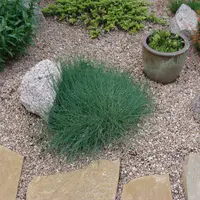
Death Valley jointfir (Ephedra funerea) is a desert shrub adapted to very dry, harsh environments. It is a gymnosperm, related to conifers but with jointed green stems instead of typical leaves. Mature plants form dense, broom-like clumps of thin, stiff, gray-green stems, often growing among rocks and gravel. Small, scale-like leaves sit at the joints, and yellowish cones appear rather than showy flowers. This species is native to the Mojave Desert, especially Death Valley and nearby arid regions. It thrives in full sun, extreme heat, and very fast-draining, mineral soils. These traits make it drought-tolerant but difficult outside similar climates, so understanding how to care for Death Valley jointfir starts with recreating dry, lean conditions and avoiding excess water.

Care Difficulty
Hard Care

Light Preference
Full Sun

Water Requirements
Low Water

Temperature Preference
Cold Hardy

Hardiness Zone
7–9

Soil Texture
Sandy, Rocky

Soil pH
Neutral (7.0), Slightly alkaline (7.0–7.5)

Soil Drainage
Well-drained

Fertilization
Minimal (feed rarely)
Scan your plant to receive care tips personalized for your specific plant
Available on iOS and Android
This desert shrub needs intense, direct sun to stay compact and healthy.
This species is highly drought-adapted and must stay on the dry side to avoid root problems.
This desert plant prefers hot, dry conditions and tolerates wide temperature swings.
This desert shrub tolerates very dry air and does not need raised humidity.
Ephedra funerea prefers extremely fast-draining, mineral soils that mimic desert scree or gravel fans.
This species can be grown in containers if the setup preserves its desert-like drainage and root conditions.
Ephedra funerea is adapted to extremely poor desert soils and usually grows best with little or no fertilizer.
Pruning Ephedra funerea is light and mostly corrective, aimed at maintaining plant health and a natural form.
This desert shrub is seldom container-grown, so care focuses on careful site transplanting rather than frequent repotting.
Propagation of Ephedra funerea is usually done from seed and is considered slow and specialized rather than routine home practice.
This species is highly cold hardy in arid regions and normally needs no special winter care beyond good drainage.

Plant Health Check
Not sure what's wrong with your plant? Check your plant's health inside the app.
This shrub naturally occurs only in a few desert mountain ranges of eastern California and adjacent Nevada, mainly around Death Valley and the Mojave Desert, making it a regionally endemic species with a very patchy distribution.
It often grows on barren, carbonate-rich rocky slopes and gravelly fans where soil is extremely shallow and low in organic matter, showing strong adaptation to harsh, low-nutrient substrates.
The plant forms a dense, low mound of jointed green stems with very small, scale-like leaves, an architecture that reduces water loss and allows it to survive intense desert sun and drought, an important point for Ephedra funerea care instructions.

Ephedra funerea is considered one of the characteristic shrubs of the so‑called funeral mountains region near Death Valley, and its species name funerea directly refers to these Funeral Mountains, tying its scientific identity to this specific desert landscape.
This species grows slowly, usually adding only a few centimeters in height and spread each year. Growth is fastest in very sharp-draining, low-organic, sandy or gravelly soils with full sun and minimal supplemental water, similar to desert habitat.
Keep your plants happy and healthy with plant identification, disease detection, and easy care guidance.