


Early vine support
Install a strong, long-term support such as a heavy-duty pergola, chain, or galvanized wire before the vine matures, because stems become woody and difficult to redirect later.

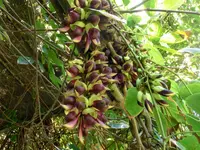
Long-fruited mucuna (Mucuna macrocarpa) is a vigorous, woody climbing vine from warm forests in East Asia, including parts of Japan, Taiwan, and China. It is mainly grown as an ornamental curiosity rather than a common garden plant.
The plant forms long, pendulous flower clusters followed by very large, elongated pods that give it its name. It needs strong support, such as a pergola or sturdy trellis, and can become quite heavy with age.
In suitable climates it prefers warm temperatures, consistent moisture, and fertile, well-drained soil with good light but some protection from harsh sun. These strong growth demands and size make how to care for long-fruited mucuna more challenging for small gardens or casual growers.

Care Difficulty
Hard Care

Light Preference
Partial Shade

Water Requirements
Regular Water

Temperature Preference
Tropical / Frost Sensitive

Hardiness Zone
11–13

Soil Texture
Loamy, Sandy, Organic-rich

Soil pH
Acidic (5.5–6.5), Slightly acidic (6.5–7.0)

Soil Drainage
Moist but well-drained

Fertilization
Light (every 4–6 weeks)
Scan your plant to receive care tips personalized for your specific plant
Available on iOS and Android
This vigorous tropical vine needs bright, indirect light with some direct sun to flower well.
This species prefers consistently moist but not waterlogged soil, with slight surface drying between waterings.
This tropical liana grows best in warm, stable temperatures without frost exposure.
This vigorous tropical climber benefits from moderately high, stable humidity.
Mucuna macrocarpa prefers deep, airy, moisture-retentive but fast-draining soil.
This species can be grown in containers if provided with strong support and careful moisture management.
This vigorous tropical vine benefits from moderate feeding during active growth but does not need heavy fertilization for good performance.
Mucuna macrocarpa benefits from thoughtful pruning to manage its vigorous climbing habit and maintain safe structure.
This large, woody vine is usually grown in the ground, so focus on careful transplanting rather than frequent container repotting.
This species is mainly propagated from seed, which requires warmth and patience for reliable establishment.
This tropical vine is frost-sensitive and needs protection in regions with cold winters.

Plant Health Check
Not sure what's wrong with your plant? Check your plant's health inside the app.
This large woody vine produces heavy, hanging flower clusters that open at night and are pollinated mainly by fruit bats attracted to the copious nectar and strong scent.
The species forms very large, thick-walled seed pods that can grow longer than a human forearm and remain conspicuous on the plant long after flowering.
It naturally occurs as a canopy-climbing liana in warm, humid evergreen forests of East and Southeast Asia, relying on tall support trees to reach full size and reproduce.

In parts of its native range, local people sometimes use the enormous, hard pods of this species in crafts or as curiosities, because their striking size and shape make them visually distinctive even long after the seeds have fallen out.
This species is a vigorous woody vine that climbs rather than creeping along the ground. It ascends by twining stems around sturdy supports such as trees, trellises, or pergolas and can form dense vertical coverage over time.
Keep your plants happy and healthy with plant identification, disease detection, and easy care guidance.

-1-200x133.webp)
Pencil Cactus
Euphorbia tirucalli
Barbados cherry
Malpighia emarginata
Philodendron pastazanum
Philodendron pastazanum
 POPULAR
Philodendron verrucosum
Philodendron verrucosum
Philodendron pedatum
Philodendron pedatum
Tillandsia oerstediana
Tillandsia oerstediana
graybark grape
Vitis cinerea

Apple
Malus domestica 'Fuji'