Root-zone stability
Use a heavy, mineral-rich top dressing (such as coarse gravel) around the base to anchor the plant and reduce stem wobble as it elongates, which lowers the risk of root disturbance when moving the pot.

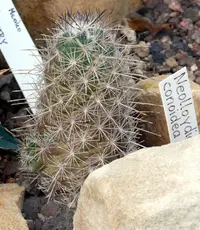
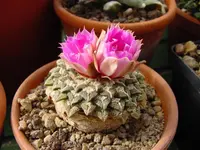
Texas cone cactus, Cochemiea conoidea, is a small desert cactus known for its upright, cone-shaped stems covered in tight spirals of tubercles and spines. It usually grows as solitary or few-stemmed clumps that stay compact, which makes it suitable for containers and small spaces.
This species is native to arid regions of Texas and northern Mexico, where it experiences strong sun, high temperatures, and very low rainfall. Its slow growth, drought tolerance, and sensitivity to excess moisture guide how to care for Texas cone cactus. It generally prefers bright light, very well-drained mineral soil, and careful, infrequent watering.

Care Difficulty
Moderate Care

Light Preference
Full Sun

Water Requirements
Low Water

Temperature Preference
Warm Climate

Hardiness Zone
9–11

Soil Texture
Sandy, Rocky, Loamy

Soil pH
Slightly acidic (6.5–7.0), Neutral (7.0)

Soil Drainage
Well-drained

Fertilization
Minimal (feed rarely)
Scan your plant to receive care tips personalized for your specific plant
Available on iOS and Android
This desert cactus thrives in bright, mostly direct sun with some protection from the harshest hours.
This species prefers infrequent, deep watering that allows the root zone to dry thoroughly between events.
This cactus prefers warm, dry conditions and reacts poorly to prolonged cold or damp.
This species prefers very dry air and rarely suffers from low indoor humidity.
Cochemiea conoidea needs a very fast-draining, mineral-rich substrate that dries rapidly between waterings.
This cactus is well suited to container growing when planted shallowly in a very free-draining mix.
This cactus needs only modest feeding to maintain compact, healthy growth in containers.
Pruning needs for Cochemiea conoidea are minimal and focus on sanitation rather than shaping.
Container-grown plants benefit from infrequent, careful repotting into very free-draining cactus mix.
This species is most reliably propagated from seeds, with stem offsets used when available.
Cool, dry winter conditions are important for healthy dormancy and flowering the following season.

Plant Health Check
Not sure what's wrong with your plant? Check your plant's health inside the app.
Young plants often show irregular, somewhat scattered spines, but as stems mature they develop a more ordered spiral of strongly hooked central spines, which helps distinguish this species from similar small desert cacti.
This species is frequently associated with gypsum-rich or limestone-derived soils in the Chihuahuan Desert, indicating a strong tolerance for mineral-heavy, alkaline substrates that many other plants cannot exploit.
In its native range it is adapted to the North American monsoon pattern, staying dormant and shriveled in prolonged drought, then quickly rehydrating and producing new growth after warm summer rains.

Field observations show that this plant often grows nestled among rocks or in crevices, where the stone surfaces both reflect heat away from the stem and channel brief desert rainfalls toward its shallow roots, giving it a microsite advantage over less well-positioned neighbors.
This species grows slowly, usually adding only a few millimeters in height and girth each year. It may take many years to reach 10–15 cm tall, even under ideal conditions, which is normal for desert cacti.
Keep your plants happy and healthy with plant identification, disease detection, and easy care guidance.