


Deep container choice
Use a narrow, deep pot with excellent drainage holes so the long taproot can develop properly and the plant stays stable against wind or accidental knocks.

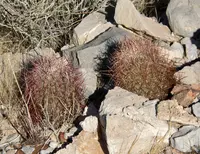
Johnson's bee-hive cactus, Sclerocactus johnsonii, is a small, slow-growing desert cactus known for its rounded body and dense, interlocking spines that resemble a beehive. It often stays compact, with a single stem that may produce a few offsets over many years.
This species is native to arid regions of the southwestern United States, where it grows in rocky, well-drained soils and experiences strong sun and wide temperature swings. Its slow growth, sensitivity to excess moisture, and need for very sharp drainage make it challenging for beginners who want to learn how to care for Johnson's Bee-hive Cactus.
In cultivation, it prefers bright light, cool dry winters, and a very gritty mineral soil that dries quickly after light watering.

Care Difficulty
Hard Care

Light Preference
Full Sun

Water Requirements
Low Water

Temperature Preference
Cold Hardy

Hardiness Zone
5–8

Soil Texture
Sandy, Rocky, Loamy

Soil pH
Slightly acidic (6.5–7.0), Neutral (7.0)

Soil Drainage
Well-drained

Fertilization
Minimal (feed rarely)
Scan your plant to receive care tips personalized for your specific plant
Available on iOS and Android
This small desert cactus needs strong light but benefits from gradual exposure to prevent sun stress.
This species is drought-adapted and must dry thoroughly between waterings to avoid root loss.
This cactus tolerates cold, but stable, dry conditions around its roots are critical for survival in low temperatures.
This cactus prefers very dry air and usually does not need humidity adjustment indoors.
This species needs very fast-draining, mineral, low-organic substrate that mimics a rocky desert habitat.
This cactus can be grown in containers if the pot is prepared to shed water very rapidly.
This desert cactus needs very light feeding, as it is adapted to nutrient-poor soils.
Pruning needs for Sclerocactus johnsonii are minimal and mainly hygiene-focused.
This species dislikes disturbance, so repot or transplant only when clearly necessary.
Propagation of Sclerocactus johnsonii is specialist work and usually done from seed under controlled conditions.
This species is cold hardy when kept very dry but still benefits from thoughtful winter management, especially in containers.

Plant Health Check
Not sure what's wrong with your plant? Check your plant's health inside the app.
This cactus forms a dense, beehive-like sphere with many narrow ribs and heavy, hooked central spines that arch over the body, creating a cage that shades the stem and reduces water loss in its hot, arid habitat.
It is native to the Colorado Plateau region of Utah, Colorado, and nearby areas, where it grows on barren, rocky, or gravelly slopes and benches, often in gypsum- or limestone-rich soils that few other plants tolerate.
In early to mid spring, it produces relatively large pink to purple flowers at the top of the small stem, taking advantage of brief cooler, moister conditions before summer heat becomes extreme.

This species is considered rare and vulnerable in parts of its range, and in some states it receives conservation attention because its small, scattered populations are easily impacted by habitat disturbance and illegal collection.
Blooming usually occurs in spring to early summer. It produces funnel-shaped flowers in pink to purplish tones, often with lighter centers. Flowering is brief, but individual plants may show several blooms over the season.
Keep your plants happy and healthy with plant identification, disease detection, and easy care guidance.

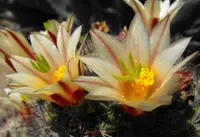
strawberry cactus
Cochemiea dioica
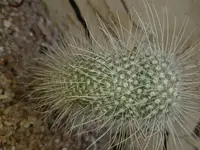
greenflower nipple cactus
Cochemiea barbata
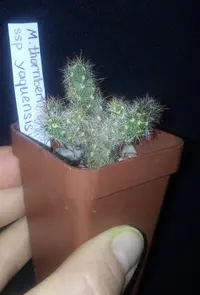
Thornber's fishhook cactus
Cochemiea thornberi
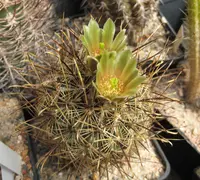
Scheer's fishhook cactus
Sclerocactus scheeri
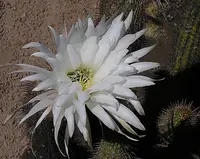
Soehrensia strigosa
Soehrensia strigosa
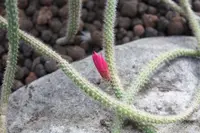
rattail cactus
Aporocactus flagelliformis

Lava cactus
Brachycereus nesioticus
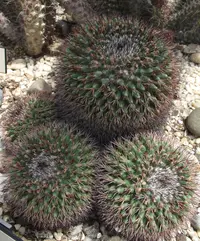
Cactus
Mammillaria bocensis