Deep container choice
Use an extra-deep, narrow pot with ample drainage holes to allow the strong taproot to develop fully and reduce the risk of root rot from trapped moisture near the base.

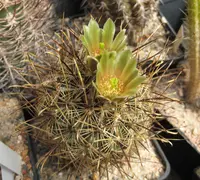
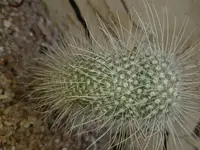
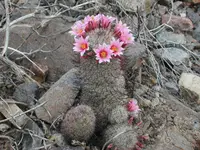
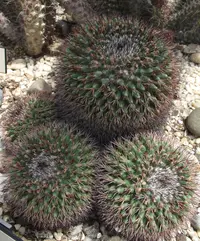
Scheer's fishhook cactus (Sclerocactus scheeri) is a small, strongly spined desert cactus known for its dense, hooked central spines and rounded to cylindrical body. It usually stays compact, forming a single stem rather than clumping extensively.
This species is native to arid regions of the southwestern United States and northern Mexico, where it grows in rocky, well-drained soils at higher elevations. Its slow growth, sensitivity to excess moisture, and need for very bright light make it more challenging than common house cacti.
Those who want to learn how to care for Scheer's fishhook cactus should provide strong light, cool dry rest periods, and a very gritty, fast-draining mineral substrate.

Care Difficulty
Hard Care

Light Preference
Full Sun

Water Requirements
Low Water

Temperature Preference
Cold Hardy

Hardiness Zone
5–9

Soil Texture
Sandy, Rocky, Loamy

Soil pH
Slightly acidic (6.5–7.0), Neutral (7.0)

Soil Drainage
Well-drained

Fertilization
Minimal (feed rarely)
Scan your plant to receive care tips personalized for your specific plant
Available on iOS and Android
This desert cactus needs strong sun with some protection from extreme afternoon intensity.
This species requires sparse, careful watering and excellent drainage.
This cactus is adapted to wide temperature swings but still has clear limits.
This cactus prefers very dry air and usually does not need extra humidity indoors.
This species needs a very fast-draining, mineral-heavy substrate to prevent root rot.
This species is suitable for container growing if the pot is set up to drain and dry quickly.
This desert cactus needs only light feeding to support healthy growth in cultivation.
Pruning Sclerocactus scheeri is minimal and mainly for health, not shaping.
This cactus dislikes frequent disturbance, so repot or transplant only when clearly needed.
Propagation of Sclerocactus scheeri is specialized and usually done from seed rather than offsets.
This species is quite cold tolerant when kept dry but still benefits from thoughtful winter care in cultivation.

Plant Health Check
Not sure what's wrong with your plant? Check your plant's health inside the app.
This species typically grows on very steep, rocky slopes and talus in the Chihuahuan Desert region, anchoring itself in coarse, mineral soils where few other plants can survive.
Its strongly hooked central spines help shade the stem from intense desert sun and can trap wind-blown debris, which slowly breaks down into a small but useful source of organic matter around the plant.
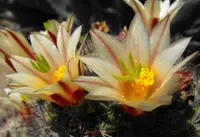
In spring, this cactus produces relatively large funnel-shaped flowers in shades of pink to magenta, which open during the day and are visited by native bees attracted by both color and pollen.

Some local populations of this cactus are highly restricted and vulnerable to illegal collecting, so it is considered of conservation concern in parts of its range and is best obtained only from reputable growers who propagate it legally rather than from wild-collected plants.
This species grows very slowly, often adding only a few millimeters in height and width each year. In cultivation it may take 5–10 years to reach a modest, mature clump under suitable conditions.
Keep your plants happy and healthy with plant identification, disease detection, and easy care guidance.