

Rosette spacing
Allow at least 45–60 cm of open space around each rosette so the stiff, spiny leaves can expand fully without crowding, which reduces airflow and lowers the risk of fungal issues at the crown.

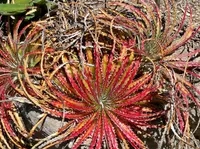
Texas false agave (Hechtia texensis) is a terrestrial bromeliad, not a true agave, forming stiff, spiny rosettes of narrow, toothed leaves. Mature plants develop an architectural, symmetrical shape that stands out in dry gardens and rockscapes.
This species is native to rocky slopes and canyons of Texas and northern Mexico, where it endures intense sun, heat, and drought. It is slow growing but long lived, and its sharp leaf margins require careful handling.
Hechtia texensis suits growers who prefer a tough, low-water plant and do not mind spines. Those learning how to care for Texas false agave should focus on strong light, very well-drained soil, and light, infrequent watering.

Care Difficulty
Moderate Care

Light Preference
Full Sun

Water Requirements
Low Water

Temperature Preference
Warm Climate

Hardiness Zone
7–10

Soil Texture
Sandy, Loamy, Rocky

Soil pH
Slightly acidic (6.5–7.0), Neutral (7.0)

Soil Drainage
Well-drained

Fertilization
Minimal (feed rarely)
Scan your plant to receive care tips personalized for your specific plant
Available on iOS and Android
This sun-loving desert bromeliad needs strong light to maintain compact growth and leaf color.
This drought-tolerant species prefers deep but infrequent watering and fast-draining soil.
This species tolerates a wide temperature range but grows best in warm, dry conditions.
This drought-adapted bromeliad handles low humidity well, so moisture in the air is rarely a concern indoors or outdoors.
Hechtia texensis needs very fast-draining, mineral-based soil that mimics rocky desert slopes.
This species grows well in containers when they provide fast drainage and strong stability for the spiny rosette.
This drought-adapted bromeliad needs minimal feeding, but light nutrition can support container-grown Texas false agave.
Hechtia texensis needs only light, functional pruning to keep the rosette tidy and safe to handle.
This species is usually grown in the ground, and transplanting should be infrequent and carefully planned.
Hechtia texensis is most often propagated by removing offsets, with seed used mainly by specialist growers.
This hardy desert bromeliad tolerates moderate frost but benefits from simple winter precautions in colder regions.

Plant Health Check
Not sure what's wrong with your plant? Check your plant's health inside the app.
This species is native to exposed, rocky limestone slopes and ledges in the Chihuahuan Desert region of Texas and northern Mexico, where it endures intense sun, high heat, and very low rainfall.
Its stiff, spiny rosette often grows from crevices in cliffs and boulders, with roots penetrating cracks in the rock to access limited moisture and stabilize the plant on steep faces.
The tall, branched inflorescences bear many small white to greenish flowers that produce nectar and are primarily visited by native bees and other insects in late spring to summer.

Hechtia texensis is considered one of the hardiest terrestrial bromeliads, surviving natural winter lows around 0°F in parts of its range, which is unusually cold-tolerant for a family best known from tropical and subtropical climates.
This species usually needs to reach full maturity, often many years, before flowering. Lack of strong light, cramped roots, or repeated cold damage can delay bloom. Once it flowers, the main rosette slowly declines afterward.
Keep your plants happy and healthy with plant identification, disease detection, and easy care guidance.

 POPULAR
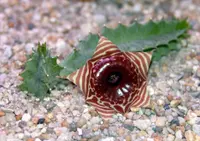
Lifesaver Plant
Huernia zebrina
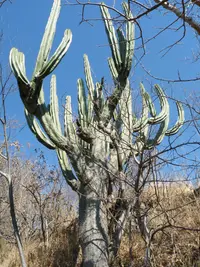
Pitaya de Queretaro
Stenocereus queretaroensis
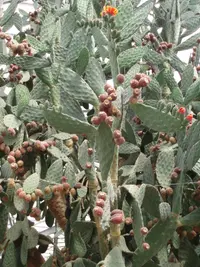
woollyjoint pricklypear
Opuntia tomentosa
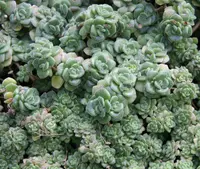
Aichryson tortuosum
Aichryson tortuosum
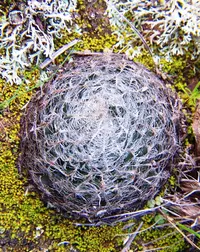
Spiderweb Haworthia
Haworthia arachnoidea
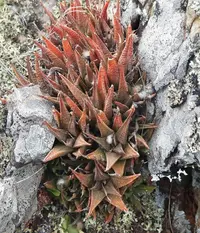
Breede Haworthia
Haworthiopsis venosa
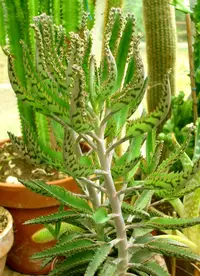
Kalanchoe × houghtonii
Kalanchoe × houghtonii
Kraalbush
Aizoon africanum