Kalanchoe × houghtonii Care

Kalanchoe × houghtonii

About Kalanchoe × houghtonii

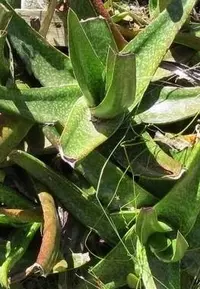
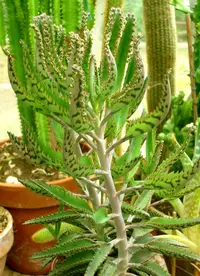
Kalanchoe × houghtonii is a succulent hybrid, often called a mother-of-thousands type plant, valued for its narrow leaves lined with small plantlets. It grows upright at first, then becomes more sprawling as stems lengthen and may lean or cascade from containers. This hybrid traces its origin to Madagascar species and is now grown mainly as a container or windowsill plant in warm and temperate regions. It is generally easy to grow for beginners because it stores water in its leaves and tolerates short dry periods. Bright light, good drainage, and restrained watering are the key points to remember when learning how to care for Kalanchoe × houghtonii.

Main Plant Requirements

Care Difficulty

Easy Care

Light Preference

Full Sun

Water Requirements

Low Water

Temperature Preference

Tropical / Frost Sensitive

Hardiness Zone

10–12

Soil Texture

Sandy, Loamy, Rocky

Soil pH

Slightly acidic (6.5–7.0), Neutral (7.0)

Soil Drainage

Well-drained

Fertilization

Minimal (feed rarely)

Get Personalized Care Plan

Scan your plant to receive care tips personalized for your specific plant

Available on iOS and Android

How to Care for the Kalanchoe × houghtonii

This succulent favors bright, indirect light with some direct sun for compact growth.

  • Provide 4–6 hours of direct morning sun or late-afternoon sun, with bright filtered light during midday to avoid leaf scorch.
  • Outdoors, place Kalanchoe × houghtonii where it gets dappled shade at noon; indoors, use a south or east-facing window with sheer curtain if sun is intense.
  • Watch for stretched, pale stems as a sign of low light, and brown, crispy patches as a sign of excessive direct sun exposure.

This drought-tolerant succulent prefers thorough but infrequent watering.

  • Water only when the top 3–5 cm of soil are completely dry, then soak the root zone and let excess drain fully.
  • Reduce watering in winter, allowing the soil to stay dry longer; in hot, active growth periods, monitor more often but still avoid frequent light sips.
  • Use fast-draining, gritty soil to limit root rot; soft, yellowing, or translucent leaves suggest overwatering, while wrinkled, limp leaves indicate underwatering.

This species prefers warm, dry conditions and is sensitive to frost.

  • Aim for 65–80°F (18–27°C) for steady growth, with slightly cooler nights improving overall vigor.
  • Protect the plant from temperatures below 40°F (4°C); tissue damage and collapse can occur near freezing, especially in wet soil.
  • In hot spells above 90°F (32°C), provide afternoon shade and airflow to limit heat stress, and avoid sudden swings between indoor and outdoor conditions.

This species tolerates typical indoor humidity and rarely needs special humidity management.

  • Target 30–50% relative humidity, similar to average heated or air-conditioned homes.
  • Dry indoor air is usually acceptable; issues arise more from overwatering than low humidity.
  • If leaf tips shrivel or wrinkle while soil stays dry, water slightly more often rather than increasing humidity.

This plant needs a sharply draining, mineral-rich substrate to prevent root and stem rot.

  • Use a cactus/succulent mix amended with extra coarse sand or fine grit to create a loose, open structure.
  • Aim for slightly acidic to neutral pH, around 6.0–7.0, which suits most commercial succulent mixes.
  • Blend roughly 50–70% inorganic components (pumice, perlite, grit) with 30–50% low-organic mix to improve aeration and drainage.
  • Avoid dense, peat-heavy or clay-based soils that stay wet, as Kalanchoe × houghtonii is highly sensitive to prolonged saturation.

This species is very suitable for container growing due to its compact root system and upright habit.

  • Choose a pot heavy or wide enough at the base to counterbalance the tall, narrow stems and prevent tipping.
  • Select terra cotta or other porous materials if extra evaporation is needed in cool, low-light conditions.
  • Use a container only 2–4 in wider than the root ball to keep the soil volume small enough to dry quickly between waterings.

This succulent needs only light feeding to support compact growth and occasional flowering.

  • Use a balanced liquid or water‑soluble fertilizer (around 10‑10‑10 or 20‑20‑20) diluted to 1/4–1/2 strength.
  • Feed Kalanchoe × houghtonii every 4–6 weeks during spring and summer only, after watering the soil lightly first.
  • Avoid fertilizing in fall and winter, when growth slows and excess nutrients can cause weak, leggy stems.
  • Skip rich compost or heavy organic feeds that stay wet, as these increase the risk of root rot in succulent soils.

Thoughtful pruning helps this plant stay compact, stable, and manageable in containers.

  • Best time for pruning is late winter to early spring, just before active growth begins.
  • Remove dead, damaged, or excessively leggy stems with clean, sharp scissors or small pruning shears.
  • Pinch or cut back stem tips to encourage branching and a denser shape, especially on young Kalanchoe × houghtonii plants.
  • Trim back crowded or top‑heavy growth gradually to prevent breakage and to maintain good light penetration.

Repotting helps prevent this fast‑rooting succulent from becoming cramped or unstable in its container.

  • Check for roots circling the pot, growing through drainage holes, or very slow growth as signs it needs repotting.
  • Plan to move it into a slightly wider pot every 2–3 years, ideally in spring when active growth resumes.
  • Use a well‑draining cactus or succulent mix, handle the root ball gently, and keep roots dry and shaded during the process.
  • After repotting Kalanchoe × houghtonii, water lightly once, then let the mix dry well between waterings to limit transplant stress.

This species is commonly multiplied from plantlets and stem cuttings rather than seed.

  • Use healthy stem tips or naturally formed leaf‑edge plantlets taken in spring or early summer.
  • Let cut surfaces dry for 1–2 days so a callus forms, reducing the risk of rot in soil.
  • Set cuttings or plantlets on a gritty, barely moist cactus mix, keeping bright light and 70–80°F conditions.
  • Once roots form and growth resumes, gradually increase light intensity and watering for young Kalanchoe × houghtonii plants.

This succulent is tender and must be kept above freezing in most climates.

  • Move container plants indoors before temperatures drop below 40°F, placing them in bright, indirect light.
  • Maintain indoor temperatures around 60–75°F and keep soil on the dry side during winter.
  • Avoid overwatering; allow the top half of the mix to dry before watering again to prevent cold‑related root rot.
  • In mild climates, outdoor Kalanchoe × houghtonii needs a very well‑drained, sheltered spot away from frost pockets.

Care Tips

Control Plantlets

Regularly remove excess plantlets along leaf edges and surface sow only a few in fresh pots to prevent overcrowding, weak growth, and self-seeding in unwanted containers or beds.

Encourage Compact Growth

Rotate the pot 90° every 1–2 weeks and pinch back overly tall stems just above a leaf pair to maintain a sturdy, compact form that is less likely to topple.

Prevent Top-Heavy Stems

Use a deeper, heavier pot and plant slightly off-center, then backfill firmly so the root ball is anchored, which helps support the tall, narrow stems as they elongate.

Safe Handling Practices

Use gloves and avoid touching your face when handling broken leaves or sap, then wash hands and tools afterward, since the latex sap can irritate skin and is toxic if ingested by pets.

Controlled Outdoor Summering

If moving the plant outdoors for summer, place it under a dry overhang or in a rain-sheltered spot and raise the pot on feet so excess water drains freely, an approach that supports healthy results when growing Kalanchoe × houghtonii.

Common Pests and Diseases

Aphids

This pest feeds on tender new growth and flower stalks, sucking sap and causing curling, distortion, and sticky honeydew on leaves. Symptoms include clustered soft-bodied insects, often green, black, or brown, around shoot tips and undersides of leaves.

Solution

Isolate the plant, then rinse infested areas with a firm stream of lukewarm water or wipe with a damp cloth and a small amount of mild insecticidal soap. Repeat soap or horticultural oil treatments every 7–10 days until no aphids remain, and reduce excess nitrogen fertilization that encourages very soft, lush growth.

Mealybugs

These insects appear as white, cottony clusters in leaf axils, on stems, and sometimes on roots, causing yellowing, stunted growth, and sticky residue. This pest is especially common on succulent kalanchoes grown in warm, dry indoor conditions.

Solution

Remove visible clusters with a cotton swab dipped in 70% isopropyl alcohol, then treat the plant with insecticidal soap or a light horticultural oil, ensuring good coverage of crevices. Inspect weekly and repeat spot treatments until no new mealybugs are seen; discard heavily infested plantlets if necessary to protect the main plant.

Powdery mildew

This disease shows as white to gray powdery patches on leaves and stems, often starting on older leaves and spreading in crowded, humid conditions. Symptoms include dull, mottled foliage and, over time, reduced vigor and leaf drop.

Solution

Improve air circulation, avoid overhead watering, and keep foliage dry, especially at night. Remove heavily affected leaves and apply a suitable sulfur or potassium bicarbonate-based fungicide according to label directions, repeating as needed while adjusting care to lower humidity around the plant.

Leaf spot

This disease causes small, water-soaked specks that enlarge into brown or black spots, sometimes with yellow halos, on the fleshy leaves. Symptoms include patchy, disfigured foliage that may eventually dry and drop.

Solution

Remove and discard affected leaves promptly, and avoid splashing water on foliage or reusing contaminated tools or pots. Allow the soil surface to dry between waterings, increase airflow, and, if spread continues, use a copper-based fungicide labeled for succulents, following directions carefully.

Soft bacterial rot

Symptoms include rapidly collapsing, mushy, foul-smelling areas on stems or leaf bases, often starting in wounds or spots that stay wet. This disease spreads quickly in warm, overly moist conditions and can destroy the central stem of the plant.

Solution

Cut away all soft, discolored tissue well into firm, healthy material with a sterile blade, then let the plant dry in bright, indirect light to callus. Discard severely affected plants, repot salvaged parts in fresh, very well-draining succulent mix, and adjust watering so the medium dries fully between waterings, a key point in Kalanchoe × houghtonii care instructions.

Interesting Facts

Hybrid parentage origin

This species is a man-made hybrid between Kalanchoe daigremontiana and Kalanchoe tubiflora, created at the University of Oxford in the 1930s by horticulturist Arthur D. Houghton, which is why it carries the hybrid name houghtonii.

Distinctive leaf morphology

Its leaves show an intermediate form between its parents, combining the broader, pendant leaves of K. daigremontiana with the narrow, tubular influence of K. tubiflora, and this mixed morphology helps botanists distinguish it from both parent species in cultivation.

Efficient vegetative spread

The plant produces plantlets along the leaf margins that detach and root quickly in suitable conditions, which allows it to spread locally without relying much on seed production, a key feature noted in Kalanchoe × houghtonii care instructions.

Botan icon

Did you know?

In some warm regions outside its native range, this hybrid has escaped cultivation and formed naturalized populations, where its prolific leaf-borne plantlets and tolerance of poor, rocky soils have led certain local authorities and ecologists to monitor it as a potentially invasive succulent.

FAQs about Kalanchoe × houghtonii

Leggy, stretched growth usually results from insufficient light and older stems losing lower leaves. Provide brighter conditions, rotate the pot regularly, and pinch or cut back tall stems to encourage branching and a denser shape.

Grow Healthy Plants with Botan Care

Keep your plants happy and healthy with plant identification, disease detection, and easy care guidance.

Botan plant care app — identify plants on mobile

Explore More Plants