Divide Mature Clumps
Every 2–3 years, lift and gently split dense clumps into smaller sections in early spring, replanting them at the same depth to maintain vigor and prevent the center from thinning out.

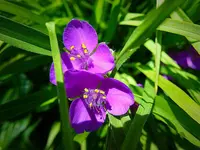
Grassleaf roseling (Callisia graminea) is a low-growing perennial from the spiderwort family, valued for its fine, grass-like foliage and small, delicate flowers. It forms compact clumps that slowly spread, creating a soft groundcover texture.
This species is native to the southeastern United States, where it grows in open pine woods, sandy soils, and dry clearings. Its moderate growth rate and generally resilient nature make it manageable for most home gardeners.
Callisia graminea prefers bright light, well-drained soil, and steady moisture without waterlogging. With these conditions, it is relatively straightforward to care for grassleaf roseling in suitable climates or controlled settings.

Care Difficulty
Moderate Care

Light Preference
Partial Shade

Water Requirements
Moderate Water

Temperature Preference
Warm Climate

Hardiness Zone
7–10

Soil Texture
Sandy, Loamy, Organic-rich

Soil pH
Acidic (5.5–6.5)

Soil Drainage
Moist but well-drained

Fertilization
Minimal (feed rarely)
Scan your plant to receive care tips personalized for your specific plant
Available on iOS and Android
Callisia graminea prefers bright conditions that mimic open woodland edges with some protection from harsh midday sun.
Callisia graminea prefers steadily moist but not saturated soil, similar to a lightly damp forest floor.
This species grows best in mild, temperate conditions without extreme heat or frost.
This species benefits from moderate to slightly high humidity but stays adaptable in typical home conditions.
This plant prefers a loose, airy substrate that drains quickly yet holds some moisture.
This species is well suited to container growing on patios or as a low, spreading accent.
Callisia graminea benefits from light, consistent feeding during the active growing season.
Pruning Callisia graminea helps maintain a compact, dense mat and removes weak growth.
Callisia graminea tolerates some crowding but benefits from occasional repotting or division when growth slows.
This species is commonly multiplied by stem cuttings and division during the warm growing season.
In its hardiness range, Callisia graminea usually needs only modest winter attention, especially in the ground.

Plant Health Check
Not sure what's wrong with your plant? Check your plant's health inside the app.
This species is naturally restricted to the southeastern United States, where it occurs mainly in coastal plain habitats from Virginia to Florida and west to Louisiana, rather than being a widespread tropical Callisia.
It is characteristically found in moist, open pine savannas and flatwoods, often in sandy, acidic soils that periodically burn, indicating adaptation to fire-influenced ecosystems.
Unlike some trailing relatives, this plant typically forms low, tufted clumps and small patches rather than long vines, creating a fine-textured, grasslike ground layer in its native habitats.
This species spreads gradually by short rhizomes and self-seeding but is not usually aggressive in garden conditions. In loose, moist soil it can form a broad patch over several years, which is useful for low groundcover.
Keep your plants happy and healthy with plant identification, disease detection, and easy care guidance.

%20-%20Copy-200x143.webp)