Seed pre-treatment
Lightly scarify the hard seed coat with fine sandpaper and soak seeds in room-temperature water for 4–6 hours before sowing to improve and synchronize germination for growing Kraalbush in dry climates.

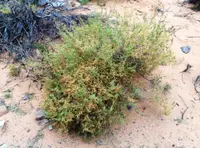
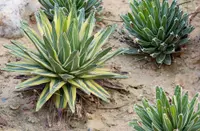
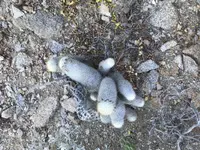
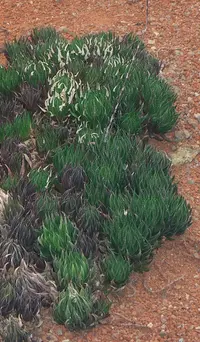
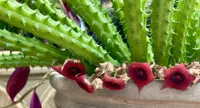
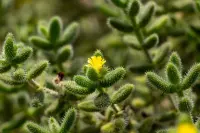
Kraalbush (Aizoon africanum) is a small, drought-tolerant succulent subshrub native to arid regions of southern Africa. It forms low, spreading clumps with fleshy leaves and small, starry flowers.
This plant is adapted to intense sun, poor sandy soils, and very low rainfall, which makes it suitable for dry gardens and rockeries. Its slow, compact growth and strong drought resistance mean it can be relatively easy to manage if overwatering is avoided.
Gardeners who want to care for Kraalbush should provide bright light, very free-draining soil, and modest watering, allowing the roots to dry between waterings.

Care Difficulty
Easy Care

Light Preference
Full Sun

Water Requirements
Low Water

Temperature Preference
Warm Climate

Hardiness Zone
9–11

Soil Texture
Sandy, Loamy, Rocky

Soil pH
Slightly acidic (6.5–7.0), Neutral (7.0)

Soil Drainage
Well-drained

Fertilization
Minimal (feed rarely)
Scan your plant to receive care tips personalized for your specific plant
Available on iOS and Android
This sun-loving succulent from arid regions thrives in strong light with minimal shade.
This drought-adapted succulent prefers infrequent, deep watering and very fast-draining soil.
This succulent is adapted to warm, dry conditions and dislikes prolonged cold or frost.
This drought-adapted succulent tolerates very dry air and usually does not need humidity adjustment indoors.
This species prefers very fast-draining, mineral, sandy soil that mimics arid, rocky habitats.
This small succulent is well suited to container growing when drainage and soil structure are carefully controlled.
This drought-adapted succulent needs only light feeding, so focus on not overdoing fertilizer when caring for Kraalbush.
Aizoon africanum needs minimal pruning, mainly to keep its low, mat-forming habit tidy and healthy.
This species is more often grown in the ground than in pots, so focus on gentle transplanting rather than frequent repotting.
This low-growing succulent is commonly propagated to expand groundcover patches or share plants.
In mild, dry climates this plant usually overwinters outdoors with minimal intervention.

Plant Health Check
Not sure what's wrong with your plant? Check your plant's health inside the app.
This species is a short-lived annual succulent native to the arid winter-rainfall regions of Namibia and South Africa’s Namaqualand, where it completes its entire life cycle within a single cool season before summer drought arrives.
Aizoon africanum persists in harsh habitats through a persistent soil seed bank, with many seeds remaining dormant in the ground and germinating only in years with sufficient winter rainfall.
In its native range, it often colonizes disturbed or bare sandy and gravelly soils, helping to stabilize loose substrate and paving the way for other plant species to establish.

During the famous Namaqualand spring flower displays, dense stands of Aizoon africanum can form colorful carpets that appear suddenly after good winter rains, then disappear again as the plants die back and survive only as seeds until the next favorable season.
This species forms low mats and can spread gradually by self-seeding and short creeping stems, but it is not considered aggressively spreading in most dry, open sites when managed with occasional thinning and removal of unwanted seedlings.
Keep your plants happy and healthy with plant identification, disease detection, and easy care guidance.