


Offset management
Leave at least 2–3 healthy offsets attached around the mother rosette to maintain a full clump, and only divide when each offset has its own visible root base to reduce transplant shock.

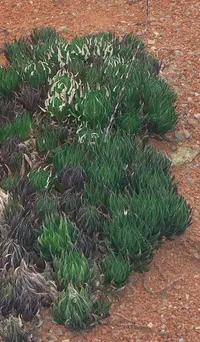
Haworthia marumiana is a small succulent from South Africa, valued for its compact rosettes of fleshy, often translucent-tipped leaves. The leaves form tight clusters that slowly expand, making it well suited to windowsills and small indoor spaces.
In habitat it grows in rocky, gritty soils with strong light but some protection from harsh midday sun. This natural adaptation makes it relatively forgiving of indoor conditions.
Its slow growth, drought tolerance, and modest size make it straightforward to grow for most beginners. Understanding how to care for Haworthia marumiana mainly involves providing bright indirect light, free-draining soil, and careful, infrequent watering.

Care Difficulty
Easy Care

Light Preference
Bright Indirect Light

Water Requirements
Low Water

Temperature Preference
Tropical / Frost Sensitive

Hardiness Zone
10–11

Soil Texture
Sandy, Loamy, Rocky

Soil pH
Acidic (5.5–6.5), Slightly acidic (6.5–7.0)

Soil Drainage
Well-drained

Fertilization
Minimal (feed rarely)
Scan your plant to receive care tips personalized for your specific plant
Available on iOS and Android
This compact succulent prefers bright, indirect light that mimics light shade in its native habitat.
This species prefers thorough but infrequent watering that allows the roots to dry between soakings.
This succulent grows best in mild, stable temperatures without frost or extreme heat.
This species handles typical indoor humidity well and rarely needs adjustment.
Use a very fast-draining, mineral-heavy mix to prevent root rot.
This compact succulent is very suitable for container growing.
This compact succulent has modest nutrient needs, so fertilizing Haworthia marumiana should stay light and infrequent.
This species needs minimal pruning, mainly to maintain cleanliness and a compact rosette form.
This slow-growing succulent thrives slightly root-bound, so repot only when clear signs appear.
New plants are most reliably produced by division of offsets rather than seeds.
This succulent is not frost tolerant and requires sheltered winter conditions in most climates.

Plant Health Check
Not sure what's wrong with your plant? Check your plant's health inside the app.
This species keeps a rosette of thin, soft, translucent-tipped leaves into adulthood, a form of paedomorphosis where adult plants retain features typical of juvenile stages in related Haworthia.
In habitat it often grows partly sunken into gritty sandstone or shale, with only the translucent leaf tips at the soil surface acting as light windows that channel sunlight down into the buried leaf tissue.
Wild populations are naturally restricted to a small area of the Eastern Cape Province in South Africa, where plants occupy specific rocky slopes and crevices rather than widespread open habitats.
This is a slow-growing succulent. In typical indoor conditions it usually adds only a few millimeters of leaf growth and maybe 0.5–1 cm of clump spread per year, so visible size changes take several seasons.
Keep your plants happy and healthy with plant identification, disease detection, and easy care guidance.


Austrocylindropuntia shaferi
Austrocylindropuntia shaferi
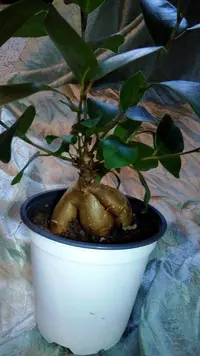
Ficus microcarpa 'Ginseng'
Ficus microcarpa 'Ginseng'
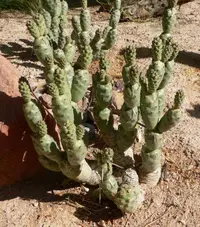
Pine Cone Cactus
Tephrocactus articulatus
Fancy-leaf Caladium
Caladium 'Postman Joyner'
 POPULAR
Foxtail Agave
Agave attenuata

Acanthocalycium leucanthum
Acanthocalycium leucanthum
Vriesea carinata
Vriesea carinata
neverdie
Kalanchoe integra