Aichryson punctatum Care

Aichryson punctatum

About Aichryson punctatum

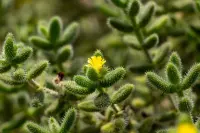
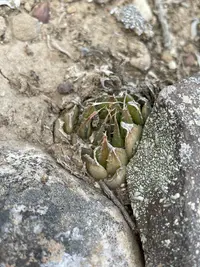
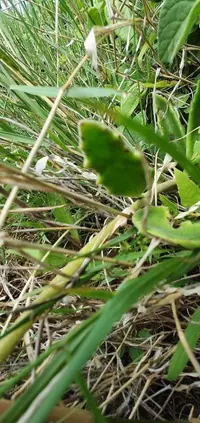
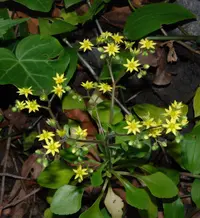
Aichryson punctatum is a small succulent shrub from the Canary Islands, related to Aeonium and often grown as a compact houseplant. It forms softly branched stems with fleshy, spoon-shaped leaves that may be slightly hairy and often arranged in loose rosettes. In good light it can produce airy clusters of star-shaped yellow flowers above the foliage. This species prefers bright, indirect light, mild temperatures, and a free-draining, gritty substrate, which keeps the roots healthy. With its drought tolerance and modest size, it suits windowsills and small indoor spaces, and is considered relatively easy if you learn how to care for Aichryson punctatum.

Main Plant Requirements

Care Difficulty

Moderate Care

Light Preference

Partial Sun

Water Requirements

Low Water

Temperature Preference

Warm Climate

Hardiness Zone

10–11

Soil Texture

Sandy, Loamy, Rocky

Soil pH

Slightly acidic (6.5–7.0), Neutral (7.0)

Soil Drainage

Well-drained

Fertilization

Minimal (feed rarely)

Get Personalized Care Plan

Scan your plant to receive care tips personalized for your specific plant

Available on iOS and Android

How to Care for the Aichryson punctatum

This compact succulent prefers bright, gentle light that avoids harsh midday sun.

  • Provide 4–6 hours of bright, indirect light, such as an east window or light dappled shade outdoors, for balanced growth in Aichryson punctatum.
  • Tolerates light partial shade, but in very low light stems stretch, leaves lose density, and flowering declines over time.
  • Protect from strong midday or afternoon sun, especially in summer, which can cause leaf scorch; increase light gradually after cloudy periods to avoid shock.

This species stores moisture in its tissues and needs measured, not frequent, watering.

  • Water only when the top 2–3 cm of soil feel dry, allowing pores to refill with air between waterings to protect the roots.
  • Use a fast-draining, gritty mix; excess water must flow freely from the root zone to prevent rot and a sour smell in the soil.
  • In cooler, lower-light seasons, extend drying time and watch for overwatering signs like mushy, translucent leaves versus underwatering signs like soft, wrinkled foliage.

This plant favors mild, stable temperatures and reacts poorly to frost or intense heat spikes.

  • Aim for 60–75°F (16–24°C) during active growth; short peaks up to 80–85°F (27–29°C) are usually tolerated with shade and airflow.
  • Keep above 40°F (4°C); brief dips toward this level may be survived if the soil is dry, but freezing temperatures damage leaves and stems.
  • In winter, a slightly cooler range around 50–60°F (10–16°C) helps maintain compact growth, but protect from cold drafts and rapid day–night swings.

This succulent handles typical indoor humidity well and rarely needs special adjustment.

  • Ideal humidity is 30–50%, similar to most heated homes.
  • Tolerates drier air but prolonged very dry conditions may cause leaf shriveling and faster leaf drop.
  • If air is extremely dry, group pots together on a pebble tray with water below the pot base to slightly raise local humidity.

This species prefers a fast-draining, airy mix similar to cactus or succulent substrates.

  • Use a light, sandy or gritty base, such as 2 parts cactus mix with 1 part perlite or pumice for extra drainage.
  • Aim for slightly acidic to neutral pH around 6.0–7.0, which supports stable nutrient availability.
  • Incorporate a small amount of fine bark or coarse sand to improve structure and aeration around the fine roots of Aichryson punctatum.
  • Avoid heavy garden soil, peat-heavy mixes without added grit, or compacted substrates that stay wet for more than 2–3 days.

This plant is well suited to container growing for indoor or patio use.

  • Choose a shallow to medium-depth pot since the root system is relatively fibrous and does not require a deep vessel.
  • Select unglazed terracotta when extra evaporation is helpful, as it reduces the risk of prolonged soil wetness.
  • Place the pot where it cannot be easily knocked, since the branching, slightly top-heavy canopy can make light containers unstable.

This succulent needs modest feeding to support compact growth and flowering during its active season.

  • Use a balanced liquid fertilizer (around 10-10-10 or 20-20-20) diluted to 25–50% strength in well-watered soil.
  • Feed Aichryson punctatum every 4–6 weeks in spring and summer only, skipping any stressed or recently repotted plants.
  • Avoid organic compost-heavy mixes that stay wet; choose formulations for succulents or cacti instead.
  • Stop fertilizing in fall and winter to match slower growth and reduce risk of weak, leggy shoots.

Light pruning keeps this small succulent bushy and prevents leggy growth.

  • Best time for structural pruning is late winter to early spring, before strong new growth begins.
  • Remove dead, damaged, or crossing stems with clean, sharp scissors or small pruning shears.
  • Tip back overly long shoots to encourage branching and a compact, rounded shape.
  • After flowering, cut back spent flower stalks to tidy the plant and reduce wasted energy.

This species prefers a snug pot and only needs occasional repotting in well-drained soil.

  • Repot every 2–3 years in spring when roots circle the pot, emerge from drainage holes, or growth slows noticeably.
  • Choose a shallow container with good drainage and a gritty succulent mix to limit water retention around roots.
  • Gently loosen circling roots, remove a small amount of old soil, and avoid breaking thick roots when shifting pots.
  • Water lightly after repotting, then let the mix dry partly before the next watering to minimize root stress and rot.

Propagation is typically done from stem cuttings that root well under suitable conditions.

  • Take 5–8 cm non-flowering stem cuttings in late spring or early summer from healthy Aichryson punctatum plants.
  • Allow cut ends to callus for 1–2 days in a dry, shaded spot to reduce rot risk.
  • Insert cuttings into a barely moist, gritty succulent mix and keep in bright, indirect light at 68–75°F.
  • Maintain slight moisture only, avoid covering with plastic, and expect rooting within several weeks under stable warmth.

This succulent is frost-sensitive and needs protection in regions with cold winters.

  • Keep temperatures above 40°F; prolonged exposure near freezing can damage foliage and stems.
  • Move container plants indoors to a bright, cool room before the first hard frost.
  • Reduce watering in winter, allowing the soil to dry more between waterings to prevent root rot.
  • Avoid cold drafts and keep leaves away from freezing window glass or uninsulated doors.

Care Tips

Compact growth control

Pinch out soft shoot tips once or twice each growing season to keep the plant compact and to encourage dense, branched rosettes instead of tall, floppy stems.

Light rotation routine

Rotate the pot 90° every 1–2 weeks during active growth so the rosettes develop evenly and stems do not lean strongly toward the light source.

Prevent stem breakage

Support older, top-heavy stems with a discreet stake or by resting them on the rim of a heavier cachepot to reduce the risk of snapping at the base.

Clean foliage care

Use a soft dry brush or a gentle burst of air to remove dust from the slightly hairy leaves instead of wiping with a wet cloth, which can damage the surface and invite rot.

Cool-season adjustment

In late fall, move the plant to a slightly cooler but bright position and reduce disturbance, as this mild rest period supports sturdier growth and simplifies caring for Aichryson punctatum over the long term.

Common Pests and Diseases

Mealybugs

This pest often hides in leaf axils and along succulent stems, sucking sap and causing distortion, yellowing, and sticky honeydew on leaves. Symptoms include slowed growth and patches of white, cottony fluff on tender parts of the plant.

Solution

Remove visible insects with a cotton swab dipped in 70% isopropyl alcohol, then wash the plant under a gentle lukewarm shower and let it dry well. For heavier infestations, repeat alcohol swabs and washing weekly and use a ready-to-use insecticidal soap, ensuring good light and drier conditions between waterings to discourage reinfestation when caring for Aichryson punctatum.

Spider mites

These insects thrive on Aichryson foliage in warm, dry indoor air and cause fine speckling, dull leaves, and delicate webbing between stems and leaf clusters. Symptoms include leaves losing their glossy look and, in severe cases, drying and dropping.

Solution

Rinse the plant thoroughly under a gentle stream of water, focusing on the undersides of leaves and between rosettes, then allow it to dry in bright, indirect light. If mites persist, apply insecticidal soap or a neem oil spray every 5–7 days for several cycles and slightly increase ambient humidity while still keeping the soil on the dry side.

Soft scale

This pest appears as small, domed, brown to yellowish bumps along stems and leaf bases, feeding on sap and excreting honeydew that can lead to sooty mold. Symptoms include weakened, stunted growth and sticky residue on or around the plant.

Solution

Gently scrape or wipe off individual scale insects with a cotton swab or soft cloth moistened with 70% isopropyl alcohol, then rinse the plant to remove honeydew. For ongoing problems, repeat alcohol spot-treatments every 7–10 days and use an insecticidal soap spray, keeping the plant in bright, airy conditions to support recovery.

Powdery mildew

This disease can develop when rosettes stay damp and air movement is low, producing white, powdery patches on leaves and stems. Symptoms include distorted new growth and a general decline in vigor if left untreated.

Solution

Remove the worst-affected leaves and improve spacing and airflow around the plant, avoiding water on the foliage and watering only at the soil level. In persistent cases, use a sulfur-based or potassium bicarbonate fungicide labeled for ornamentals, applying lightly and allowing leaves to dry quickly in bright, indirect light.

Leaf spot

This disease shows as small, water-soaked or brown spots on leaves, often starting on lower or crowded foliage where moisture lingers. Symptoms include yellow halos around spots and premature leaf drop in more advanced cases.

Solution

Prune off affected leaves with clean, disinfected tools and discard them, then adjust watering to keep foliage dry and allow the soil surface to dry slightly between waterings. If spotting continues, apply a copper-based or other broad-spectrum fungicide suited to succulents and maintain good air circulation and moderate, stable humidity.

Interesting Facts

Endemic Macaronesian succulent

This species is naturally restricted to the Macaronesian region, particularly the Canary Islands, where it grows as a small, short-lived perennial succulent on rocky slopes, cliffs, and dry walls in mild oceanic climates.

Sticky, hairy leaves

Its leaves are densely covered with glandular hairs that can feel slightly sticky; these trichomes help reduce water loss, protect against intense sunlight, and may deter small herbivores or insects.

Loose, branching inflorescences

The plant produces airy clusters of small, star-shaped yellow flowers on branching stems, a structure that maximizes exposure to pollinators while keeping the photosynthetic leaf rosettes below relatively undisturbed.

FAQs about Aichryson punctatum

Lack of blooms usually comes from insufficient light, overly rich or constantly moist soil, or no cool rest in winter. Provide bright conditions, allow the mix to dry slightly between waterings, and avoid heavy fertilization in late fall–winter.

Grow Healthy Plants with Botan Care

Keep your plants happy and healthy with plant identification, disease detection, and easy care guidance.

Botan plant care app — identify plants on mobile

Explore More Plants