Haworthia arachnoidea var. nigricans Care

Haworthia arachnoidea var. nigricans

About Haworthia arachnoidea var. nigricans

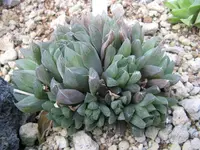
Haworthia arachnoidea var. nigricans is a small, compact succulent from South Africa, forming tight rosettes of narrow, pointed leaves. The leaves are dark green to nearly black and often tipped with fine, bristly spines, giving the plant a textured, spidery look.

It grows slowly and stays low, making it suitable for windowsills, desks, and small containers. This variety is adapted to strong light and dry conditions, which makes it forgiving of occasional neglect.

For those learning how to care for Haworthia arachnoidea var. nigricans, its main needs are bright, indirect light, a gritty, fast-draining soil mix, and careful watering that avoids prolonged wetness around the roots.

Main Plant Requirements

Care Difficulty

Easy Care

Light Preference

Partial Sun

Water Requirements

Low Water

Temperature Preference

Tropical / Frost Sensitive

Hardiness Zone

10–11

Soil Texture

Sandy, Loamy, Rocky

Soil pH

Slightly acidic (6.5–7.0), Neutral (7.0)

Soil Drainage

Well-drained

Fertilization

Minimal (feed rarely)

Get Personalized Care Plan

Scan your plant to receive care tips personalized for your specific plant

Available on iOS and Android

How to Care for the Haworthia arachnoidea var. nigricans

This compact succulent prefers bright, indirect light with limited direct sun exposure.

  • Provide 4–6 hours of bright, filtered light daily, such as dappled shade or behind a sheer curtain, for stable growth.
  • Allow gentle morning sun but protect from strong midday and afternoon rays, which can cause leaf scorch, bleaching, or hardened brown tips.
  • In winter, move Haworthia arachnoidea var. nigricans to a brighter spot to compensate for shorter days, but avoid placing it against hot glass.

This species stores water in its leaves and needs infrequent but thorough watering.

  • Water only when the top 3–5 cm of soil are completely dry, then soak the root zone and let excess drain away fully.
  • Reduce watering sharply in winter, sometimes to once every 3–4 weeks, keeping the soil mostly dry while avoiding complete, prolonged desiccation.
  • Watch for soft, translucent, or blackened leaves as signs of overwatering, and for wrinkling or leaf curling as indicators of underwatering or very dry soil.

This succulent prefers moderately warm, stable temperatures and dislikes frost or extreme heat spikes.

  • Aim for 65–80°F (18–27°C) during active growth, which supports steady photosynthesis and root activity without stressing the tissues.
  • Protect from temperatures below 40°F (4°C); brief dips may be tolerated, but freezing conditions cause irreversible leaf and root damage.
  • In hot spells above 90°F (32°C), give light shade and increased airflow to prevent overheating, especially for plants in small, dark containers or exposed rock beds.

This species is adapted to dry air and usually does not need special humidity management indoors.

  • Target 30–50% relative humidity, similar to most heated or air‑conditioned homes.
  • Dry, firm leaves with normal color indicate acceptable humidity, while soft, collapsing tissue may point to overwatering rather than low humidity.
  • If air is extremely dry from heating, place the pot near other plants to create a slightly more humid microclimate without misting.

This succulent requires a very fast-draining, mineral-rich mix to prevent root rot.

  • Use a gritty, sandy mix such as 50–70% mineral components (pumice, coarse perlite, 3–5 mm gravel) blended with 30–50% cactus potting mix.
  • Aim for slightly acidic to neutral pH around 6.0–7.0, which supports nutrient availability without encouraging rot-causing fungi.
  • Ensure the mix feels loose and crumbly, not compact; large particles maintain air pockets around the roots for steady oxygen supply.
  • Avoid water-retentive peat-heavy soils or fine compost that stays wet for longer than 2–3 days after watering, as Haworthia arachnoidea var. nigricans is prone to rot in saturated conditions.

This species is very suitable for container growing due to its compact, shallow-rooting habit.

  • Choose a shallow, wide pot that matches the diameter of the rosette to keep the mix drying evenly and prevent unused wet zones.
  • Select unglazed terracotta if extra evaporation is needed in humid or cool rooms, as it allows moisture to escape through the pot walls.
  • Raise the pot on feet or a stand so excess water drains freely and does not reabsorb from a flat saucer surface.

This compact succulent needs only light feeding to stay healthy in containers.

  • Use a diluted balanced liquid fertilizer (around 10-10-10 or 20-20-20 at 1/4 strength) during active growth in spring–summer.
  • Apply no more than once every 4–6 weeks to Haworthia arachnoidea var. nigricans grown in very gritty, low-organic mixes.
  • Avoid fertilizing in winter or when growth pauses, as excess nutrients encourage weak, elongated leaves.
  • Never apply fertilizer to dry soil; water lightly first to prevent root burn.

Haworthia arachnoidea var. nigricans needs minimal pruning, mainly for cleanliness and shape control.

  • Best time is during active growth in spring or early summer for quicker recovery.
  • Gently remove dead, shriveled, or damaged leaves at the base to reduce disease risk.
  • Thin out congested offsets at the clump edges to maintain a compact rosette shape.
  • Use clean, sharp scissors or tweezers, and let any cut surfaces dry in good airflow.

This slow-growing succulent prefers infrequent repotting, as mild root crowding supports its compact habit.

  • Repot every 3–4 years or when roots circle the pot base or emerge from drainage holes.
  • Choose late spring as the ideal time, when temperatures are stable and growth is starting.
  • Use a shallow pot with ample drainage holes and a very gritty cactus–succulent mix.
  • Gently loosen the root ball, remove old soil, then keep the plant slightly dry for 5–7 days to limit transplant shock.

Haworthia arachnoidea var. nigricans is most commonly propagated by dividing offsets around the mother rosette.

  • Separate offsets in late spring–summer, when warmth supports root growth.
  • Allow any broken surfaces to callus for 1–2 days in shade to reduce rot risk.
  • Plant offsets in a dry, fast-draining succulent mix and water sparingly until roots form.
  • Seed propagation is possible but slow; provide warmth, bright indirect light, and very light, even moisture for germination.

This succulent is not frost hardy and needs indoor or sheltered conditions in cold climates.

  • Avoid exposure below about 35–40°F; freezing temperatures can damage or kill tissues.
  • Move containers indoors to a bright, cool spot with good airflow before the first hard frost.
  • Keep soil almost dry in winter, watering lightly only when leaves begin to soften.
  • Do not use heavy mulches around the crown, as trapped moisture in cold conditions encourages rot.

Care Tips

Seasonal light shift

Move the plant to a brighter, cooler spot in winter (still protected from harsh midday sun) to maintain compact rosettes and prevent weak, etiolated growth during low-light months.

Rotate for symmetry

Rotate the pot 90° every 2–3 weeks so the rosette develops evenly and does not lean toward the light, which also improves air circulation around the leaves.

Top-dress with grit

Apply a 0.5–1 cm layer of clean mineral grit or small pumice on the soil surface to keep the crown dry, reduce fungus gnat breeding, and visually mark how far to keep water away from the leaf bases.

Cool rest period

Provide a mild rest in late summer by slightly lowering temperatures and slowing watering, which mimics its natural cycle and encourages denser growth rather than forced, stressed extension.

Inspect leaf bases

Every 1–2 months gently spread the outer leaves and check the crown and leaf bases for early signs of rot or mealybugs, since caring for Haworthia arachnoidea var. nigricans is easier when problems are caught before they spread into the tight rosette.

Common Pests and Diseases

Mealybugs

This pest often hides in leaf bases and tight rosette centers, feeding on sap and causing yellowing, distortion, and slowed growth.

Solution

Remove visible insects with a cotton swab dipped in 70% isopropyl alcohol, then rinse the plant gently and allow it to dry; for persistent infestations, apply a systemic insecticide labeled for succulents and isolate the plant from others during treatment as part of Haworthia arachnoidea var. nigricans care instructions.

Aloe mite

This pest, also called eriophyid or gall mite, causes distorted, warty, or cauliflower-like growths on leaves and rosette centers.

Solution

Cut away and discard all affected tissue, sterilizing tools between cuts, then keep the plant in bright, dry, well-ventilated conditions; severe cases are best destroyed to prevent spread, and nearby plants should be monitored closely for early signs of similar galls.

Soft scale

These insects appear as small, smooth, dome-shaped bumps on leaves and stems, producing sticky honeydew and weakening the plant over time.

Solution

Gently scrape or wipe off scales with a cotton pad or soft brush, then wash the plant with a mild insecticidal soap solution and repeat every 7–10 days until no new scale appears, keeping the plant in lower humidity and avoiding excess fertilizer during recovery.

Fungal leaf spots

This disease produces small brown to black spots on leaves, sometimes with a yellow halo, usually after prolonged moisture on the foliage or poor airflow around the rosette.

Solution

Remove and discard affected leaves, then improve ventilation, avoid overhead watering, and let the potting mix dry well between waterings; in persistent cases, apply a sulfur- or copper-based fungicide labeled for ornamentals, following directions carefully.

Basal stem rot

This disease starts at the crown where leaves meet the stem, leading to soft, discolored tissue and eventual collapse of the rosette, often triggered by cold, wet soil and poor drainage.

Solution

At early stages, unpot the plant, cut away all soft, dark tissue, dust the remaining healthy parts with a dry fungicide or sulfur powder, and re-root in a fresh, sharply draining mineral mix; long term, use pots with large drainage holes and water only when the substrate is fully dry to prevent recurrence.

Interesting Facts

Dark stress coloration

This variety develops a much deeper brown to almost black tone than typical Haworthia arachnoidea when exposed to strong light, a stress response caused by increased production of protective pigments that shield the photosynthetic tissues from UV radiation.

Microhabitat rock specialist

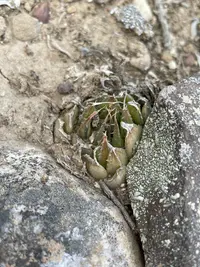
In its native Western Cape habitats of South Africa, it often grows tucked into shallow rock crevices or among stones, where the surrounding mineral substrate moderates temperature swings and limits water loss in an otherwise harsh, seasonally dry environment.

Fine spines as shading

The dense, fine marginal spines on the leaf edges help break up direct sun across the leaf surface, creating small zones of shade and airflow that reduce overheating and transpiration in its arid habitat.

FAQs about Haworthia arachnoidea var. nigricans

This species grows slowly, typically adding only a few leaves each year and forming small offsets over time. In normal indoor conditions, expect a clump to noticeably enlarge over 3–5 years rather than each season.

Grow Healthy Plants with Botan Care

Keep your plants happy and healthy with plant identification, disease detection, and easy care guidance.

Botan plant care app — identify plants on mobile

Explore More Plants