Rotate For Even Growth
Turn the pot 90° every 2–3 weeks so all sides receive similar light exposure, which keeps the rosette compact and prevents the leaves from leaning in one direction.

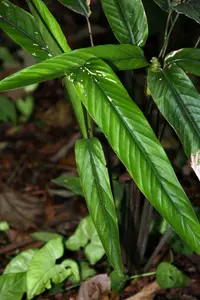
Calathea lasiostachya is a tropical understory plant from humid forests in South America, valued for its broad, decorative foliage and compact growth habit. Leaves typically form a low clump, with patterned surfaces and softer tones than some other calatheas.
This species prefers warm, stable conditions, evenly moist but airy soil, and protection from direct sun. It is moderately demanding because it reacts to low humidity, irregular watering, and poor water quality.
Once its environment is stable, it maintains attractive foliage with steady growth, making it suitable for experienced beginners ready to learn how to care for Calathea lasiostachya.

Care Difficulty
Moderate Care

Light Preference
Bright Indirect Light

Water Requirements
Keep Soil Moist

Temperature Preference
Tropical / Frost Sensitive

Hardiness Zone
11–12

Soil Texture
Loamy, Peaty, Organic-rich

Soil pH
Acidic (5.5–6.5)

Soil Drainage
Moist but well-drained

Fertilization
Light (every 4–6 weeks)
Scan your plant to receive care tips personalized for your specific plant
Available on iOS and Android
This species prefers soft, filtered light that mimics a forest understory.
Watering should keep the root zone evenly moist without becoming saturated.
Stable, warm conditions support steady growth and healthy foliage.
This species needs consistently high humidity to keep leaves healthy and avoid edge damage.
Calathea lasiostachya prefers a loose, airy, organic-rich mix that holds moisture but never stays waterlogged.
This species is well suited to container growing when pot moisture and stability are carefully managed.
During active growth, Calathea lasiostachya benefits from light, consistent nutrition in containers.
Pruning needs are minimal and focus on keeping Calathea lasiostachya foliage healthy and tidy.
Container-grown Calathea lasiostachya benefits from careful, infrequent repotting to refresh soil and support root health.
Division is the most reliable method for increasing Calathea lasiostachya plants in home collections.
In cooler regions, Calathea lasiostachya needs protective winter care, especially when grown in containers.

Plant Health Check
Not sure what's wrong with your plant? Check your plant's health inside the app.
This species is native to the shaded understory of tropical forests in Brazil, where it grows on the forest floor under dense canopy and adapts to very low light with broad, thin leaves that maximize light capture.
Unlike many ornamental calatheas grown mainly for foliage, this species produces compact inflorescences with noticeably hairy bracts, which is the feature referred to by the epithet lasiostachya, meaning hairy spike.
The leaves change angle not only with day–night light changes but also respond to hydration, often drooping under water stress and recovering after rehydration, which makes it a useful visual indicator of its immediate moisture status compared with some related species.
Leaf curling usually comes from low humidity, underwatering, or exposure to cold drafts. Check that the root zone stays lightly moist, raise humidity to around 60–70%, and keep it away from vents or open windows.
Keep your plants happy and healthy with plant identification, disease detection, and easy care guidance.


-1-200x150.webp)