


Segment handling
Handle pads with long tweezers or folded paper when repotting or inspecting, since the brittle joints snap easily and each detached segment can be rooted or discarded before it rots in the pot.

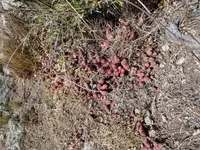
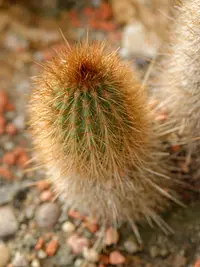
Tephrocactus verschaffeltii is a small, segmented cactus from arid regions of Argentina. It forms clusters of rounded joints covered with spines or bristles, giving it a sculptural look. Growth is slow and compact, which makes it suitable for containers and small indoor spaces.
This species is adapted to strong sun, high drainage, and long dry periods. Its main challenge is avoiding excess moisture, which easily leads to rot. Once its need for bright light and very free-draining, gritty soil is understood, it becomes straightforward to care for Tephrocactus verschaffeltii.

Care Difficulty
Moderate Care

Light Preference
Full Sun

Water Requirements
Low Water

Temperature Preference
Warm Climate

Hardiness Zone
9–11

Soil Texture
Sandy, Rocky, Loamy

Soil pH
Slightly acidic (6.5–7.0), Neutral (7.0)

Soil Drainage
Well-drained

Fertilization
Minimal (feed rarely)
Scan your plant to receive care tips personalized for your specific plant
Available on iOS and Android
This cactus needs bright sun but benefits from some protection at the hottest times of day.
Watering should mimic desert rainfall patterns with thorough soakings separated by dry periods.
This species prefers warm, dry conditions with a distinct cool, dry rest period.
This cactus thrives in dry indoor air and rarely needs extra humidity attention.
This species needs very fast-draining, mineral-based soil to prevent root and stem rot.
This species is well suited to container growing for controlled drainage and protection from excess rain.
This cactus has low nutrient needs, but light feeding supports steady growth in containers.
Pruning is minimal and mainly done to maintain shape and remove damaged tissue.
This slow-growing cactus prefers infrequent repotting and tight containers.
Propagation is most often done from segment cuttings, with seeds used less commonly.
This species dislikes prolonged freezing and benefits from controlled, cool-dry winter conditions.

Plant Health Check
Not sure what's wrong with your plant? Check your plant's health inside the app.
This species forms small, egg-shaped stem segments that detach quite easily, an adaptation that allows the plant to spread when segments fall and root in suitable conditions.
Populations of this cactus can show very different spine densities and lengths, from almost bare segments to heavily armed ones, reflecting genetic variation and responses to local microclimates in its native range.
Tephrocactus verschaffeltii is native to arid, high-altitude regions of Argentina, where it copes with strong sun, wide day–night temperature swings, and very low rainfall.

In habitat, Tephrocactus verschaffeltii often grows partially buried in rocky, mineral soils, so only the upper parts of its segments are exposed, which helps protect the plant from intense solar radiation and sudden temperature drops.
Growth is slow. New segments usually appear only once or twice a year, and a small clump may take 3–5 years to form. Limited watering and cool winter rest are normal reasons for slower growth, not problems.
Keep your plants happy and healthy with plant identification, disease detection, and easy care guidance.

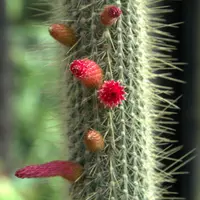
Cleistocactus parviflorus
Cleistocactus parviflorus
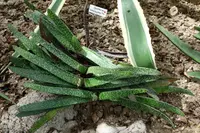
Short Oxtongue
Gasteria brachyphylla
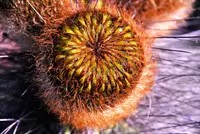
Eulychnia acida
Eulychnia acida
Opuntia bonaerensis
Opuntia bonaerensis
Aztekium hintonii
Aztekium hintonii
Blossfeldia
Blossfeldia liliputana
Orpine
Hylotelephium telephium
Weberbauerocereus weberbaueri
Weberbauerocereus weberbaueri