Long Tonguefig Care (Glottiphyllum longum)

Long Tonguefig

About Long Tonguefig

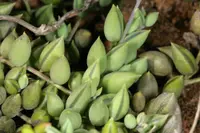
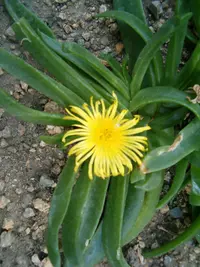
Long tonguefig, Glottiphyllum longum, is a small South African succulent valued for its thick, tongue-shaped leaves and low, spreading growth habit. It forms dense clumps that sit close to the soil surface.

The leaves store water, so the plant tolerates dry indoor air and infrequent watering, which makes it appealing for beginners. Yellow, daisy-like flowers may appear in good light.

Native to arid regions of the Eastern and Western Cape, it prefers bright light, very well-drained gritty soil, and careful watering. These drought-adapted traits mean it is generally easy to care for Long Tonguefig when overwatering is avoided.

Main Plant Requirements

Care Difficulty

Easy Care

Light Preference

Full Sun

Water Requirements

Low Water

Temperature Preference

Tropical / Frost Sensitive

Hardiness Zone

10–11

Soil Texture

Sandy, Loamy, Rocky

Soil pH

Slightly acidic (6.5–7.0), Neutral (7.0)

Soil Drainage

Well-drained

Fertilization

Minimal (feed rarely)

Get Personalized Care Plan

Scan your plant to receive care tips personalized for your specific plant

Available on iOS and Android

How to Care for the Long Tonguefig

This South African succulent prefers bright, cool light with some protection from intense midday sun.

  • Provide 4–6 hours of direct morning sun or late-afternoon sun, plus bright indirect light for the rest of the day, especially in coastal or mild climates.
  • In hotter inland areas, give Glottiphyllum longum light shade from about 11 a.m.–3 p.m. to prevent leaf scorch and washed-out color.
  • If stems stretch or leaves thin and lean toward windows, increase light exposure; in winter, move plants to the brightest frost-safe position.

This species stores water in its leaves and needs thorough but infrequent watering.

  • Water only when the top 3–5 cm of soil are completely dry, then soak the root zone and let all excess drain away.
  • During active growth in spring and fall, expect to water every 10–21 days depending on heat, wind, and soil drainage; in winter, water lightly once the leaves start to soften.
  • Yellowing, translucent, or splitting leaves suggest overwatering and poor drainage, while wrinkled, flat, or folding leaves signal it is time to water Glottiphyllum longum.

This succulent prefers mild, dry conditions and is sensitive to hard frost.

  • Aim for 60–80°F (16–27°C) for steady growth, with slightly cooler nights improving color and compact form.
  • Protect from temperatures below 32°F (0°C); short dips to 30°F (−1°C) may be survived if the soil is dry, but repeated freezes damage leaves and roots.
  • In hot spells above 90°F (32°C), increase airflow, provide light shade, and avoid watering during the hottest part of the day to reduce heat stress.

Humidity is rarely a concern for this drought-adapted succulent when grown indoors or outdoors in dry climates.

  • Aim for 30–50% relative humidity, which matches most heated and air-conditioned homes.
  • Long Tonguefig tolerates very dry air; problems usually arise more from excess moisture than from low humidity.
  • Watch for soft, translucent leaves or fungal spots, which indicate overly humid, stagnant conditions; improve air circulation and reduce watering.

Glottiphyllum longum prefers a very fast-draining, mineral-rich substrate that mimics its native arid habitats.

  • Use a gritty mix such as 50–70% inorganic material (pumice, coarse sand, or small gravel) blended with 30–50% cactus potting mix.
  • Ensure water drains through in seconds, leaving no puddling on the surface or in the saucer after watering.
  • Keep pH slightly acidic to neutral, around 6.0–7.0, which supports nutrient availability without encouraging rot.
  • Avoid heavy, peat-dense, or clay-based soil that compacts around the roots and traps moisture, reducing aeration.

This species is well suited to container growing due to its compact, shallow-rooted habit.

  • Choose a wide, shallow pot to support its spreading rosettes and prevent water from lingering around the roots.
  • Select unglazed clay if extra evaporation is needed, especially in cooler or less sunny locations.
  • Elevate the pot or use pot feet so drainage holes stay clear and runoff moves away quickly after watering.

This slow-growing succulent needs only light feeding to stay healthy in pots.

  • Apply a diluted balanced liquid fertilizer (around 10-10-10) at 1/4–1/2 strength every 4–6 weeks in spring and summer.
  • Use a cactus or succulent formula or a very thin compost tea rather than rich organic feeds.
  • Stop feeding Long Tonguefig in fall and winter when growth slows or pauses.
  • Always water lightly before fertilizing to avoid root burn in the sandy, fast-draining mix.

Glottiphyllum longum requires minimal pruning, mainly to maintain appearance and plant health.

  • Best time is late winter to early spring, before the main growth flush.
  • Remove spent flower stalks, shriveled leaves, and any soft, rotting segments with clean scissors.
  • Thin congested rosettes slightly to improve airflow and keep a low, open shape.
  • Disinfect tools before and after use to lower the risk of fungal or bacterial problems.

This succulent prefers a stable container but benefits from occasional repotting into fresh, sharply drained mix.

  • Repot every 2–3 years or when roots circle the pot base, mix dries extremely fast, or growth slows.
  • Choose late winter to early spring, just before active growth starts, for lower transplant stress.
  • Move to a pot only 2–3 cm wider, using a gritty cactus mix to avoid excess moisture around roots.
  • Gently loosen the root ball, trim any dead roots, keep the crown slightly above soil level, and avoid heavy watering for 3–5 days after moving.

Glottiphyllum longum is commonly propagated from offsets and short stem cuttings under warm, bright conditions.

  • Best season is spring to early summer, when plants are actively growing and root quickly.
  • For offsets, separate small clumps with a clean knife, allow cut surfaces to callus 1–2 days, then plant in dry, gritty mix.
  • For cuttings, take firm, non-mushy segments, let them dry, then place upright on barely moist substrate.
  • Seeds can be sown on the surface of well-draining mix at 68–75°F with bright, indirect light and very light moisture.

This species is not fully frost hardy and needs simple winter care in cooler climates.

  • Avoid exposure to hard frost; aim to keep temperatures above 35–40°F for potted plants.
  • Move containers indoors or into a bright, cool greenhouse before the first freezes.
  • In the ground, use a very gravelly, well-drained bed and a light gravel mulch around the crown to shed winter moisture.
  • Cut back watering sharply in winter to reduce risk of rot in cold, wet substrate.

Care Tips

Controlled pot depth

Use a wide, shallow pot and keep the root zone close to the surface, since the plant forms a relatively shallow, fibrous root system that stays healthier when it is not buried in deep, cold soil.

Winter light boost

In winter, move containers to the brightest, coolest frost-free spot available and, if grown indoors, consider a small LED grow light set on a 10–12 hour timer to prevent weak, elongated leaves.

Dry rest period

Provide a marked reduction in watering during the hottest, brightest part of summer if growth slows, as this semi-dormant rest helps prevent root loss and improves flowering the following season.

Topdressing with grit

After potting, add a 0.5–1 cm layer of coarse mineral grit around the crowns to keep leaf bases dry, reduce algae growth, and discourage fungus gnat larvae in the upper soil.

Cluster division timing

Divide congested clumps only at the start of active growth, then replant sections so that the leaf bases sit just above the mix and keep them dry for 3–5 days to let minor wounds callus before light watering.

Common Pests and Diseases

Mealybugs

This pest appears as small white cottony clusters in leaf grooves and along stems, often causing yellowing and distortion of the fleshy leaves.

Solution

Isolate the plant, then dab visible insects with cotton swabs dipped in 70% isopropyl alcohol and repeat weekly until no new clusters appear; for heavier infestations, rinse the plant thoroughly with a strong but gentle stream of water and use a neem oil or insecticidal soap spray labeled safe for succulents, keeping the plant in bright, dry conditions to discourage reinfestation.

Aphids

These insects cluster on new growth and flower stalks, sucking sap and causing curled, sticky, and misshapen leaves.

Solution

Rinse the plant under a firm, lukewarm water spray to remove colonies, then treat tender areas with insecticidal soap or neem oil, repeating every 5–7 days until the aphids and sticky honeydew are gone; avoid overfertilizing, which encourages soft, aphid-prone growth.

Root and stem mealybugs

This pest hides in the potting mix or at the stem base, leading to slow decline, poor growth, and sometimes a white, cottony residue at the soil line.

Solution

Unpot the plant, wash roots gently, and remove all visible pests and old soil, then repot in fresh, very free-draining succulent mix; treat the root zone and lower stems with a systemic insecticide labeled for container succulents or repeated drenches of neem solution, and reduce watering frequency to keep the mix mostly dry between waterings.

Leaf spot

This disease causes small, sunken, brown or dark gray spots on the thick leaves, sometimes with a yellow halo or slight softening of tissue around the lesion.

Solution

Remove and discard affected leaves, improve air circulation, and avoid wetting the foliage when watering; in persistently humid or crowded conditions, use a copper-based or broad-spectrum fungicide labeled for succulents and reduce overhead moisture to limit new infections.

Edema

Symptoms include blister-like, corky or translucent patches on leaves caused by the plant taking up water faster than it can transpire in cool, low-light, or very humid conditions.

Solution

Allow the soil to dry more thoroughly between waterings, use a very free-draining mineral-rich succulent mix, and increase light and ventilation; damaged tissue does not recover, but new growth will form normally once watering and environment are adjusted, which is a key aspect of Glottiphyllum longum plant care in indoor conditions.

Interesting Facts

Tongue-like leaf shape

This species has long, flat, strap-shaped leaves that can twist slightly as they grow, which inspired the common name long tonguefig. The leaf blades are often uneven at the tips, a feature botanists use to distinguish it from closely related Glottiphyllum species.

Karoo winter grower

Glottiphyllum longum is native to the semi-arid Karoo regions of South Africa, where most rainfall occurs in the cooler months. In habitat it grows mainly during winter and often slows or rests through the hottest, driest part of summer.

Shallow, efficient rooting

In its stony native soils this plant develops a shallow, spreading root system that quickly absorbs brief showers and dew near the surface. This adaptation allows it to survive in areas where water rarely penetrates deeply into the ground.

Botan icon

Did you know?

Botanists have documented that populations of Glottiphyllum longum often grow partially shaded by stones or low shrubs in the Karoo, using these microhabitats to reduce heat stress and water loss compared with fully exposed plants nearby.

FAQs about Long Tonguefig

Lack of flowers is often due to insufficient light, overfertilizing with high-nitrogen products, or a pot that stays wet too long. Provide bright conditions, use a low-nitrogen succulent fertilizer, and allow the mix to dry between waterings.

Grow Healthy Plants with Botan Care

Keep your plants happy and healthy with plant identification, disease detection, and easy care guidance.

Botan plant care app — identify plants on mobile

Explore More Plants