Bottle tree Care (Pachypodium lealii)

Bottle tree

About Bottle tree

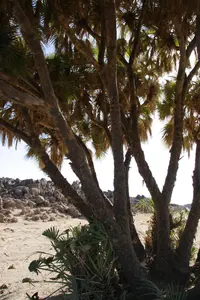
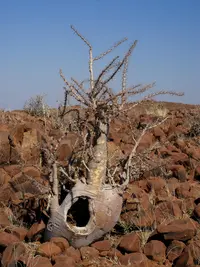
Pachypodium lealii, often called bottle tree, is a succulent tree with a swollen, bottle-shaped trunk that stores water. It develops sparse branches topped with narrow leaves and showy white flowers. This species is native to arid regions of Namibia and Angola, where it grows on rocky slopes and dry landscapes. Its drought tolerance and slow growth habit make it suitable for specialized succulent collections. The thick stem, sharp spines, and need for strong light and fast-draining soil influence how to care for Bottle tree and keep it healthy in cultivation.

Main Plant Requirements

Care Difficulty

Moderate Care

Light Preference

Full Sun

Water Requirements

Low Water

Temperature Preference

Tropical / Frost Sensitive

Hardiness Zone

11–12

Soil Texture

Sandy, Loamy, Rocky

Soil pH

Slightly acidic (6.5–7.0), Neutral (7.0)

Soil Drainage

Well-drained

Fertilization

Minimal (feed rarely)

Get Personalized Care Plan

Scan your plant to receive care tips personalized for your specific plant

Available on iOS and Android

How to Care for the Bottle tree

This desert succulent needs intense light to form a strong trunk and compact growth.

  • Provide 8–10 hours of direct sun daily, ideally full sun from morning through mid‑afternoon, especially in dry climates where Pachypodium lealii naturally occurs.
  • In very hot regions, give Bottle tree light afternoon shade or filtered sun to reduce leaf scorch and trunk overheating above 100°F (38°C).
  • In winter, maximize exposure with an open southern aspect and avoid deep shade, which causes weak, stretched growth and sparse leaves.

This species stores water in its swollen trunk and prefers sparse, deep watering.

  • Water only when the top 3–5 cm of soil are completely dry; then soak thoroughly and let excess drain quickly through very gritty, fast‑draining soil.
  • During active growth in warm seasons, drying between waterings is normal; wrinkling of the trunk or soft, drooping leaves can signal that Pachypodium lealii needs water.
  • In cool or dormant periods, reduce watering sharply; yellowing lower leaves, blackened roots, or a soft base usually indicate overwatering and starting rot.

This drought‑adapted succulent prefers consistently warm, dry air with no frost exposure.

  • Aim for 70–90°F (21–32°C) during active growth for best stem thickening and leaf production.
  • Protect from cold below 50°F (10°C) and never allow exposure to 32°F (0°C) or frost, which can kill tissue in the trunk and roots.
  • Short heat waves up to 100–105°F (38–41°C) are tolerated if soil is well drained and the plant is not sitting in soggy conditions.

This species prefers dry air and does not need extra humidity.

  • Target 30–50% relative humidity, similar to a typical heated home, for stable Pachypodium lealii care.
  • The Bottle tree tolerates very dry air but may shrivel slightly along stems if combined with underwatering.
  • If leaf tips brown while soil stays wet, reduce any misting and increase air movement rather than raising humidity.

This plant needs a sharply draining, mineral-heavy mix that prevents water from sitting around the roots.

  • Use a gritty cactus mix made of roughly 50–70% mineral material such as pumice, coarse sand, or fine gravel, with the rest light potting soil.
  • Aim for a slightly acidic to neutral pH around 6.0–7.0, avoiding strongly acidic or alkaline mixes that restrict nutrient uptake.
  • Create a loose, crumbly structure that air can move through; break up any compacted peat and avoid heavy loam or clay-based garden soil.
  • For container Pachypodium lealii, ensure fast drainage by adding extra pumice or perlite and elevating the pot so water can exit freely.

This species is well suited to container growing when the pot supports its heavy, bottle-shaped stem.

  • Choose a wide, heavy clay or ceramic pot to counter the top-heavy stem and reduce the risk of tipping in wind or accidental bumps.
  • Select a pot that is only slightly wider than the root mass so the coarse mix dries evenly and does not hold moisture at the bottom.
  • Raise the container on feet or spacers so drainage holes stay clear and excess water can escape quickly after each watering.

Pachypodium lealii benefits from light, controlled feeding during its active growing season only.

  • Use a dilute balanced liquid fertilizer (around 10-10-10 or 20-20-20) at 1/4–1/2 strength for Bottle tree in spring and summer.
  • Apply every 4–6 weeks while growth is strong, always onto moist soil, never bone dry.
  • Avoid organic compost or rich slow-release products that keep the soil wet or overly fertile.
  • Stop feeding completely in fall and winter dormancy to prevent soft, weak growth and root issues.

Pachypodium lealii needs very little pruning and is usually shaped by its natural growth habit.

  • Best timing is late winter to early spring, just before new growth starts.
  • Use clean, sharp pruners to remove dead, damaged, or diseased branches only.
  • Limit cuts to small tips; heavy pruning can scar the trunk and slow recovery.
  • Light shaping of crowded side branches can improve structure and light penetration without forcing dense, weak growth.

Container-grown plants prefer infrequent repotting because Pachypodium lealii dislikes root disturbance.

  • Check for roots circling the pot, pushing through drainage holes, or unexplained slow growth as signs it needs a larger container.
  • Repot in late spring, every 3–5 years, moving only 1 pot size up with a very fast-draining cactus mix.
  • Water lightly 1–2 days before repotting, then gently loosen the root ball and trim only dead, rotten roots.
  • After repotting, keep the plant slightly dry and shaded for 7–10 days to reduce shock before resuming normal light and watering.

Propagation of Pachypodium lealii is usually done from seed and is considered slow and specialized.

  • Sow fresh seeds in late spring to early summer in a sterile, gritty cactus mix.
  • Maintain 75–85°F, bright light, and lightly moist but not wet substrate for germination.
  • Provide strong airflow and avoid covering trays tightly to limit fungal problems.
  • Stem cuttings are possible but often unreliable, and any attempt should use very dry, well-aerated conditions to prevent rot.

This species is very frost-sensitive and needs strict cold-season protection, especially in container culture.

  • Keep temperatures above 50°F; brief dips below this, especially near freezing, can damage tissues.
  • Move container plants indoors or into a heated greenhouse before night temperatures drop in fall.
  • Provide bright light and keep soil almost dry during winter dormancy to reduce rot risk.
  • In mild climates, a gravel mulch around the base improves drainage and keeps the root zone slightly warmer.

Care Tips

Root zone stability

Use a heavy, wide-based pot or add a top layer of coarse gravel to keep the plant stable as the trunk swells and to reduce the risk of tipping over when the canopy gets larger.

Winter rest management

During the cool dormant season, move the plant to the brightest, driest spot available and keep the root ball just barely on the dry side to prevent root rot while supporting its natural rest period.

Sun acclimation steps

When shifting the plant outdoors for summer, increase direct sun exposure over 10–14 days by starting in bright shade and moving it gradually so the thickened trunk and leaves do not scorch.

Calcium and structure

Provide a cactus-type fertilizer that lists calcium or trace minerals, or occasionally top-dress with a small amount of crushed limestone grit, to support strong, woody tissue in the trunk and branches.

Safe handling routine

Always use thick gloves and handle the plant by the pot or trunk base, not by the spiny stems, to avoid injury and accidental breakage when repotting or repositioning, which is an important part of practical Pachypodium lealii plant care.

Common Pests and Diseases

Mealybugs

This pest often hides in leaf bases, spines, and branch junctions, sucking sap and causing yellowing, stunting, and sticky honeydew that can lead to sooty mold.

Solution

Isolate the plant, then dab visible insects with cotton swabs dipped in 70% isopropyl alcohol and repeat weekly until gone; for heavier infestations, use an insecticidal soap or a systemic insecticide labeled for succulents, and reduce excess humidity while improving air movement around the plant.

Scale insects

These insects attach firmly to the thick stems and trunk, appearing as small brown or gray bumps that weaken the plant over time and may cause localized yellowing or dieback.

Solution

Gently scrape off or wipe scales with a soft brush or cloth dipped in diluted alcohol, then apply a horticultural oil or insecticidal soap, ensuring thorough coverage of all crevices; monitor regularly and avoid overfertilizing, which encourages soft, pest-prone growth.

Spider mites

This pest thrives in hot, very dry indoor air, causing fine stippling on leaves, dulling of the surface, and in heavier cases, fine webbing on spines and branch tips.

Solution

Rinse the plant thoroughly with a strong but controlled stream of lukewarm water, focusing on leaf undersides and branch joints; repeat every few days and, if needed, apply insecticidal soap or a miticide labeled for ornamentals, while slightly raising humidity and removing heavily damaged foliage.

Stem canker

This disease causes localized sunken, discolored patches on the thick trunk or branches, often starting at an old wound or pruning cut and potentially leading to cracking or partial collapse of tissue.

Solution

Cut out affected tissue with a sterile, sharp blade back to firm healthy tissue, allow the wound to dry in bright, airy conditions, and avoid watering the trunk; keep the plant in a free-draining mix, protect from prolonged rain or splashing, and discard severely affected plants to prevent spread.

Corky stem lesions

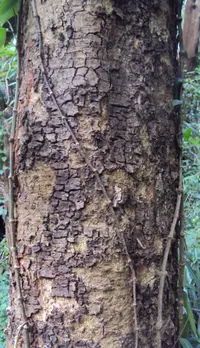
Symptoms include rough, corky, brown patches on the trunk or branches that usually follow overwatering, sudden temperature drops, or minor mechanical damage rather than active infection.

Solution

Allow the substrate to dry more deeply between waterings, improve drainage, and maintain stable warm temperatures; prune only if tissue is soft or spreading, and then keep cuts dry and clean, as most stable, dry corky areas are cosmetic and do not require further treatment under proper Pachypodium lealii plant care.

Interesting Facts

Bottle-shaped water storage

This species forms a swollen, bottle-like trunk that stores water, an adaptation to highly seasonal, arid environments in Namibia and Angola.

Night-scented flowers

The white, tubular flowers open mainly at night and release a strong fragrance that attracts nocturnal pollinators such as moths.

Toxic latex defense

The plant produces a milky latex that is toxic if ingested; this chemical defense helps protect it from herbivores in its native habitat.

Botan icon

Did you know?

In parts of Namibia and Angola, unusually large individuals of this species become prominent landscape features, and their striking, sculptural forms have inspired the common name bottle tree and made grow Pachypodium lealii a niche interest among collectors of arid-climate plants.

FAQs about Bottle tree

Lack of flowers usually comes from insufficient light, cool temperatures, or a plant that is still immature. Ensure very bright conditions, a cool dry winter rest, and avoid heavy feeding, which can shift energy into stem and leaf growth.

Grow Healthy Plants with Botan Care

Keep your plants happy and healthy with plant identification, disease detection, and easy care guidance.

Botan plant care app — identify plants on mobile

Explore More Plants