


Rosette spacing
Allow at least 1.5–2 m of open space around each plant so the rosette can reach full size without crowding, which reduces damage from overlapping leaves and makes long-term maintenance safer and easier.

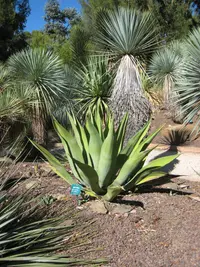
Weber's century plant, Agave weberi, is a large rosette-forming succulent known for its broad, blue-green leaves with fine teeth and a graceful, arching shape. It belongs to arid and semi-arid regions of northeastern Mexico and is now widely used in dry landscapes in warm climates.
This agave grows slowly but forms an impressive, architectural specimen that can eventually produce offsets around the base. It prefers full sun, sharp drainage, and low to moderate moisture, which makes it suitable for water-wise gardens.
Its drought tolerance and low maintenance needs make it relatively easy for experienced succulent growers, but the size and spines require some planning and care for Weber's century plant.

Care Difficulty
Easy Care

Light Preference
Full Sun

Water Requirements
Low Water

Temperature Preference
Warm Climate

Hardiness Zone
8–11

Soil Texture
Sandy, Loamy, Rocky

Soil pH
Slightly acidic (6.5–7.0), Slightly alkaline (7.0–7.5)

Soil Drainage
Well-drained

Fertilization
Minimal (feed rarely)
Scan your plant to receive care tips personalized for your specific plant
Available on iOS and Android
This sun-loving succulent thrives in bright, open sites with strong light and low humidity.
This drought-tolerant species needs infrequent but deep watering and fast-draining soil.
This agave prefers warm, dry conditions and handles heat far better than prolonged cold or frost.
This species prefers arid to semi-arid air and rarely needs humidity adjustment indoors or outdoors.
Agave weberi needs very fast-draining, mineral-heavy soil to prevent root and crown rot.
This species is suitable for container growing where space or winter protection is needed.
This agave grows well in lean soils and needs only modest feeding to stay healthy.
Agave weberi needs minimal pruning focused on safety and hygiene rather than shaping.
This large agave is usually transplanted outdoors rather than maintained long term in containers.
Agave weberi is most commonly propagated from offsets rather than seeds for reliable results.
This agave has good cold tolerance but may need targeted winter care in colder regions.

Plant Health Check
Not sure what's wrong with your plant? Check your plant's health inside the app.
This species is widely considered a natural hybrid, likely involving Agave americana and Agave asperrima, which explains its large size, fast growth compared with many agaves, and intermediate leaf traits.
Unlike many closely related agaves, this plant typically lacks sharp marginal teeth along its leaves, making it easier to handle in cultivation while still retaining a stout terminal spine at the tip.
Like most agaves, this species is monocarpic, meaning each rosette flowers only once at the end of its life, producing a tall flower stalk followed by many offsets and bulbils before the main rosette dies.

In parts of northeastern Mexico, large, mature rosettes of this species have been traditionally cultivated as a source of sap for local fermented beverages, reflecting a long-standing regional use distinct from the more globally known pulque agaves.
Brown leaf tips or margins usually come from physical damage, intense sun combined with low moisture at the roots, or cold stress. Widespread soft, brown areas often indicate root rot from excess moisture and poor drainage.
Keep your plants happy and healthy with plant identification, disease detection, and easy care guidance.

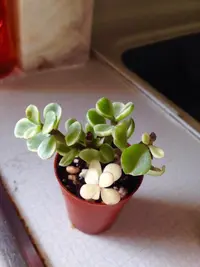
Elephant Bush
Portulacaria afra 'Variegata'
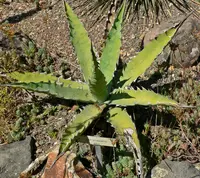
century plant
Agave xylonacantha
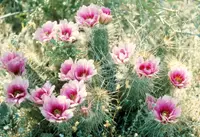
pinkflower hedgehog cactus
Echinocereus fasciculatus
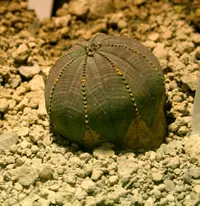 POPULAR
Baseball Plant
Euphorbia obesa
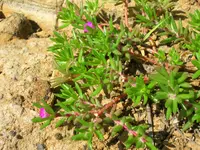
kiss me quick
Portulaca pilosa
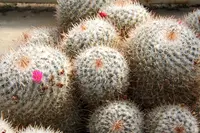
twin spined cactus
Mammillaria geminispina
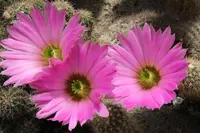
Echinocereus sciurus
Echinocereus sciurus
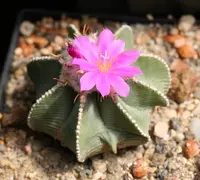
Aztekium hintonii
Aztekium hintonii