Branch wiring
Use soft plant wire or bonsai training wire to gently guide young, flexible stems into a balanced shape, checking every 3–4 weeks so the wire does not cut into the thickening branches.

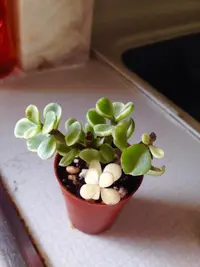
Portulacaria afra 'Variegata', often called variegated elephant bush, is a compact succulent shrub with small cream-and-green leaves on reddish stems. It forms a bushy, branching plant that can be trained as a small indoor shrub or bonsai-style specimen.
This species is native to South Africa, where it grows in dry, rocky areas and stores water in its thick stems and leaves. Its drought tolerance, slow to moderate growth, and forgiving nature make it suitable for many beginner succulent growers.
It prefers bright light, relatively dry conditions, and a fast-draining soil mix, which helps owners understand how to care for Elephant Bush successfully indoors.

Care Difficulty
Easy Care

Light Preference
Partial Sun

Water Requirements
Low Water

Temperature Preference
Tropical / Frost Sensitive

Hardiness Zone
10–11

Soil Texture
Sandy, Loamy, Rocky

Soil pH
Slightly acidic (6.5–7.0), Neutral (7.0)

Soil Drainage
Well-drained

Fertilization
Minimal (feed rarely)
Scan your plant to receive care tips personalized for your specific plant
Available on iOS and Android
Portulacaria afra 'Variegata' needs bright light to keep compact growth and strong variegation.
This succulent stores moisture in its leaves and prefers infrequent, thorough watering.
This species prefers warm, dry conditions and does not tolerate frost.
This succulent tolerates typical indoor humidity and does not need special humidity management.
This plant needs a very fast-draining, mineral-rich mix to prevent root rot.
This species is well-suited to container growing due to its compact, succulent root system.
This succulent benefits from light, controlled feeding to support compact growth and variegation.
Thoughtful pruning keeps Portulacaria afra 'Variegata' dense, compact, and well-shaped.
Container-grown plants appreciate occasional repotting to refresh the soil and manage size.
This species is commonly multiplied from stem cuttings rather than seed for consistent variegation.
Cool, dry winter conditions help this succulent rest while avoiding cold damage.

Plant Health Check
Not sure what's wrong with your plant? Check your plant's health inside the app.
The creamy-white and green striping on its leaves is genetically stable, so new growth reliably shows variegation rather than reverting to solid green as many chimeric variegated plants do.
Its variegated leaves have less chlorophyll than the plain green species, so it typically grows more slowly and stays somewhat smaller and denser, which makes it especially suited to container culture and bonsai work.
The small, thick, opposite leaves store water and minimize surface area, and the pale variegated portions can reflect some light, an adaptation that supports growing Elephant Bush in bright, exposed positions without rapid water loss.

In its native range in South Africa, mixed stands of green Portulacaria afra and naturally variegated forms have been used in long-term ecological restoration trials, where their combined dense canopy and extensive root systems help stabilize degraded slopes and create microhabitats that allow other native species to re-establish.
Yellowing leaves usually result from overwatering, poor drainage, or sudden low light. Check that the pot drains freely, allow the soil to dry more between waterings, and remove any consistently soggy, compacted mix around the roots.
Keep your plants happy and healthy with plant identification, disease detection, and easy care guidance.